For decades, the specter of virtual death loomed over gaming like an unshakable chaperone—run out of hit points, face the dreaded 'Game Over' screen, and repeat sections until perfection. But as the medium matured, visionary developers began questioning whether this binary succeed-or-die paradigm truly served all experiences. What emerged were ingenious titles transforming failure from a full stop into a comma, where setbacks became narrative textures rather than progress blockers. These pioneers didn't just remove death; they reimagined consequence itself, proving that tension can thrive without the threat of deletion. Like rivers carving new paths through ancient stone, they demonstrated how vulnerability could be redesigned as curiosity’s companion rather than its executioner. 🎮
🔍 People Also Ask
- Why eliminate death mechanics?
For some games, death contradicts their core purpose—whether it's Fable 2's power fantasy or Spiritfarer's meditation on mortality. Removing fail states preserves thematic harmony.
- Can games stay challenging without death?
Absolutely! Wario Land 2 replaces health bars with transformative debuffs, while Braid's time-rewinding turns mistakes into puzzle-solving tools.
- Do these designs appeal beyond casual audiences?
Monkey Island 2's meta-humor and Braid's cerebral puzzles attracted hardcore gamers by replacing frustration with intellectual engagement.
9 Fable 2: The Unbreakable Hero
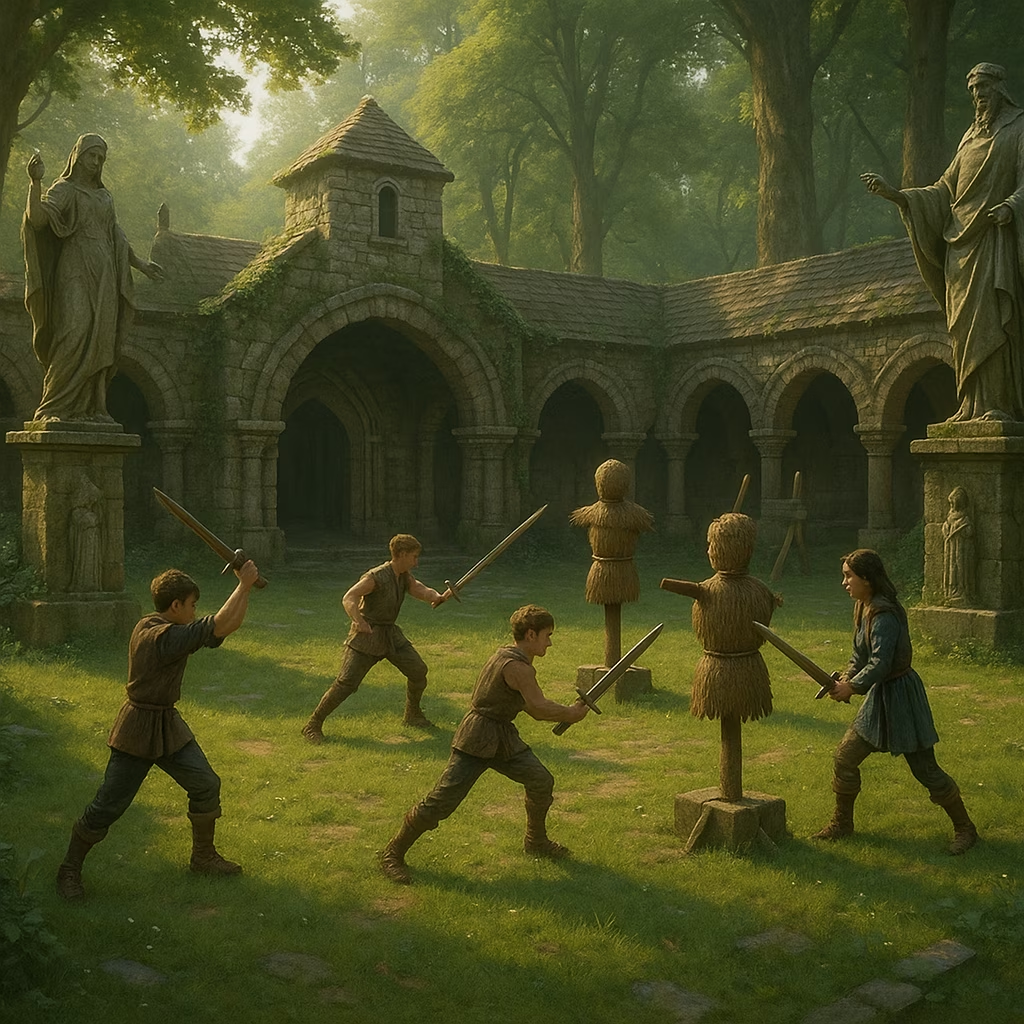
Lionhead Studios flipped the script by making players literally undefeatable. When health depleted, heroes bounced back with a cinematic "burst of strength," losing only minor XP and gaining randomized scars affecting their appearance stats. This design mirrored the power fantasy—what's a chosen one if easily slain? The scars became badges of chaotic storytelling, turning each near-death into personalized lore rather than a reload prompt. Debates still simmer about whether this softened challenge, yet its boldness reshaped RPG consequences forever.
8 Lil Gator Game: Playground Rules Apply
This indie gem framed its lack of fall damage through in-universe logic. When a character fretted over plummeting, the protagonist shrugged: "We haven’t played the latest games with fall damage." By rejecting lethal physics, it prioritized joy and inclusivity. Death would’ve shattered its sun-drenched, collaborative spirit—like interrupting hide-and-seek with a fire drill. Instead, players soared worry-free, embodying childhood’s fearless abandon where scraped knees never ended the game. 🦎
7 A Short Hike: Altitude Without Anxiety
Cliffside paths and daring glides unfolded without a health bar, transforming peril into pure exploration. Developer Adamgryu focused on emotional triumphs—conquering personal fears, not pixel-perfect jumps. Removing death mechanics felt like replacing a stern coach with a supportive friend, whispering "Try again" instead of "You failed." The result? A tranquil hike where every stumble still moved the journey forward.
6 Kirby’s Epic Yarn: Unraveling Consequences
How do you threaten sentient yarn? By making hazards cost precious beads, not lives. Enemies and pitfalls scattered collectibles instead of triggering resets. This turned combat into a playful economy—like misplacing buttons while sewing a quilt—where losses were recoverable nudges toward exploration. Kirby’s fluff-armor reshaped danger into a scavenger hunt, proving that stakes could be woven from curiosity rather than survival. 🧵
5 LEGO Marvel Super Heroes: Snap-Back Resilience
True to plastic-brick ethos, "dying" meant spectacularly bursting apart before instantly reassembling—minus a few studs. Wolverine’s regeneration even earned achievements when he resurrected as a gleaming skeleton. This mirrored LEGO’s physical charm: structures might topple, but rebuilding is half the fun. Like knocking over dominoes to admire the cascade, failure became a visual punchline, not progress purgatory. 💥
4 Monkey Island 2: Death as Narrative Glitch
LucasArts masterfully mocked adventure-game tropes. If Guybrush perished, the camera cut to present-day Elaine dryly noting "You couldn’t be telling this story if you died." Death wasn’t penalized—it was a fourth-wall-breaking gag. Like discovering a playwright heckling their own script, it transformed potential frustration into collaborative humor between player and creator. 🎭
3 Braid: Rewinding Regrets
Time manipulation erased conventional failure. Spike traps or enemies simply paused gameplay, inviting players to rewind moments like editing film reels. This mechanic respected players’ time—no reload screens, just fluid experimentation. Braid understood that punishing death in puzzle games was like scolding a scientist for failed hypotheses; true progress thrives on iteration, not penalties. ⏪
2 Spiritfarer: Beyond the Veil
How do you die when you’re already ferrying souls in the afterlife? Thunder Lotus sidestepped this with poignant logic: failure meant fumbling minigames, not mortality. Stella’s journey celebrated life’s fragility through emotional weight, not health bars—like tending a garden where wilted flowers regrow with care. The absence of death mechanics reinforced its message: meaning persists beyond endpoints. 🌌
1 Wario Land 2: Greed’s Quirky Consequences
Wario’s anti-Mario ethos shone brightest here. Enemies couldn’t kill him—they inflicted absurd transformations: zombiefication, spring compression, or flaming rear ends. Each "debuff" unlocked new exploration paths, turning hazards into keys. Like a gremlin thriving in chaos, Wario proved that "failure" could be a shapeshifting playground where getting flattened just made you bounce higher.
Ultimately, these games challenge a fundamental assumption: must imperilment always walk hand-in-hand with obliteration? As interactive stories evolve beyond combat-centric models, perhaps "game over" will splinter into kaleidoscopic interpretations—where vulnerability manifests as metamorphosis, memory, or even laughter. What new dialects of risk might emerge when designers fully untether consequence from extinction?