There's something deeply unsettling about watching a beloved childhood icon transform into a cold, calculating predator. Picture the boy who never grew up, the gleeful leader of the Lost Boys, the sprite who taught us to crow at the moon—now imagine him decades older, stripped of whimsy, and wielding a glowing fairy like a hitwoman. That's exactly the gut punch DC's Fables delivers in one of the most audacious villain revamps in recent comic memory.
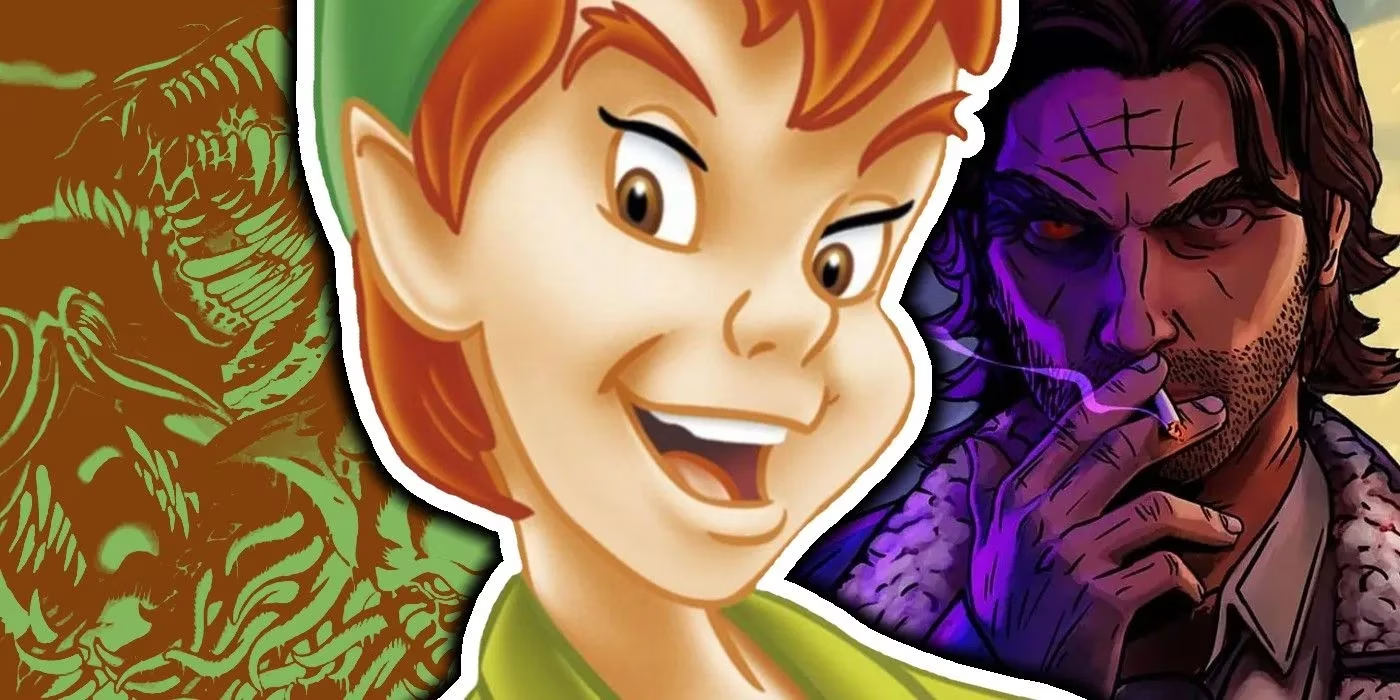
For those who haven't been keeping up, Fables has always specialized in cracking open fairy-tale figures to reveal the messy, complicated souls inside. Snow White is a tough-as-nails deputy mayor, the Big Bad Wolf is a grizzled sheriff, and Prince Charming… well, he's ex-husband number three for a lot of people. So it was only a matter of time before Peter Pan got the same treatment. What nobody expected was just how terrifying the result would be.
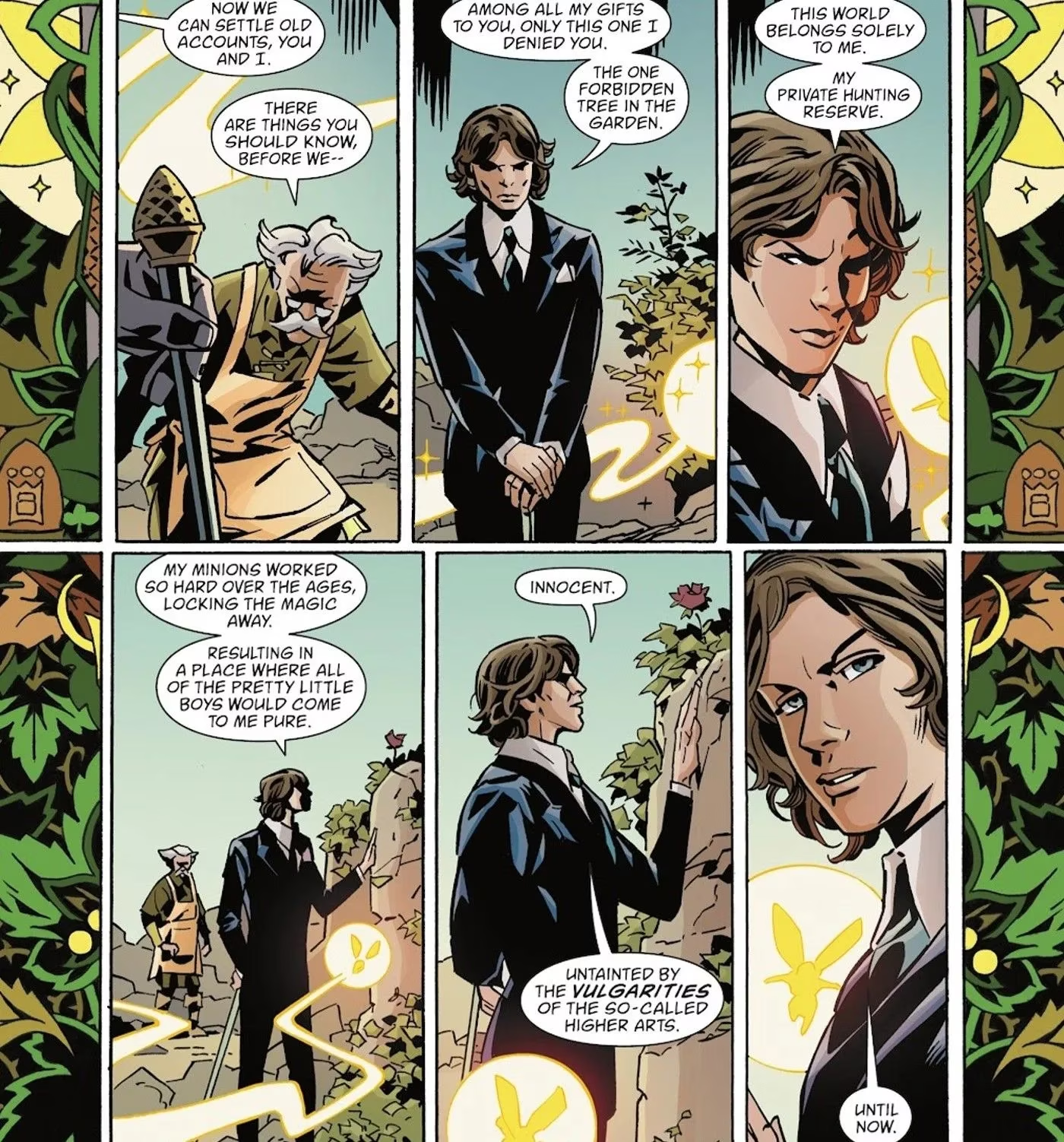
The series, which returned after a lengthy hiatus to tie up sprawling narrative threads, pulled back the curtain in Fables #152. And there he was: Peter Pan, all grown up and running the show from the shadows. This isn't the impish scamp you remember from Disney sing-alongs. This Peter lounges in scenes with Geppetto—yes, that Geppetto, the former interdimensional warlord who carved a bloody path across multiple worlds with his wooden soldiers—and the power dynamic makes it crystal clear that Pan is the one holding the leash. In fact, the issue strongly implies that Geppetto has been answering to Pan all along, which retroactively positions the laughing boy as one of the most formidable threats the Fables universe has ever coughed up.
So what's his game? A cosmic hunting preserve. Pan treats Earth like a private game reserve stocked with the most dangerous prey imaginable: lost boys. Forget Neverland—this man hunts children across the globe, treating their pursuit as a twisted sport. He's flanked constantly by a tiny, luminous fairy who dispenses death at his slightest command, a glittering reminder that magic in Pan's hands isn't about pixie dust and happy thoughts. It's about control, terror, and the casual snuffing out of lives. The reveal lands like a fist to the gut because it weaponizes nostalgia itself. Readers have been trained for a century to associate Peter Pan with innocence and joy, and Fables uses that emotional baggage as a trapdoor.
Now, you might be thinking, isn't this just a little bit silly? A middle-aged Peter Pan brooding in a lair, monologuing about lost boys like some deranged big-game hunter? The recent Chip 'n' Dale: Rescue Rangers movie went there for laughs, giving us a balding, washed-up former child star version of Pan that was pure comedy. But here's the thing—Fables makes it work so well it becomes genuinely chilling. Within a handful of issues, the series transforms a character who should be ridiculous into something that keeps you up at night. That's been the secret sauce of Fables from day one: taking figures swaddled in warm memories and peeling back the layers until you find the darkness underneath.
And the darkness here goes deep. One of the most staggering revelations in Fables #152—and I mean put-the-comic-down-and-stare-at-the-wall staggering—is that Peter Pan is the reason Earth has no naturally occurring magic. In a multiverse where every other world hums with enchantment and spellcraft, Earth stands out as a mundane anomaly. Turns out that's not an accident. Pan deliberately keeps our world magic-free… presumably because it makes the hunting better, though the full extent of his engineering remains as frightening as it is vague. The implications ripple backward through twenty years of Fables storytelling, recontextualizing everything readers thought they knew about the refugees who fled to our world and the magic they had to leave behind. It's rare that a late-game villain reveal manages to feel both inevitable and shattering, but this one pulls it off.
What makes Pan's evil particularly effective is the way he inverts his own mythology. The original Peter stole children away to Neverland so they could live in perpetual, rule-free adventure. This Peter steals children's lives with an adult's patience and a predator's cunning. The fairy that once symbolized childlike wonder now acts as a silent assassin. The refusal to grow up that was once rebellious and charming has curdled into a kind of frozen, obsessive cruelty—because if you never grow up, you never develop empathy, never learn consequence, never see anyone else as more than a plaything. Fables cleverly reimagines Peter Pan not as a boy who couldn't age, but as a monster who chose not to, and that choice warped him into something the Grimm brothers would recognize.
All of this lands at a fascinating moment in pop culture. As audiences grow more skeptical of uncritical nostalgia, Fables offers a dark mirror. It asks what happens when the stories we've been telling ourselves turn out to have teeth. The Peter Pan reveal doesn't just raise the stakes for the series' endgame; it challenges readers to reexamine the tales they've held close since childhood. After all, if Peter Pan can be a cosmic-level villain hiding in plain sight, what else have we been misremembering?
DC's Fables has always been a love letter to storytelling itself, but with this chapter it becomes something thornier—a reminder that every beloved tale has a shadow, and sometimes the brightest characters cast the deepest ones. Forget everything you think you know about the boy who wouldn't grow up. He grew up. And the result is nightmare fuel of the highest order.
So if you've been away from the series for a while, consider this your invitation back. Just don't expect to look at a certain flying, crowing, green-clad figure the same way ever again. This Pan leaves scars.