When players think about Xbox role-playing games, the original Fable from 2004 often comes to mind. It was one of the platform's most distinctive RPGs, and over the years the franchise built a dedicated following. Peter Molyneux's grand promises helped and hurt the series, but the love for Albion remained real. So when a spin-off card game called Fable Fortune arrived, some fans were curious, while others simply wanted a proper Fable sequel. By 2026, that experiment is long over: Fable Fortune shut down on March 4, 2020, and its servers have been silent for six years. 🃏
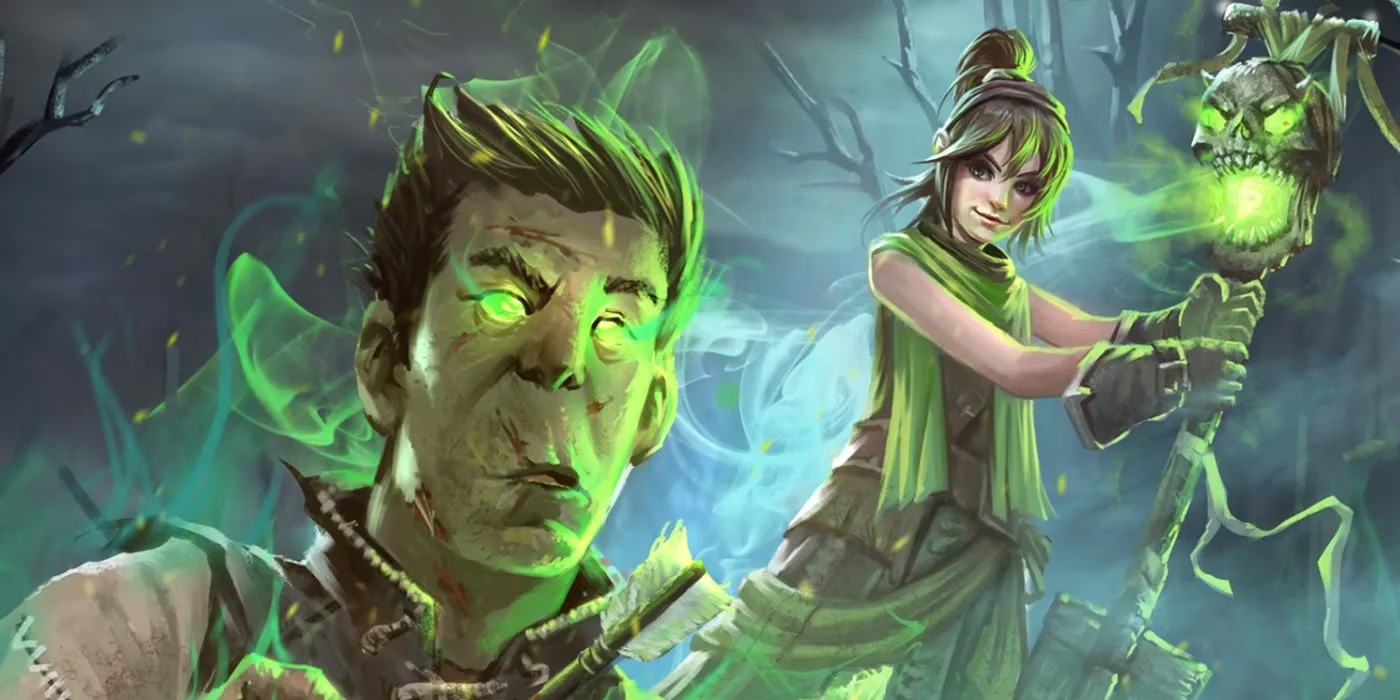
Fable Fortune was not a mainstream blockbuster like Hearthstone or Gwent. It was a card battler set in the Fable universe, and it managed to run 30 seasons during its short life. That number sounds impressive until players look at the population. According to RockPaperShotgun, the game had zero online players at one point and a peak of only six in January 2020. That is not a healthy community; it is a ghost town with card packs. 📉
| Detail | Information |
|---|---|
| Shutdown date | March 4, 2020 |
| In-game store | Disabled before closure |
| Existing unopened packs | Usable until servers closed |
| Seasons | 30 |
| Reported player peak in January 2020 | 6 |
| Reported online players at observation | 0 |
The final announcement came from the Fable Fortune team on the game's official website. It explained that all current and future game servers would be shut down, meaning no one would be able to play at all once the end arrived. The in-game store was disabled, so players could not purchase new items or card packs in the run-up to termination. Players who had previously purchased card packs and had not yet opened them, however, retained access to those cards until the servers closed. It was a small mercy in a sad situation.
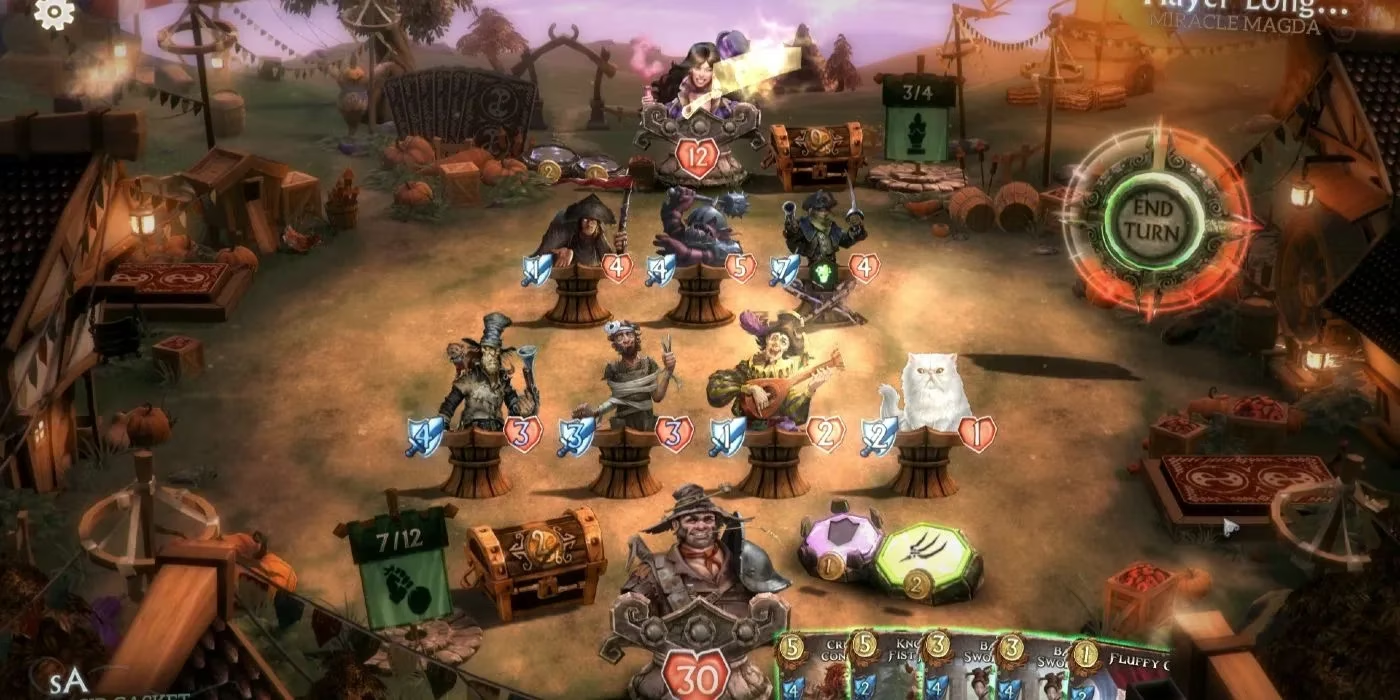
In the message to fans, the Fable Fortune team thanked everyone who had supported the project throughout its development. The team said, 'We'd like to thank everyone who has joined us for the journey and extend our gratitude to the entire Fable Fortune community.' That gratitude was genuine, but it could not change the math. A multiplayer card game needs matchmaking, updates, and a critical mass of players. Fable Fortune had neither the audience nor the momentum. 🎮
From a 2026 perspective, the shutdown is a clear case study in live-service risk. It also arrived in a crowded market. Gwent had The Witcher's huge audience. Hearthstone had Blizzard's ecosystem. Fable Fortune had nostalgia for Albion and a small team, but nostalgia alone cannot fill a lobby. It was not quite as popular as its predecessors, and the card-based approach, while enjoyable to some, never became the main event fans wanted.
Relatedly, Lionhead wanted to make Fable 4 instead of Fable Legends. That detail matters because it shows where some developers' hearts were. Fable Legends was another multiplayer-focused spin-off that never fully launched before cancellation. Fable Fortune followed a similar path: a side project that could not replace the mainline RPG fans craved. It was a spin-off in a franchise that had already trained players to expect big worlds, moral choices, and British fantasy humor. A card game could offer a slice of that charm, but it could not offer the whole meal.
Still, not every fan hated it. Some enjoyed the simpler card-based approach. They liked collecting cards, building decks, and seeing Fable's quirky world in a new genre. When the shutdown was announced, those players lost a game they genuinely supported. The Fable Fortune community may have been small, but it was real. For them, the closure was not just a business decision; it was the end of a hobby. 😔
By 2026, the mainline Fable series has moved on. The franchise's biggest hope is the reboot from Playground Games, which was announced after Fortune's closure and has carried the series' mainstream ambitions into the current console generation. Whether that project delivers or not, it represents the kind of big-budget return that fans wanted all along. A card game was never going to satisfy that demand forever. The series needed a new mainline entry, not just a side quest.
Fable Fortune's failure does not erase the original games' legacy. Fable, Fable II, and Fable III remain beloved for their humor, morality systems, British fantasy charm, and player choice. They were flawed, ambitious, and memorable. The spin-off simply could not capture that magic in a sustainable multiplayer format. It was a small deck in a game that demanded a full hand. 🧙
Could Fable Fortune have survived with better marketing, cross-play, or a single-player campaign? Maybe. But in 2026, hypotheticals do not change the outcome. The servers are off, the store is gone, and the community has scattered. The only thing left is the lesson: a famous IP can open doors, but it cannot keep them open without players. That lesson applies to every publisher hoping to turn a beloved franchise into a live-service card game or multiplayer spin-off.
Fable Fortune's story is therefore both sad and useful. It reminds developers that live-service games are not guaranteed successes, even when they borrow from a legendary franchise. It reminds fans that spin-offs are not replacements for sequels. And it reminds everyone that a shutdown announcement can be polite, grateful, and still final. The team thanked its community; then the lights went out. ⚰️
Today, in 2026, Fable fans are looking forward, not backward. The series may still have a future in Albion, but Fable Fortune is a footnote. Its 30 seasons, its tiny player counts, and its March 2020 closure all point to one conclusion: the card game was dealt a bad hand, and no amount of Fable nostalgia could turn it into a winning deck. The franchise's next chapter will have to be written somewhere else.
Recent analysis comes from GamesIndustry.biz, and it helps frame Fable Fortune’s 2020 shutdown as a familiar live-service problem: without sustained engagement and a critical mass of players, even recognizable IP can’t justify ongoing server, support, and update costs. In the context of a crowded digital card-game market, the game’s dwindling population and disabled store read less like a sudden collapse and more like the predictable end-state of a niche multiplayer product that couldn’t reach stable matchmaking or long-term monetization momentum.