In the spring of 2016, Lionhead Studios' sudden closure cast a long shadow over the Fable franchise. Publicly, the studio had been developing Fable Legends, an asymmetrical multiplayer experiment. Privately, another project was taking shape: Fable Fortune, a collectible card game set in the same whimsical and morally charged universe. When Fable Legends was cancelled, Microsoft gave permission to Flaming Fowl Studios—a new team founded by former Lionhead members—to continue work on Fable Fortune. The studio lacked a publisher, so it turned to Kickstarter. The campaign was scheduled to begin on Tuesday, May 31, 2016, and it presented the game as both a love letter to Fable and a deliberate attempt to improve the CCG genre.
🃏 A CCG With Fable's DNA
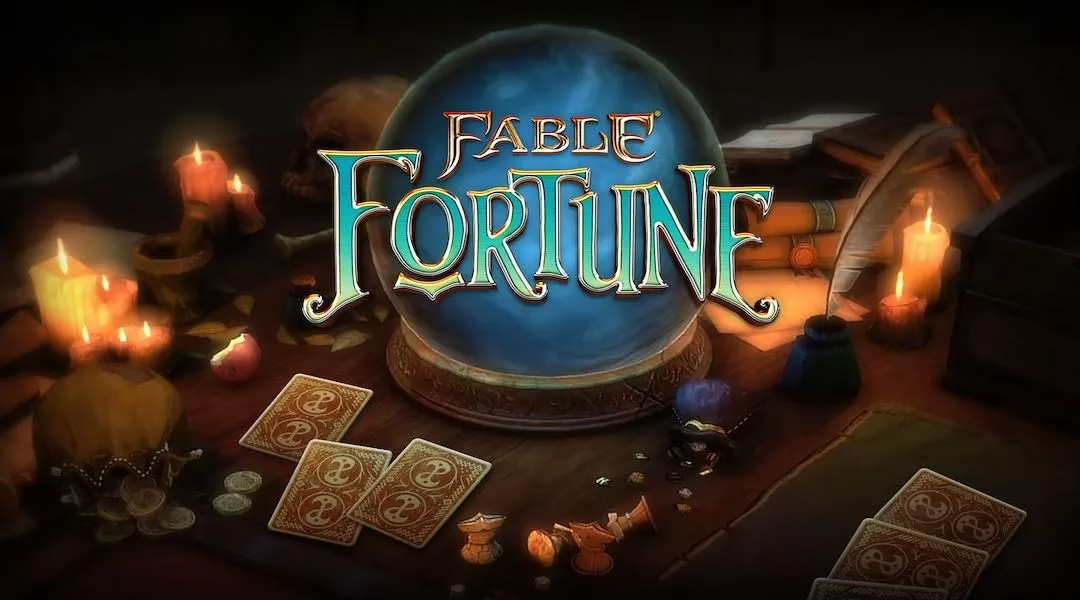
Fable Fortune was a collectible card game in the same broad lane as Hearthstone, but developer Mike West said the team wanted to 'improve the genre.' That ambition appeared in several planned features: a stronger art style, leveling for heavily played cards, and a full cooperative mode against AI bosses. The Fable universe supplied the rest. Characters, locations, oddball humor, and morality choices gave the project a recognizable identity at a time when many CCGs were competing for the same audience. A better art style was not merely cosmetic; it was meant to help the game stand out in a crowded field. The cooperative mode was equally notable, because it offered a structured alternative to purely competitive play. By combining those ideas with Fable's established tone, Flaming Fowl hoped to make a card game that felt familiar enough to learn and strange enough to remember.
⚖️ Morality as a Mid-Match Mechanic
Since its inception, Fable had emphasized morality choices, so a good-versus-evil concept in Fable Fortune was natural. About halfway through a match, a player would be asked to make a choice by completing certain objectives. The Kickstarter described effects that could alter a hero's powers or even let cards take on new forms. Could such a system really reshape a card game? The pitch suggested yes: the choice introduced a wide range of options that could dramatically alter the board. This mechanic was likely the clearest way Fable Fortune could stand out from the pack. It also connected the card game to the franchise's oldest obsession—whether power should be used for noble or selfish ends—without reducing that idea to a simple cosmetic label.
🧩 From Fable 2 Pitch to Kickstarter Prototype
Some might be surprised to learn that Fable Fortune was initially pitched as part of Fable 2. It never made its way into the 2008 release, but the concept never left the minds of the development team. After Lionhead's closure was announced, some of the team began work on a playable prototype in the hope of using it as a sales pitch. That prototype was set to form the backbone of the announced beta, which would be available to Kickstarter backers. Backers would also be able to join an exclusive forum and participate in the development process. Since the game had already been in development for more than a year, Flaming Fowl planned to have a beta ready shortly after the campaign concluded. If funding was met, a closed beta would follow shortly after the campaign ended. The team expected the game to release early the following year, with Fable Fortune targeting an early 2017 release.
📅 Key Facts at a Glance
| Element | Detail |
|---|---|
| Developer | Flaming Fowl Studios |
| Project | Fable Fortune |
| Genre | Collectible card game |
| Public campaign | Kickstarter |
| Campaign start | Tuesday, May 31, 2016 |
| Planned beta | Shortly after the campaign |
| Target release | Early 2017 |
| Signature idea | Mid-match good vs. evil choice |
🔍 Why It Still Reads as a Time Capsule
From the vantage point of 2026, the Fable Fortune pitch reads like a time capsule from a turbulent moment in the franchise's history. It shows a small team trying to preserve a universe after its original studio had closed, while also trying to compete in a crowded CCG market. The Kickstarter language was cautious but hopeful: a prototype existed, a beta was planned, and backers were invited into the process. What made the project distinctive was not simply the Fable name. It was the promise that morality—the series' long-running obsession—could become a mechanical twist rather than a cosmetic choice. Could a card game make good and evil feel meaningful in the middle of a match? That question gave Fable Fortune its best chance to be more than another Hearthstone-style challenger. In 2026, that ambition remains the most interesting part of the story, and it explains why the project is still worth examining as a case study in franchise survival, genre ambition, and the risks of building a game without a publisher.