In 2026, the long-running Fable 4 rumor cycle has finally lost its mystery. What began as an annual E3 wish, a leak, and a fan theory has become a confirmed reboot from Playground Games, built for Xbox Series X/S and PC. The question is no longer whether Albion will return, but what kind of Albion should return. The answer, as it has been for years, points toward a clean reboot rather than a numbered sequel.
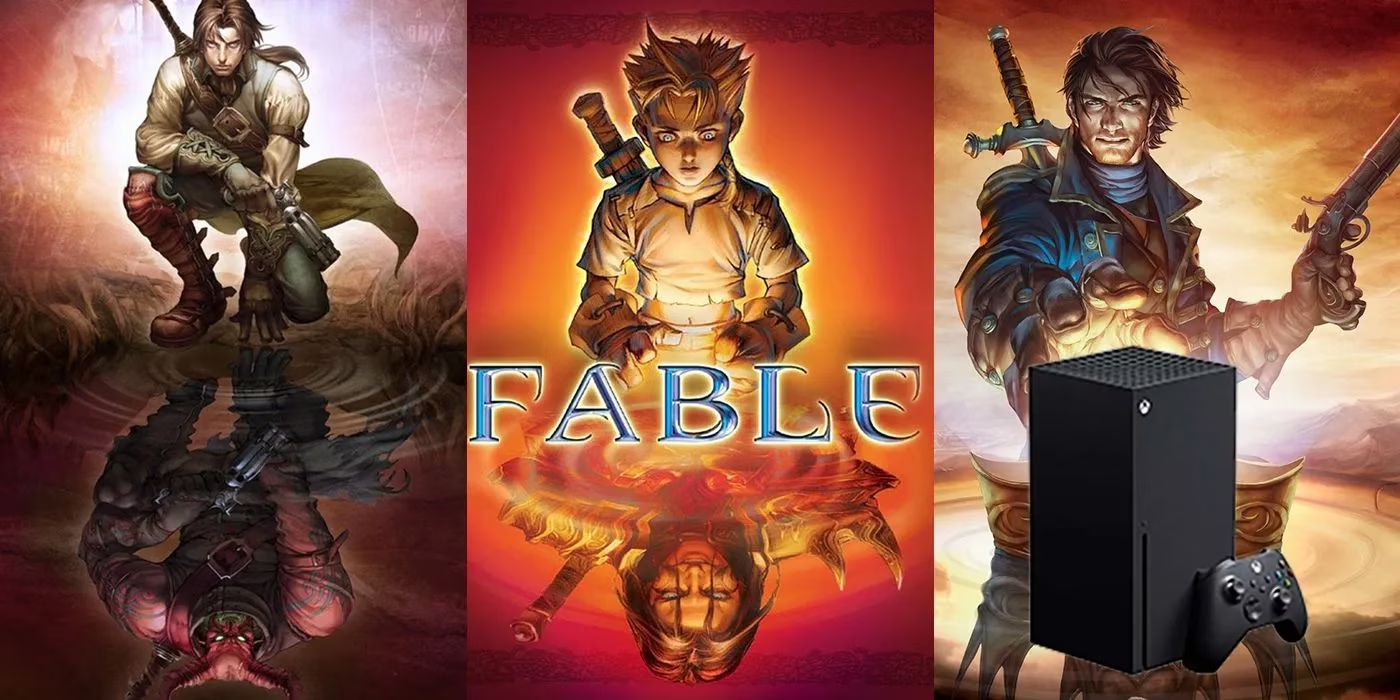
The original trilogy always changed with the times. Fable was a simple fantasy hero's tale, innocent and storybook-like. Fable II pushed Albion into a steampunk age of firearms, industry, and expanding moral compromise. Fable III turned the hero into a rebel, then a monarch, then a ruler whose choices could bless or break a nation. Even the spin-offs, such as Fable: The Journey, experimented with tone and perspective. These shifts were not random; they were woven into the world's identity. Albion grew, and its heroes grew with it.
| Era | Tone and Setting | Central Fantasy | Legacy |
|---|---|---|---|
| Fable | Medieval fantasy | A boy becomes a hero | Origins of the Guild |
| Fable II | Steampunk revolution | A hero rises in a changing world | Industry and firearms |
| Fable III | Industrial monarchy | Rebel, ruler, reformer or tyrant | Political choice |
| Fable: The Journey | On-rails fantasy | A companion's journey | Experimental spin-off |
| Fable (2026 reboot) | New Albion | A fresh hero, a fresh legend | Rebirth, not continuation |
One thread tied the old games together: Theresa, the blind Seer and sister of the first Hero. She appeared across centuries, guiding heroes and making Albion feel like a single, evolving place. But that thread cannot carry a new game forever. Theresa dies in a later novel, and a decade-long gap has made direct continuity more of a burden than a gift. If a new Fable simply replaced her with another cryptic guide, players might spend more time mourning what is missing than exploring what is new. A reboot avoids that trap.
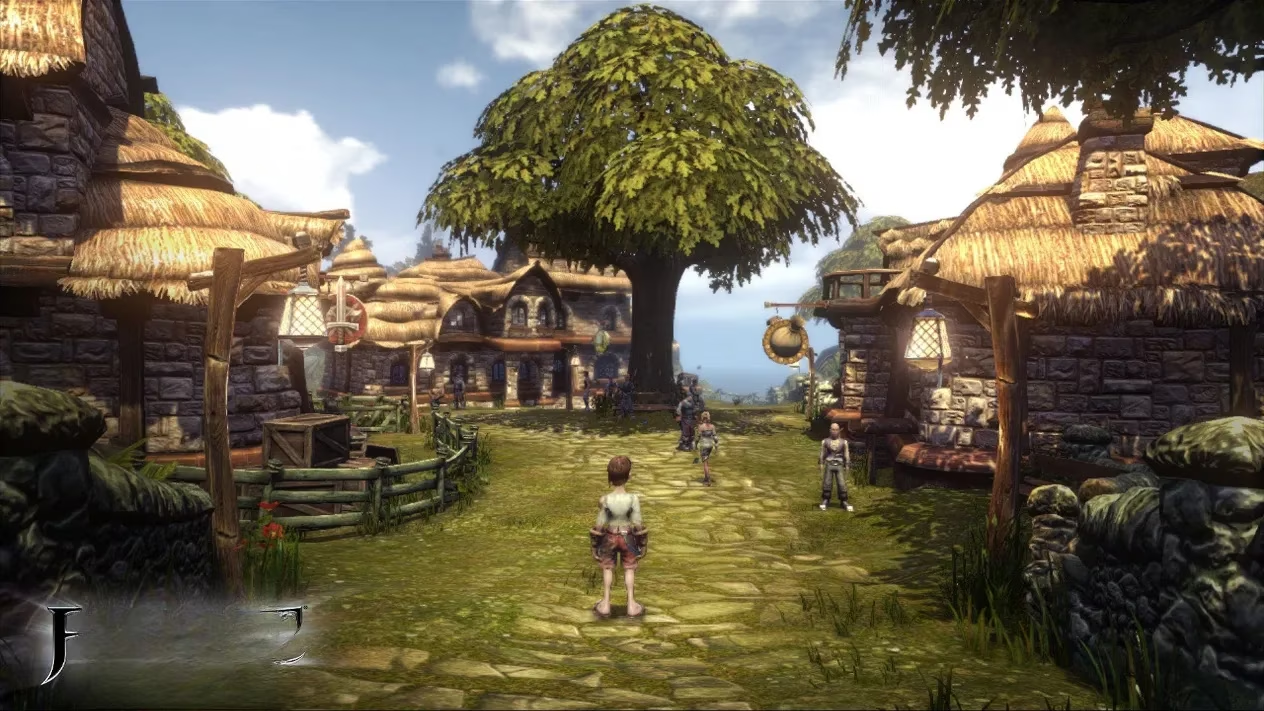
What does a reboot actually solve? It frees the developers from old choices, old endings, and old canon. It allows Albion to begin again, perhaps in an earlier, stranger age. It welcomes veterans who remember the first game's charm, and it invites newcomers who have never touched a Fable title. Most importantly, it lets the series reintroduce its core pillars without pretending that nothing has changed. The old fans are not forgotten; they are simply not imprisoned by continuity.
In 2026, Xbox's first-party lineup looks very different from the Xbox One era. Microsoft owns a wide collection of studios, Game Pass has changed how players discover games, and exclusives matter more than ever. Fable is no longer a rumor used to fill an E3 gap. It is a flagship project with the weight of a beloved franchise behind it. That weight is both an advantage and a risk. A reboot can be a system seller, but only if it understands why the original games mattered.
Some commentators once argued that Fable 4 should be Xbox's Breath of the Wild: a bold reinvention that honors a legacy while breaking its conventions. That comparison remains useful in 2026. The Legend of Zelda did not need to be a direct sequel to Ocarina of Time to feel essential. Likewise, Fable does not need to resolve the choices of Fable III to be meaningful. It needs a new hero, a vivid Albion, sharp humor, moral temptation, and the feeling that every NPC has a life beyond the player's quest.
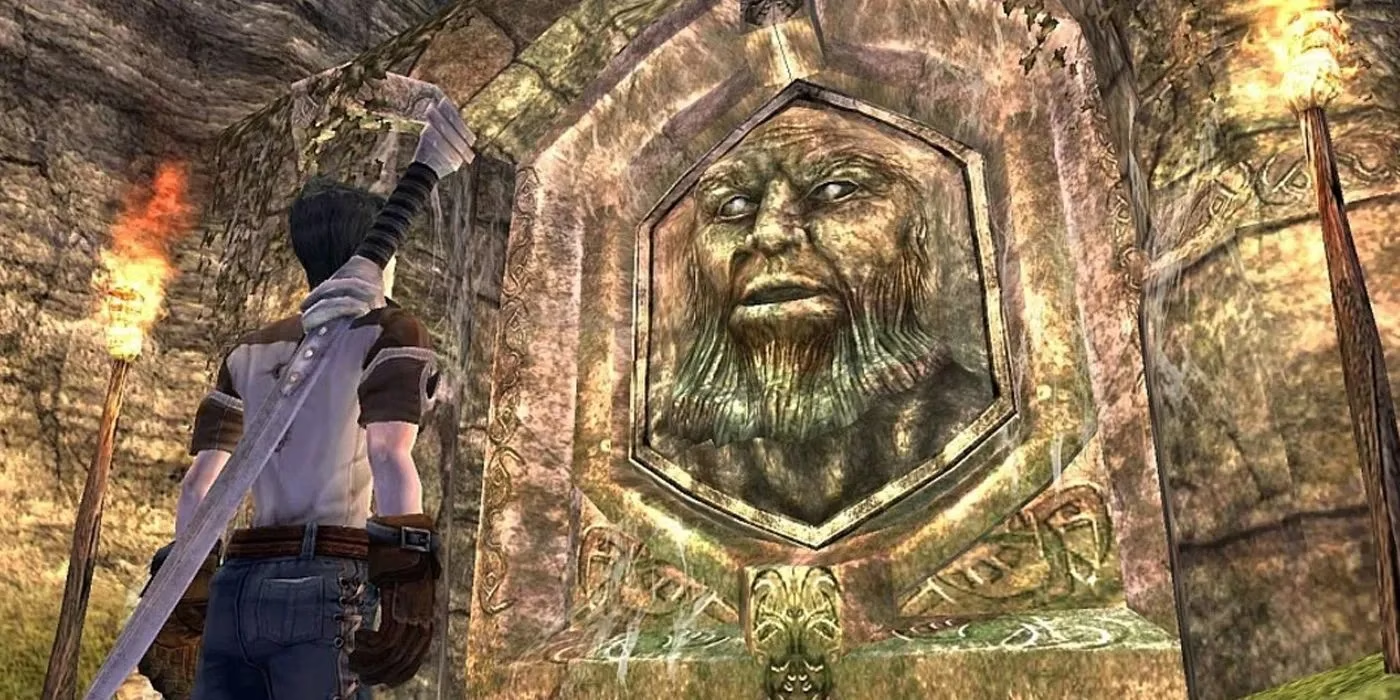
A successful reboot should keep certain things: the British wit, the fairy-tale darkness, the morality system, the emphasis on reputation, and the joy of watching a small hero become a legend. It should reinvent others: combat, open-world design, co-op, and the consequences of choice. It should leave behind the demand for numbered continuity. The question is not whether Fable 4 exists in some official ledger. The question is whether Fable can feel new again. A reboot is the best chance to answer yes.
Of course, risks remain. Playground Games is admired for Forza Horizon, but Fable demands a different kind of craft. Can the studio capture Albion's eccentric voice? Can it balance comedy with genuine stakes? Can it make morality feel more than a binary meter? In 2026, those questions are part of the excitement. A reboot is not a guarantee of quality, but it is a guarantee of freedom.
Ultimately, Fable has always been a story about heroes in a world that refuses to stand still. A direct sequel would have to drag ten years of lore behind it. A reboot can begin with a single step into a new Albion. For Xbox, for Playground Games, and for players who have waited since 2010, that is not a retreat. It is the most sensible way forward. Albion can change again, and this time, it can do so without the weight of a missing Seer or a finished trilogy holding it back.