Once upon a console generation, Microsoft owned a kingdom of wit and consequence. The Fable franchise was, for a time, a huge success, a British-flavored role-playing series whose humor recalled MediEvil and whose morality system made every horn or halo visible on a hero's skin. The first two Fable games earned critical acclaim for good reason. They assembled casts full of stars: James Corden, Zoe Wanamaker, Stephen Fry, and later Michael Fassbender and Naomie Harris. They mixed magic, archery, and swords with intricate details. They gave players a pet as a friend in Fable 2 and Fable 3, and they built towns brimming with wit and detailed world-building. For many Xbox owners, Albion became a second home, a place where a chicken could be kicked and a choice could echo for decades. 🐔
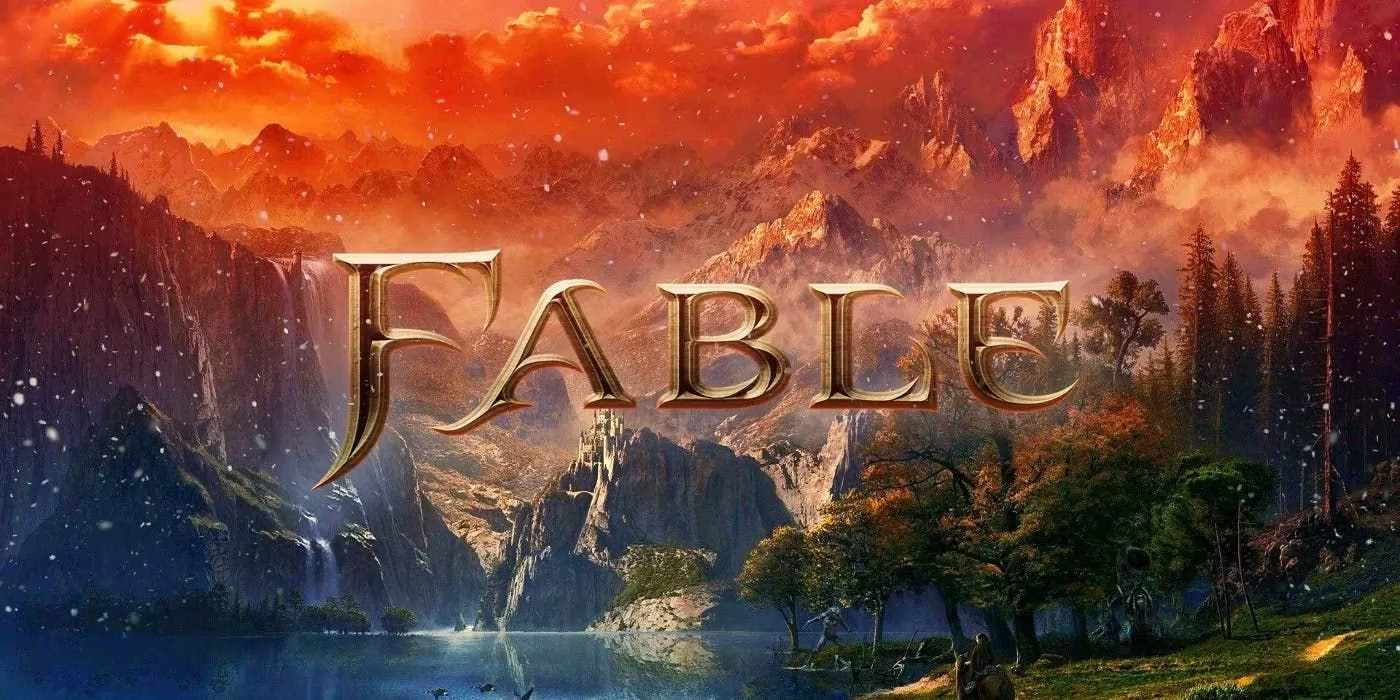
The franchise experienced many bumps in the road, yet its reputation remained sterling. By 2026, the conversation has shifted. The long-rumored Fable reboot from Playground Games is no longer just a rumor whispered in forums; it is a real project with a real studio and a real weight of expectation. Microsoft should care about this reboot because of increasing nostalgia, the franchise's promise, and the enduring popularity of RPGs. But the story of Fable is not merely a business case. It is a tale of ambition, overpromising, and a world that refused to die.
The Ghost of Promises Past
Fable had issues as a franchise. The biggest recurring issue was not delivering on promises made to fans. Before the first game, claims had been made that the player would see a whole hero's lifetime, that planting an acorn would grow a tree, and that players could have children in the game. Peter Molyneux, founder of Lionhead, later admitted making game features up. Some promises were eventually fulfilled. Having children arrived in the following game, which also covered the childhood of the player's hero. Yet a game not delivering what was promised is never a good thing. The gap between Molyneux's words and the final product became a canyon that fans learned to cross with a mixture of love and disappointment.
Molyneux has said he wants Fable 4 to have rideable dragons. Lofty wants, however, are not what defined the most critically successful installment in the franchise, Fable 2. That game was an engaging and funny world that delivered side quests with repercussions. Its charm was not a coat of paint; it was the load-bearing wall. A game that operates with charm should be the goal of future Fable games. Fable had a huge part in the morality craze of the late nineties, and since then RPGs like The Witcher 3 have delivered the concept more fully. With that said, few games have revisited physical repercussions to losing fights and doing evil deeds as well as the Fable games. The scars on a hero's body were a ledger of failure and cruelty, and that idea still has teeth.
How Albion Lost Its Compass
The demise of Fable came from a lack of direction from the third game onward. The third game concentrated on one narrative and did not allow players to explore the game in the same way as previous titles. From that point on, Microsoft asked for some odd games from Lionhead. There was a Kinect game, a beat 'em up, and Fable Legends, a cooperative action role-playing game that was cancelled in development. Eventually, the series lost its charm as it adapted to different genres, with talk that Lionhead wanted to focus on Fable 4 and not Legends. Albion became a cartographer's error: the map was redrawn so often that the landmarks blurred.
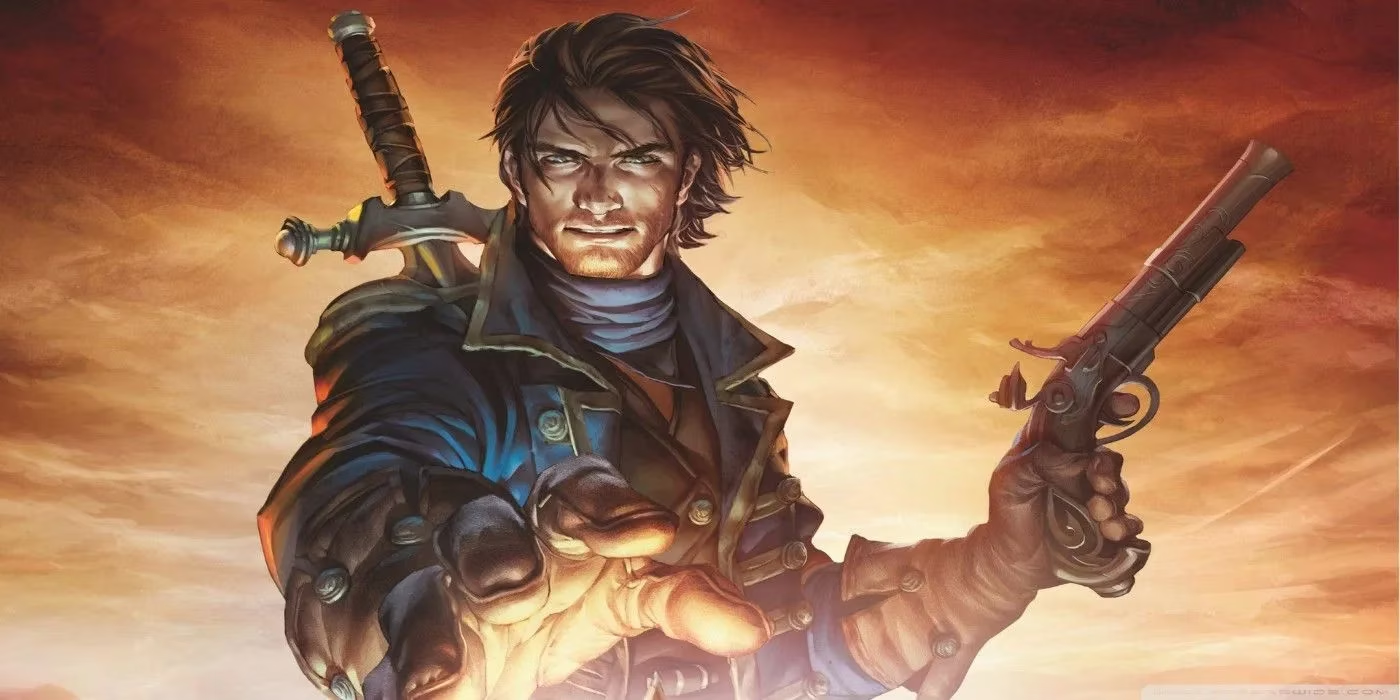
There have been leaks about Fable 4, and although there has been no concrete confirmation of every rumor, it looks like there would be an abundance of side quests and a completely open world. This largely seems to continue from where the core Fable series was left, and it would undoubtedly excite fans if the franchise were to receive another sequel. There is also a rumor that the scriptwriters of Batman: Arkham will join Fable 4. That would be a winning combination if an impressive cast could once again be hired. However, Fable should not only be rebooted because it was a good game with a significant fan-base.
The Business Case for a Reboot
Role-playing games were the third best-selling genre of video games in 2018. That does not sound like too much, but in an industry valued over 150 billion dollars, it is significant potential profit. Furthermore, a new generation of consoles will undoubtedly see a new set of exclusives battling to sway consumers. Gears 5 did finally knock Fortnite off the top of the digital charts on Xbox, if only for a short time, and this success can be replicated. The Fable franchise, like Gears of War, is often considered among the best Xbox originals. Franchises are incredibly important in convincing consumers to purchase a console. The possibility of having a beloved RPG like Fable as an exclusive is surely too good for Microsoft to miss. 🎮
| Reason for a reboot | Why it still matters in 2026 |
|---|---|
| Nostalgia | Fans who grew up in Albion now have disposable income and children of their own. |
| RPG popularity | The genre remains a commercial titan, and open-world RPGs dominate player attention. |
| Exclusive power | Console makers need system-sellers, and Fable is a recognizable Xbox name. |
| Unfinished business | The series never received the send-off its best ideas deserved. |
The significant rumors surrounding a new Fable indicate that fans are desperate for a new title. There have been talks of EA, BioWare, and Guerrilla devs being hired for Fable 4, but whether the talks, rumors, and speculation become concrete facts remains to be seen. Yet in an age when exclusives are paramount, RPGs are selling well, and the factors that Fable implemented have been improved upon by the industry as a whole, a reboot seems like a logical step. By 2026, subscription services and cloud gaming have changed the battlefield, but they have not erased the simple truth that a great world is a great world. A reboot is not a resurrection machine; it is a second chance, and second chances are rare in any industry.
What the Next Fable Must Remember
The next Fable must remember that charm is not a garnish. It is the recipe. It must remember that morality should have physical and narrative consequences, that side quests can bite back, and that a pet companion can make a lonely road feel like a home. It must remember the humor that made Albion feel British and strange and alive. It must remember that players do not need rideable dragons if the ground beneath their feet is full of stories. ⚔️
For the fans of Albion and the chicken kickers, whether a Fable should return has never been in doubt. The only question was whether Microsoft could remember why it mattered. In 2026, with a reboot finally taking shape, the answer feels closer than it has in years. The kingdom is still there, waiting for a hero who can keep a promise.