I still get a kick out of remembering the great Fable Legends gold leak of 2015. As a player who was glued to every scrap of closed beta gossip, I watched the whole microtransaction drama unfold like a slow-motion carriage crash. The game was supposed to launch as a free-to-play title with rotating heroes and villains, and Lionhead Studios had stressed that you could play the full experience without paying a penny. Everything was earnable through normal play — or so the official line went. Then a beta tester broke a signed NDA and dropped a screenshot of the in-game store called the Bank of Brightlodge, and the community lost its collective mind. 😅
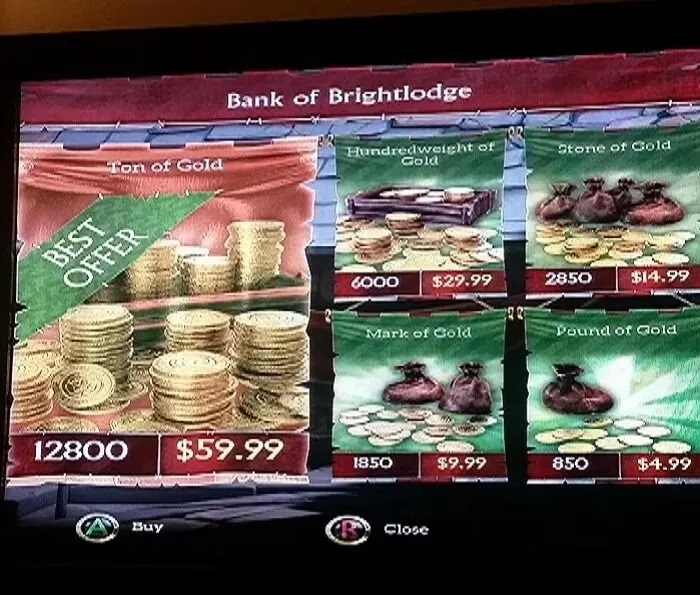
The leak came from a thread with the less-than-diplomatic title 'Here's one reason why Fable Legends is going to suck.' The screenshot revealed bundles of gold sold for real money, and the prices were, to put it mildly, a talking point. Here is the table that set the forums ablaze:
| Gold Bundle | Gold Pieces | Real-Money Price |
|---|---|---|
| Pound of Gold | 850 | $5 |
| Mark of Gold | 1,850 | $10 |
| Stone of Gold | 2,850 | $15 |
| Hundredweight of Gold | 6,000 | $30 |
| Ton of Gold | 12,800 | $60 |
I remember the reaction being a real mixed bag, as most microtransaction reveals tend to be. Some players were furious, and Lionhead caught plenty of flak on social media. The developer handled it professionally and did not deny that the feature existed, which was probably the smart play. Other beta testers rushed to the game's defense, saying that earning in-game currency was not overly difficult. According to them, the gold shop was more of a shortcut than a paywall. That context made the news sting a lot less, but the damage to the game's reputation was already done. In internet terms, the horse had bolted. 🐎
Looking back, Fable Legends was a game surrounded by question marks. It was originally announced two years earlier at Gamescom 2013, and then it quietly plugged along in a closed beta for what felt like ages. The last meaningful update came earlier in 2015 when Lionhead announced that the title would arrive on PC as well as Xbox One, and that it was switching to a free-to-play model inspired by League of Legends and Killer Instinct. The E3 2015 trailer hinted at a holiday 2015 release, but with a rapidly closing window and little to no marketing, the chances of that happening looked incredibly slim. By the time 2016 rolled around, the game still did not have a firm release date. ⏳
Now, writing this in 2026, I have to add the bittersweet update that the whole debate became academic. Fable Legends never launched. Microsoft cancelled the game in 2016, and Lionhead Studios closed its doors. The Bank of Brightlodge, the rotating heroes, the gold bundles — all of it vanished into the fog of what could have been. In hindsight, the microtransaction leak was a storm in a teacup compared with the real heartbreak for Fable fans. We did not lose a game to a gold shop; we lost a game, full stop. 💔
That said, the leak still offers food for thought. Free-to-play games need a way to stay profitable after launch, and microtransactions are one of the oldest tricks in the book. The question is never really whether a shop exists, but whether it respects the player's time. If beta testers could earn gold at a reasonable clip, then the prices were not necessarily a slap in the face. But trust is fragile. Once players smell a cash grab, they start voting with their wallets before the game even ships. The jury is still out on whether Fable Legends would have found its footing, but I suspect the model was ahead of its time in some ways and behind the curve in others.
Would I have bought a Pound of Gold? Probably not. I am the sort of player who hoards currency like a dragon and grinds through the boring bits. But I also know plenty of people with more money than free time, and for them, a shortcut is worth every penny. The real lesson is that transparency matters. If Lionhead had announced the shop on its own terms instead of letting a leaked screenshot do the talking, the conversation might have been a lot calmer. Instead, the internet did what the internet does: it jumped the gun and turned a pricing table into a symbol of everything wrong with modern gaming. 🎮
So here we are in 2026, reminiscing about a store that never opened and a game that never shipped. The Fable Legends microtransaction saga is a weird little time capsule — a reminder that players care deeply about fairness, that leaks always travel faster than press releases, and that sometimes the biggest controversy is not the one that kills a game. For me, the whole affair is a nostalgic shrug and a quiet wish that Lionhead had gotten a fairer shake. The gold was never the real story. The real story was a beloved studio running out of time. And that, dear readers, is the bitter pill I still swallow whenever someone brings up the Bank of Brightlodge. 💭
In-depth reporting is featured on The Verge - Gaming, whose industry coverage helps frame controversies like the Fable Legends gold leak within the bigger shift toward free-to-play monetization, platform strategy, and player trust. From that perspective, the Bank of Brightlodge debate was not just about bundle prices, but about how quickly a leaked storefront can reshape public perception of a game long before launch.