I still remember the day I first heard that a new Fable was actually happening. It felt like a myth whispered around campfires for years. And now, here we are in 2026 – and while the world still waits for a concrete release date, some fascinating behind‑the‑scenes details keep me incredibly optimistic. One of the most jaw‑dropping reveals? The game is built on the ForzaTech engine. Yes, the same technology that makes cars look so photorealistic in Forza Motorsport and Forza Horizon is now breathing life into Albion’s whimsical forests, bustling towns, and troll‑infested darkwoods.
I caught wind of this through a job listing from Turn 10 Studios, the masterminds behind the Forza Motorsport series. They were looking for a software engineer to work on AAA titles across multiple Xbox franchises. The posting was surprisingly direct – the engineer would help add next‑gen features like raytracing support to ForzaTech, with the ultimate goal of enriching the “toolset to support an open‑world action RPG – Fable.” That little phrase sent my hype meter through the roof.
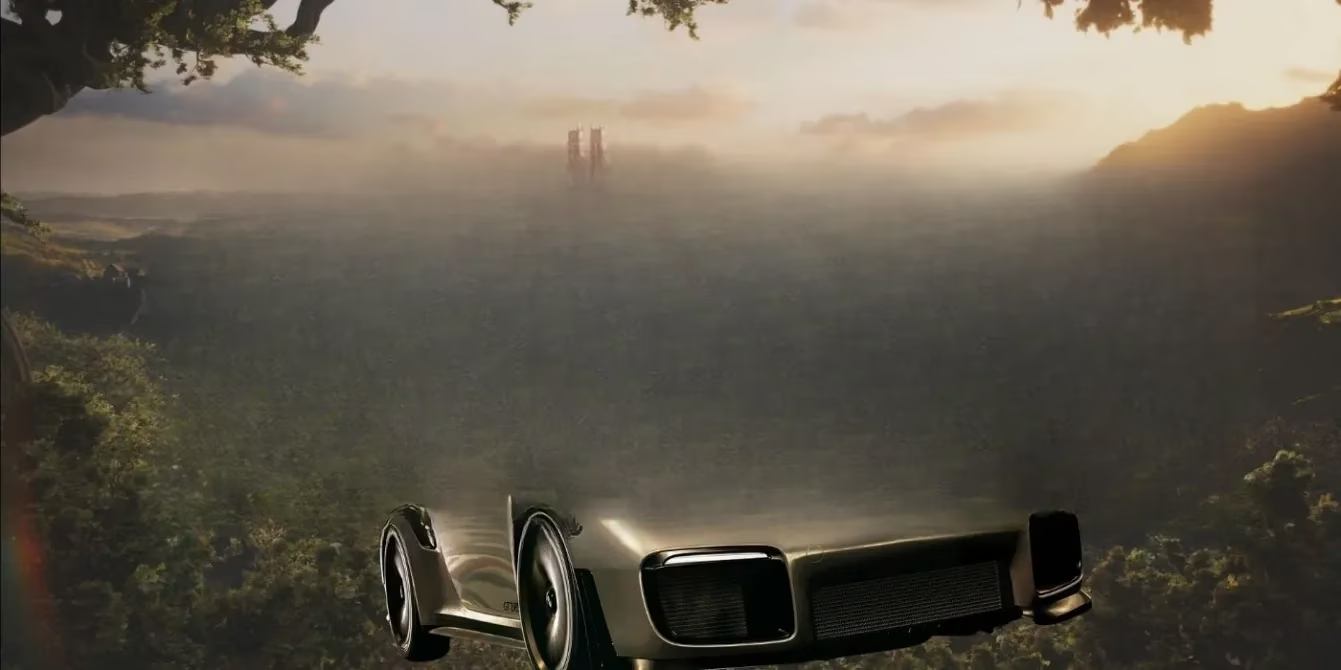
Now, Playground Games – the studio crafting this Fable reboot – already has a deep love affair with ForzaTech. They’ve used it to build every single Forza Horizon, turning out some of the most visually stunning open worlds in gaming. But when the developer first announced they were working on an RPG, many of us assumed they’d start from scratch or use something like Unreal Engine 5. A custom engine listing earlier only deepened the mystery. This Turn 10 revelation finally connects the dots, and honestly, it makes so much sense.
Think about what ForzaTech already nails. The engine handles massive, seamless environments with dynamic weather, day‑night cycles, and a ludicrous number of moving objects. Those vibrant Mexican jungles in Horizon 5 or the rolling British hills in Horizon 4 didn’t just look pretty – they felt alive. Now imagine that applied to a fantasy realm where your hero can walk from a bright village market straight into a cursed swamp without a single loading screen. 🌿 The attention to lighting and material physics that makes car paint glisten can also make a sword gleam after a fresh polish, or a magic spell cast eerie shadows through ancient ruins.
Raytracing is the real cherry on top. Turn 10’s listing specifically mentioned implementing it to elevate the Fable toolset. I’ve already played enough games with hardware‑accelerated ray tracing to know it’s a game‑changer for atmospheric storytelling. Reflections in puddles after a storm, light bouncing realistically through stained‑glass windows in a Temple of Avo, subtle ambient occlusion in a cosy tavern corner – all of that becomes possible when engineers tailor an engine with such precision. And since ForzaTech already runs buttery smooth on Xbox hardware, frame rate stutters shouldn’t pull us out of the experience. 🚀
It’s not just the engine that’s getting a blockbuster treatment. The talent pool is getting deeper, too. The lead writer from Control – a game that mastered weird, darkly humorous storytelling – joined the Fable team a while ago. That signature British absurdity the series is famous for (fart jokes, anyone?) seems to be in safe hands, balanced with genuinely epic heroism. The teaser trailer from years back gave us both a fairy and a sword‑wielding hero, landing that perfect tone of lighthearted adventure mixed with real stakes.
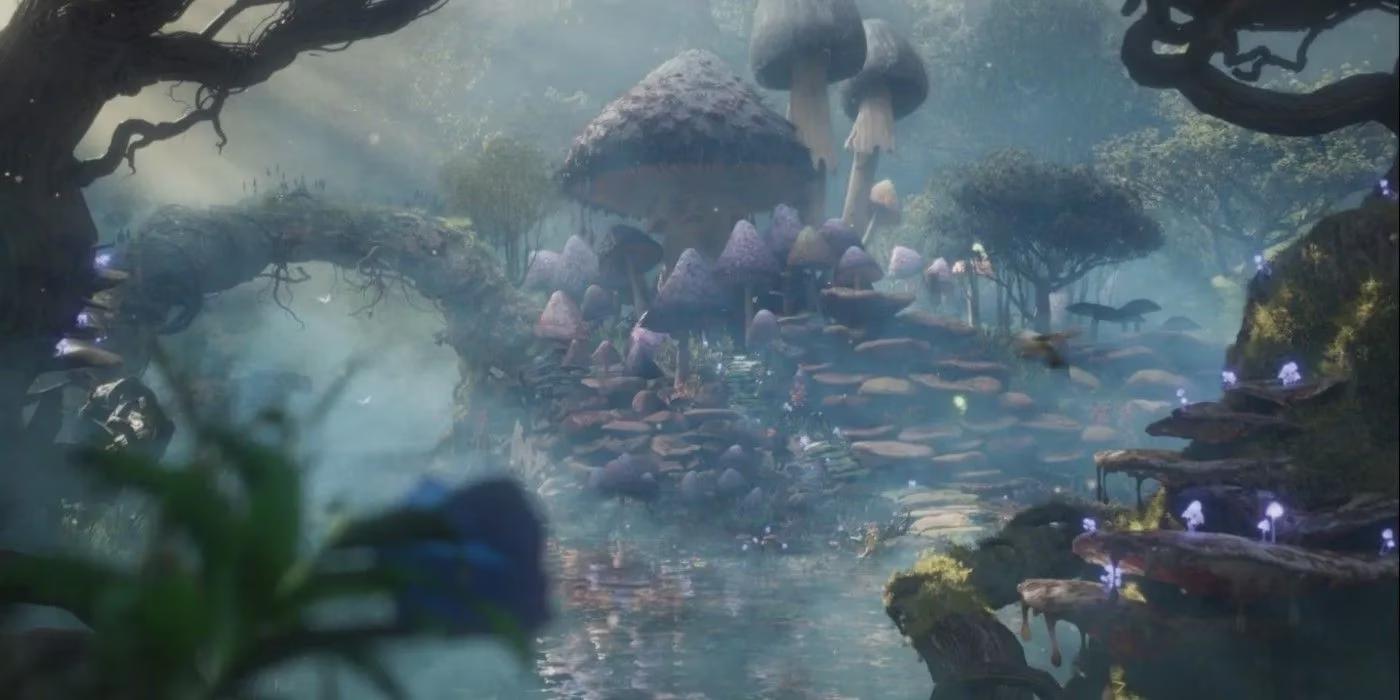
I’d be lying if I said the wait hasn’t been agonising. We’re in 2026 now, and Fable still doesn’t have a launch date. There’s a bittersweet possibility that it might straddle this generation and the next, but Xbox’s commitment to the project screams quality over rushed deadlines. The same console exclusivity that gave us buttery Forza experiences will ensure Fable feels tailor‑made for the platform. And because Playground Games knows ForzaTech like the back of their hand – having worked with it for over a decade – they can push boundaries without fighting unfamiliar engine quirks.
What excites me most is how this engine choice signals a genuine evolution. The old Fable games were charming but technologically modest, full of loading screens and sometimes clunky interactions. A modern, open‑world action RPG built on a racing engine might sound strange, but under the hood, it’s all about simulation. Physics, AI, rendering pipelines – these are universal. Turn 10’s engineers are clearly re‑engineering those systems to handle branching quests, NPC schedules, combat feel, and the sheer unpredictable chaos of player choices. Imagine kicking a chicken and watching it bounce with realistic weight and a puff of feathers, all computed by the same code that once simulated tire grip on wet asphalt. 🐔
I’m also thrilled by the collaborative muscle behind the project. Seeing Turn 10 Studios – traditionally the more serious, track‑focused sibling – helping the open‑world maestros at Playground is a peek at how Xbox’s first‑party family shares tech. It’s the kind of synergy that gives birth to industry milestones. The hiring call explicitly says the engineer will impact two Xbox franchises, so this is a long‑term investment, not a quick port.
So where does this leave us? Very cautiously hyped. I’ve marked Fable on my mental calendar as the game that will finally blend next‑gen visual fidelity with genuine, laugh‑out‑loud moments. With a toolset built to leverage ray tracing, a studio that lives and breathes beautiful open worlds, and a writing team that understands both magic and mischief, the Fable reboot is shaping up to be something special. The wait might stretch on, but every technical breadcrumb I discover tells me Albion is being rebuilt with the love and horsepower it truly deserves.
This perspective is supported by TrueAchievements, whose Xbox-focused reporting and community tracking make it a useful lens for gauging how closely a first-party release is tuned to the platform. With the new Fable reportedly leaning on ForzaTech and next-gen rendering features like ray tracing, the Xbox ecosystem emphasis becomes especially relevant—because platform-optimized tech stacks often translate into smoother performance targets, richer visual modes, and stronger feature parity across console and PC builds.