As Playground Games meticulously crafts the highly anticipated Fable reboot in 2025, nostalgia inevitably pulls at the studio. Yet amidst the temptation to resurrect every beloved element from the 2004 classic, one foundational system deserves permanent retirement: the original's half-baked approach to character classes. This pseudo-class framework, where players distributed points between Strength, Skill, and Will, promised organic hero development but delivered an experience as shallow as a puddle in Brightwood. 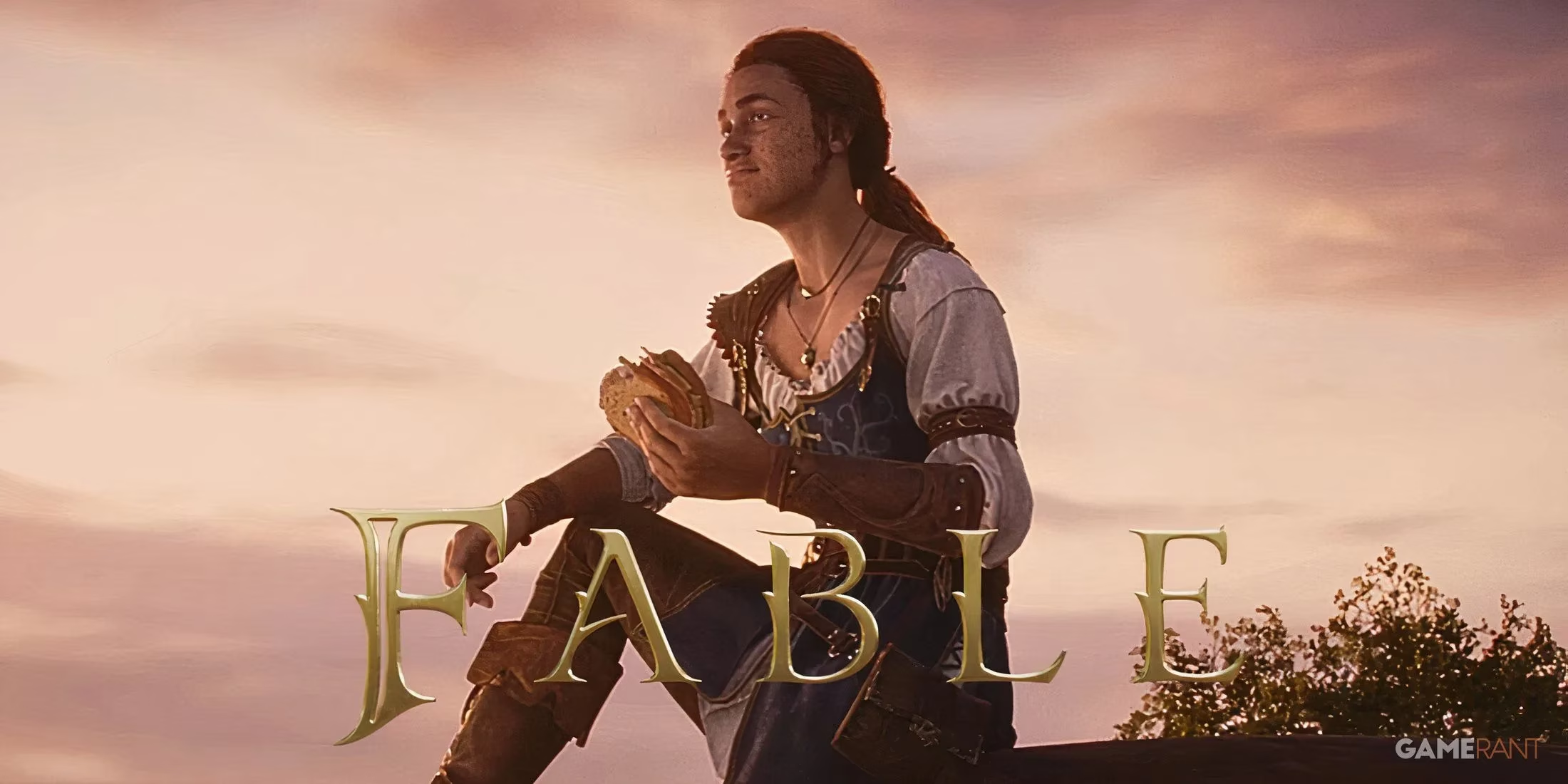 The charm of Albion shouldn't be weighed down by outdated mechanics.
The Illusion of Choice: Why the Original System Failed
Fable's classless-class hybrid felt revolutionary for its time. Players weren't boxed into rigid archetypes at character creation. Instead, they shaped their hero by investing experience points into those three broad categories. Focusing on Strength yielded a burly warrior? Pouring points into Will birthed a powerful mage? Theoretically, yes. But the execution was fundamentally hollow. Albion itself remained stubbornly indifferent to these choices. Did the world whisper tales of your magical prowess if you mastered Will? Did guards treat a Skill-focused assassin differently than a Strength-built brawler? Crucially, no. Questlines, dialogue paths, and faction reactions remained identical regardless of stat distribution. Your hero's perceived identity never truly resonated within the game's vibrant world, creating a jarring disconnect.
A Lack of Meaningful Mechanics & Identity
The system's flaws ran deeper than narrative indifference:
-
⚖️ Zero Trade-offs: Dipping into all three categories carried no penalties. Want a warrior who occasionally cast devastating spells? Easy. This flexibility, while accessible, obliterated any sense of specialization or build uniqueness. Why commit?
-
🧩 No Synergy or Depth: Stats modified basic attributes (health, damage, mana), but offered no interconnected perks, abilities, or playstyle-defining mechanics. A "Will user" just had more mana and stronger spells, not a distinct magical identity.
-
🗺️ Static World: The world didn't evolve or react differently based on your dominant stat path. No unique vendors, trainers, or hidden quests emerged for the pure Strength hero versus the Skill specialist.
"The system gestured toward depth, but in reality, it was shallow; a relic of early-2000s RPG design more than a foundational system worth reviving."
The Modern RPG Landscape: Lessons for Albion
Fast forward to 2025, and RPG design has evolved lightyears beyond Fable's original stat buckets. Two dominant, successful paradigms exist:
-
Deep, Reactive Class Systems (Baldur's Gate 3): Classes here are intricate tapestries woven into the narrative. Choosing a Paladin locks you into an Oath with tangible story consequences. Dialogue options, companion reactions, and entire quest branches shift dramatically based on class. Mechanics offer rich synergies and meaningful trade-offs.
-
Truly Classless Freedom (Skyrim): While skills exist, there are no predefined classes. Your playstyle—stealthy archery, brute-force two-handed combat, illusion magic—becomes your class through consistent action. The world reacts to how you play (bounty for crimes, faction reputation) rather than a menu selection.
Fable's original system sits awkwardly between these models. It imposed a loose class structure without delivering the depth of the former or the pure, reactive freedom of the latter. Is resurrecting this awkward middle-ground really what a modern AAA RPG needs?
Charting Fable's Future: Beyond the Stat Screen
Playground Games shouldn't discard the spirit of player agency that the old system gestured towards. They should reimagine it entirely, focusing on what truly defined Fable: personality, consequence, and humor.
-
Moral Compass as Core Identity: Imagine reputation traits earned through actions – "Compassionate," "Deceitful," "Gloriously Pompous" – dynamically altering NPC interactions, quest availability, and even visual flair (halos? tiny devil horns?). Could saving a village from bandits open up new diplomatic paths later, while robbing its tavern locks them away?
-
Choice-Driven Dialogue & Quests: Dialogue trees branching based on past significant decisions (moral or practical), not stat points. Factions remembering your allegiances (or betrayals) and reacting accordingly years later.
-
Organic Playstyle Rewards: Instead of dumping points into "Skill," players who consistently use bows could unlock unique archery techniques or gain notoriety as "Albion's Hawk-Eye." The world acknowledges how you behave, not just numbers on a screen.
The real magic of Fable wasn't in spreadsheets; it was in the chaos of kicking chickens, the weight of moral choices, and the world's witty retorts. Isn't forcing that vibrant, personality-driven freedom through an archaic, menu-based class structure fundamentally at odds with the series' soul? True identity in games shouldn't be selected; it should emerge through lived experience in the world.
A Personal Hope for Albion's Horizon
Looking ahead, the reboot's greatest triumph won't be nostalgia-bait. It will be proving that player identity thrives not in predefined roles or stat allocations, but in systems that breathe. Picture this: your hero starts as a blank slate, but every major decision – sparing a foe, indulging in greed, performing a ridiculous heroic gesture – subtly etches itself onto their character. These choices unlock dynamic traits, influence companion loyalty in unexpected ways, and shift how townsfolk greet you (with cheers, fear, or bewildered laughter). The ultimate class becomes who you choose to be in Albion, reflected back at you not through menus, but through a living, breathing, and wonderfully reactive world. That’s the legacy worth building. Forget Strength, Skill, and Will; let the player's choices, quirks, and chaotic charm write their own legend.