I still remember watching the Xbox Games Showcase when a tiny fairy darted through an enchanted forest, weaving past swords and skulls like it owned the place. I’m not gonna lie, that one cinematic teaser was enough to remind me why I fell in love with Fable in the first place. After Fable 3 leaned hard into Albion’s industrial age, the franchise felt like it had drifted from its fairy-tale soul. But the new reveal — noticeably not called Fable 4 — felt like a deliberate homecoming to fantasy.
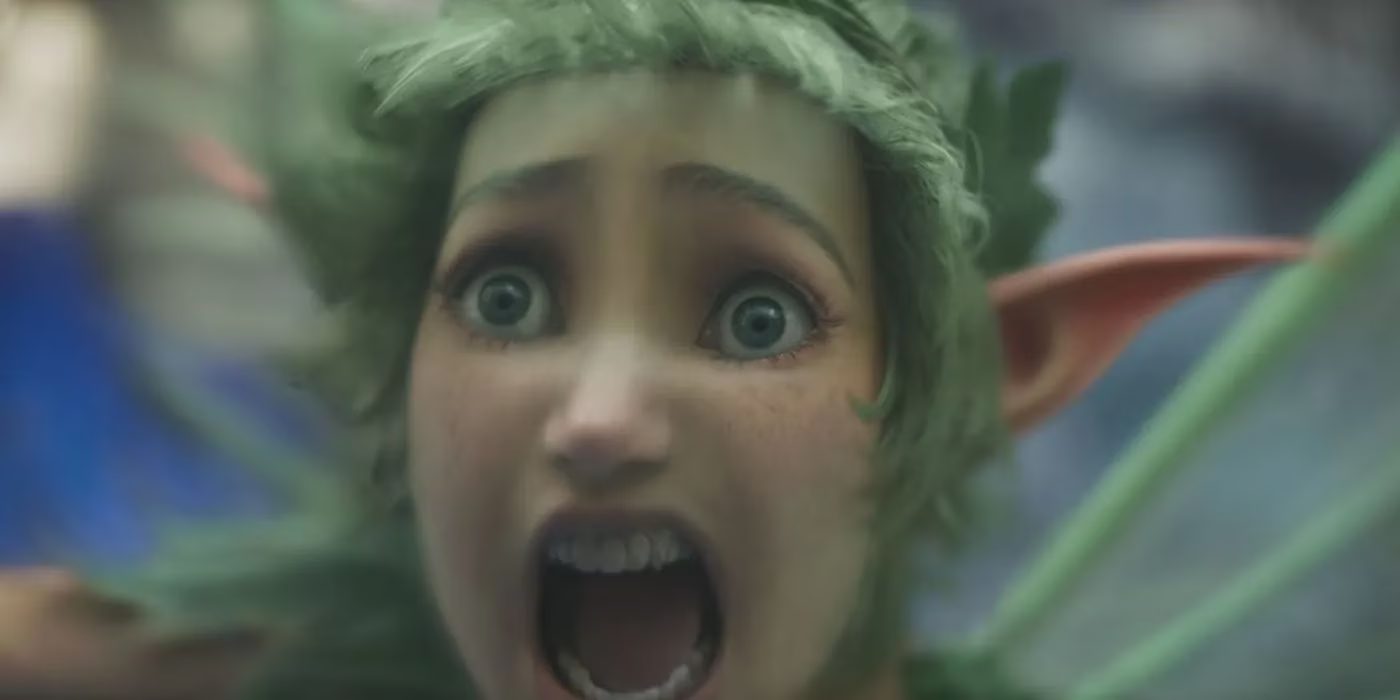
The name choice is interesting. Microsoft and Playground Games didn’t slap a number on it, and I think that matters. Fable 4 would have implied a continuation of the timeline that led to factories and industry. Instead, the reveal showed villages, forests, and an enchanted woodland full of magic. Those are classic medieval RPG signposts. For longtime fans, that’s a huge deal.
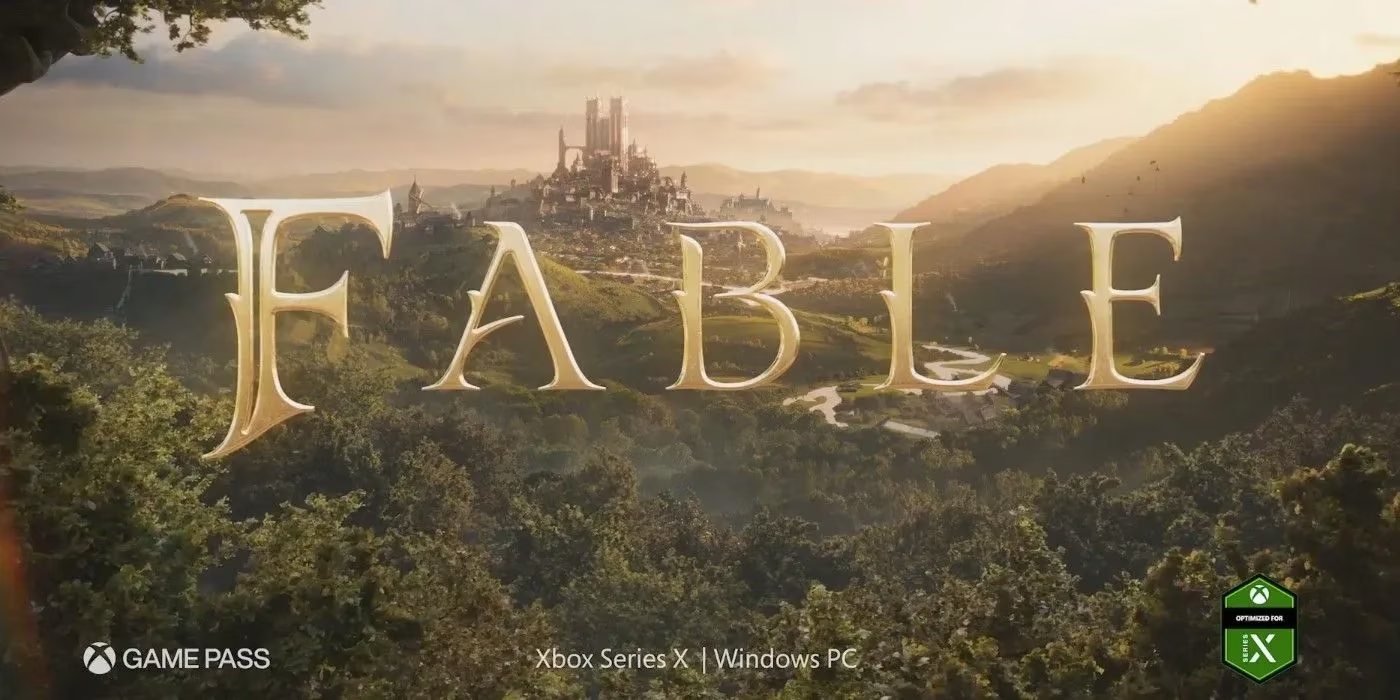
At the time of the reveal, there was no release date, no gameplay, and no story summary. The trailer was purely cinematic, which told me the game was still in early development. Some players, including me, assumed that meant we’d be waiting years. Well, here we are in 2026, and the wait has been real. A precise launch date still hasn’t been locked down in a way I can put on my calendar, but the project has clearly matured beyond that early tease. The early speculation that the game might arrive by 2023? Let’s just say that aged like milk. But the good news is that Playground Games has shown much more of the world since then, and the 2026 window is the closest thing to a finish line we’ve had.
The original confirmation said Fable is coming to PC and Xbox Series X. That was notable because, during the Xbox Series X’s first two years, most first-party games were still expected to support Xbox One. The fact that Fable didn’t mention Xbox One hinted that the game would skip the cross-gen period entirely. The reveal’s later platform wording has since been updated to PC and Xbox Series X|S, which makes sense for a modern Xbox ecosystem. That still means no last-gen version, which is probably the right call for a huge open-world RPG.
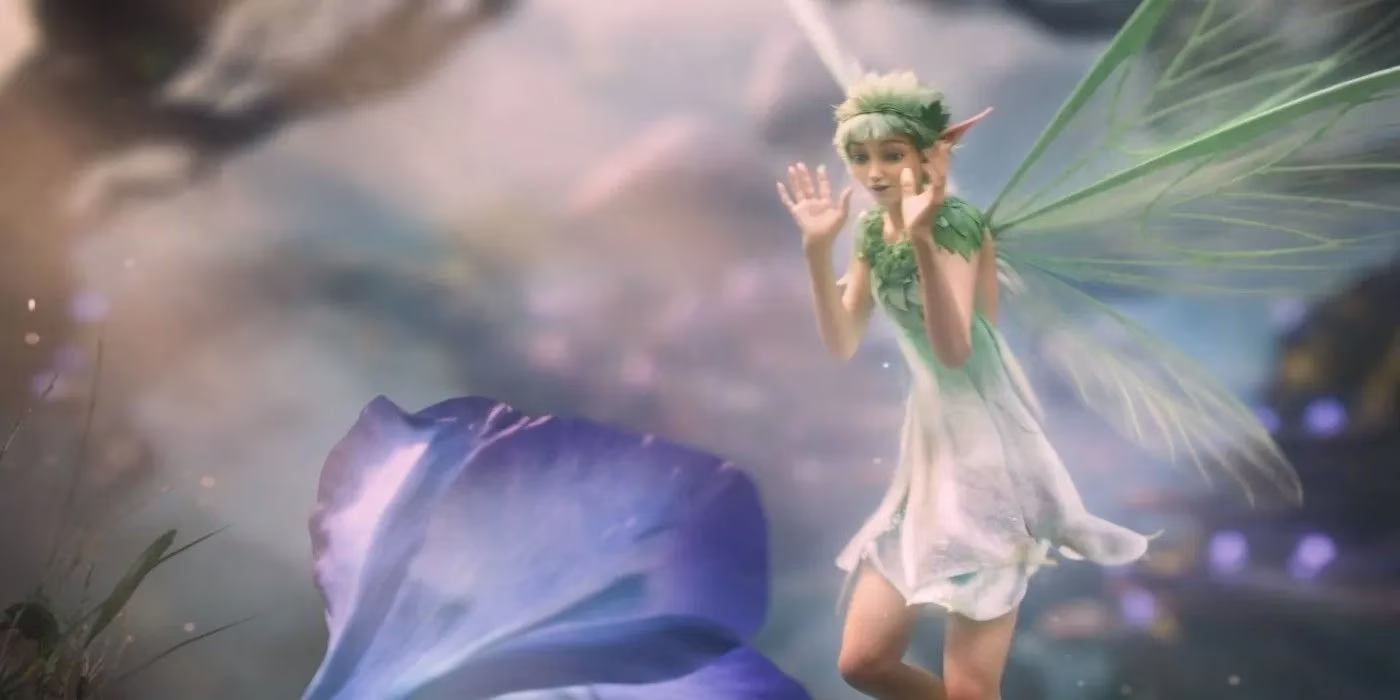
Let’s talk about that trailer. A fairy flew through what looked like an enchanted forest, darting past swords, skulls, and other debris of past adventures. That single shot screamed medieval fantasy. But eagle-eyed fans spotted something better on one of the swords: the Heroes Guild seal crest. I’ll admit I missed it on my first watch. If the Heroes Guild really is back, that could anchor the story in a familiar Fable institution — the place where heroes are trained. That would be a smart way to reconnect with the older games without rehashing Fable 3’s industrial direction.
The trailer didn’t explicitly say open world, but the sweeping camera and vast environment hinted at it. Before the reveal, reports claimed a team of around 200 people was working on a high-budget open-world Fable action RPG focused on character and story. The scale of the teaser seemed to match that rumor. If those reports are accurate, then I think we’re looking at a world built for exploration rather than a linear fairy tale.
Here’s what I’m keeping in mind as I look ahead:
-
✨ Return to fantasy: The reboot looks like medieval Fable, not industrial Fable 3.
-
🗡️ Heroes Guild tease: The seal crest on the sword could mean Guild mechanics return.
-
🌲 Open-world likely: The environment suggests exploration, matching old rumors about a 200-person team.
-
💻 Platforms: PC and Xbox Series X|S, with no Xbox One version.
-
📅 Timing: Still no exact date, but 2026 is the current focus.
Fable is still in development for PC and Xbox Series X|S. I’d be lying if I said the wait hasn’t been frustrating, but watching that fairy fly through the forest again still gives me chills. Playground Games has a lot of high-profile talent behind the scenes, and if they can blend the original game’s charm with modern open-world design, this could be the fantasy comeback I’ve been hoping for. Fingers crossed we get a date soon.
This assessment draws from Polygon, a publication known for connecting game announcements to broader design trends and player expectations. With Fable positioned as a reboot rather than “Fable 4,” the framing matters as much as the footage: it signals a tonal reset toward classic storybook fantasy (guilds, quests, folklore humor) while still aiming for modern open-world ambitions on PC and Xbox Series X|S—making the long 2026 runway feel less like a delay and more like the cost of rebuilding Albion’s identity with contemporary production values.