As I stand here in 2026, gazing back at the landscape of gaming, I can't help but feel a pang of melancholy, a sense of déjà vu that's all too familiar. It's like watching a beloved, quirky friend try to fit into a crowd by wearing someone else's clothes—the fit is all wrong, the soul is missing. The whispers, the reports, they all point in one direction: the next chapter of Fable is poised to walk a well-trodden path, to become another 'Witcher-like' in a world already saturated with them. This isn't just a shift; it feels like an identity crisis for an entire creative spirit.
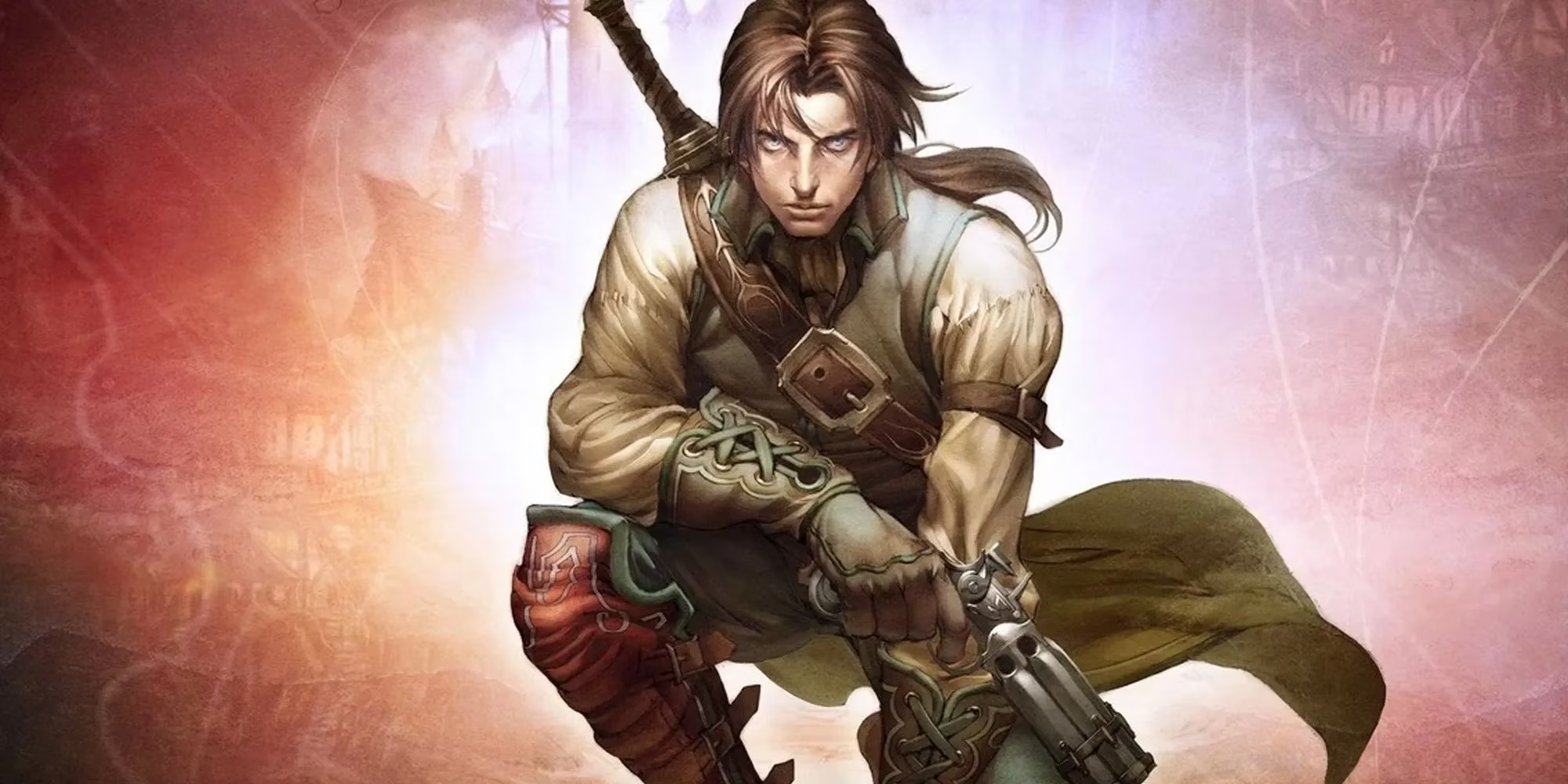
My mind drifts to that iconic silhouette—the hooded figure, blade at the ready. It screamed Assassin’s Creed, it was the look. But then, something shifted. The series traded its sleek stealth for bloated worlds, its distinct identity for tiered loot and Souls-inspired combat. It became, as they say, a 'pale imitation of better games.' The lesson was stark: chasing trends can strip a series of its very essence. And yet, here we are, with Fable reportedly set to repeat history. Talk about not learning from the past! It's enough to make you want to scream 'C'mon, man!'
This pivot, this desperate scramble to be like the 'it' game, makes our whole industry feel so... small. Everything blends into a homogeneous mush. Instead of a vibrant tapestry of unique worlds, we get:
-
Four variations of the most successful game from seven years ago.
-
Originality taking a backseat to trend-chasing.
-
Personality dissolving in the quest for gritty, award-bait realism.
Fable was never about that. Fable was the cheesy, child-like fantasy where you could be gleefully evil, where combat was floaty and enemies exploded into satisfying orbs. It had a charm that was uniquely its own—a far cry from the grimdark worlds it's now apparently emulating.
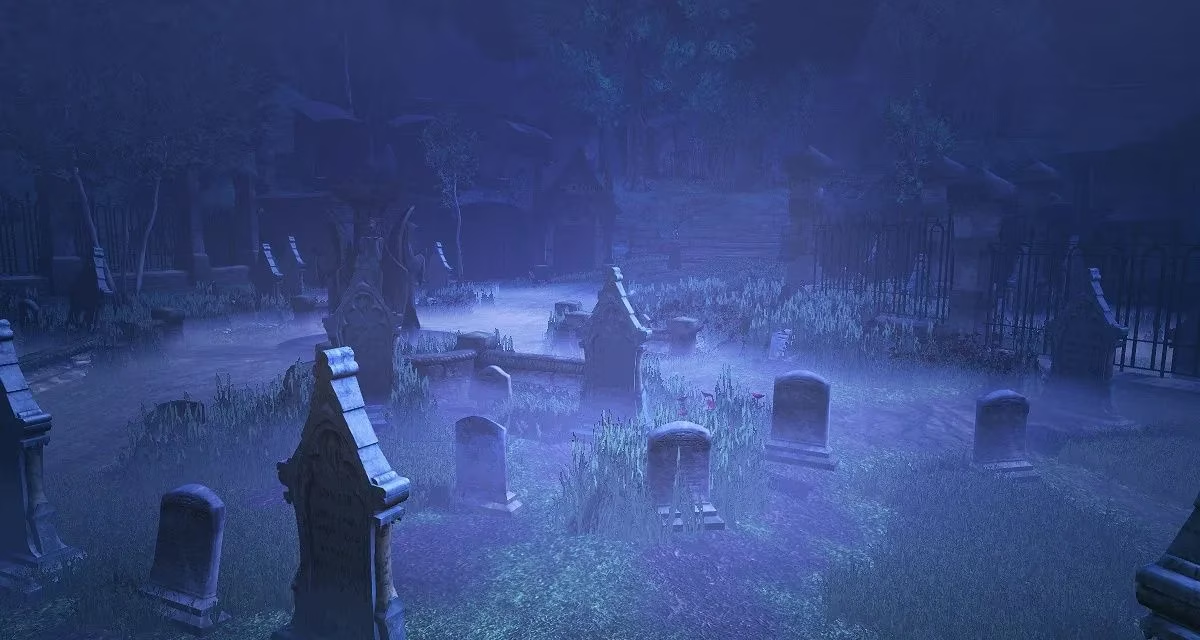
Let's get real for a second. RPGs these days are all about chasing that 'dark fantasy high.' But Fable? Fable opened like a Charles Dickens novel meets a twisted fairy tale—orphans causing mayhem, carnivals in the snow, over-the-top tragedies that felt more like a storybook than a history book. It leaned into the surreal, the whimsical. None of that screams 'Geralt of Rivia,' does it? It's a different vibe entirely.
I see the temptation, I really do. For a dormant series making a comeback, the siren song of 'Oscar bait' gaming is strong. Look at God of War—fantastic games, no doubt, but their inspiration from The Witcher and Dark Souls was palpable. As much as I adore them, their success contributed to the slow fade of the hack-and-slash genre in the AAA space. The variety shrank. And if the reports are true, Fable's return might just shrink it further. We're losing flavors, and the menu is starting to look awfully samey.
The new team behind Fable faces a Herculean task: capture the old magic while carving something new. But so often, 'new' is only new relative to the series itself. Remember Assassin's Creed Origins? It felt fresh... for Assassin's Creed. In the grand scheme of things, it was another checklist open-world title with vast, empty spaces. Fable could—and my gut says will—fall into that same trap. Being 'new' only when compared to its own past is a recipe for blending into the background noise.
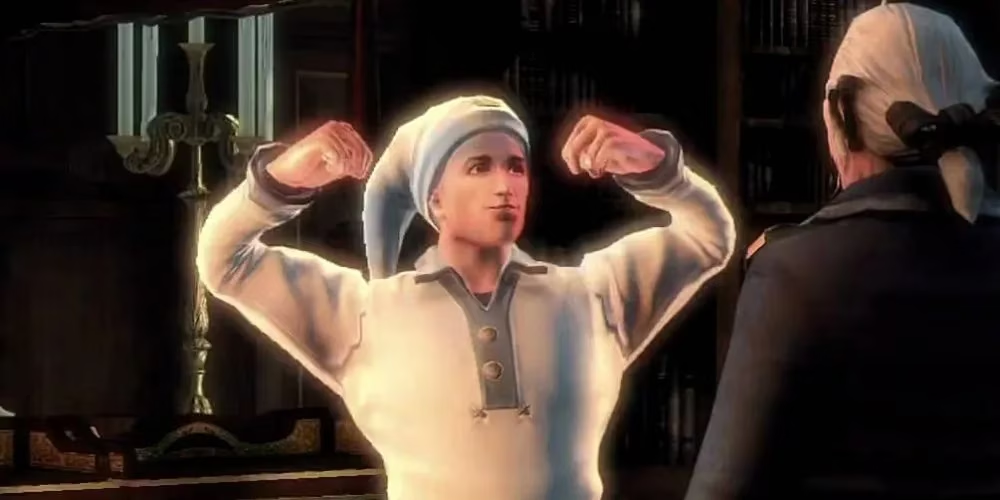
And oh boy, the competition now. We're not in 2017 anymore. The market is staggeringly full of open-world, Souls-inspired, Witcher-like RPGs. Another one? It'll get lost in the noise. It'll need to be truly exceptional to stand out. Look at Horizon Forbidden West—a critical and commercial success, yet it fell out of the zeitgeist almost immediately. The brand recognition of Fable won't be a magic bullet. In fact, it might backfire. Fans returning after years, hoping for a renaissance of that unique charm, might just find... another generic copycat. That's a real 'facepalm' moment waiting to happen.
| The Problem | The Likely Fable Outcome |
|---|---|
| Trend-Chasing | Losing its whimsical, fairy-tale soul. |
| Homogenization | Becoming another gritty, open-world RPG. |
| 'New for the Series' | Feeling derivative in the wider market. |
| Fan Expectations | A clash between nostalgia and generic reality. |
Don't get me wrong—growing with the times is essential. A carbon copy of the old games won't cut it either. But evolution doesn't have to mean adoption of tired trends. Reinvention should be built on your own foundations, not borrowed from someone else's house.
Fable has a chance, a real shot, to carve out a space that's uniquely its own in 2026. It can be bold, it can be modern, but it must remember the heart that made people love it: the cheese, the choices, the child-like wonder mixed with dark humor. It should make us laugh, make us feel powerful in silly ways, make our decisions matter in a world that doesn't take itself too seriously. The industry needs that flavor back. We need games that aren't afraid to be themselves, warts and all. Otherwise, we're all just playing the same game with different skins, and what's the fun in that? The ball is in their court. Let's hope they don't fumble it.