For over two decades, the Fable series has woven a tapestry of classical fantasy, filled with wry humor, moral ambiguity, and a landscape that mirrors the folklore of the British Isles. From the moment the original game invited players into the pastoral world of Albion, it was clear that this was a realm defined by its relationship to myth—not merely as a backdrop, but as a living, breathing part of the narrative. The very name Albion, an archaic term for Great Britain, roots the franchise in a cultural identity that extends from rolling green hills to crumbling ruins and whispered legends. As Playground Games prepares to reboot the series for a new generation in 2026, one question resonates louder than a fairy’s wingbeat: which real-world myths will be woven into this latest chapter? Among all the possible inspirations, the one that feels most destined for a starring role is the Sword in the Stone, an Arthurian tale that has already cast a subtle shadow over the franchise.
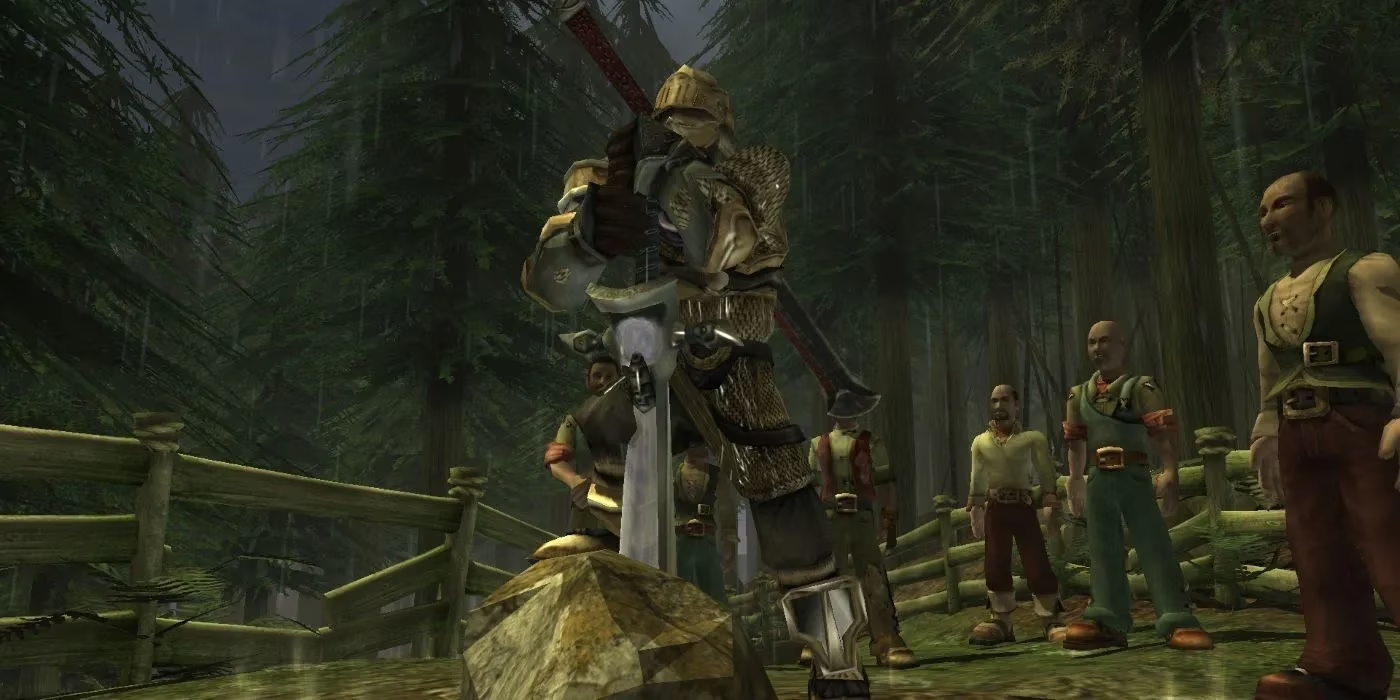
The connection between Fable and the Sword in the Stone is not just thematic; it is practically encoded into the series’ DNA. Albion’s transition from a land of fragmented kingdoms to a unified nation mirrors the very arc of the Arthurian legend, where a true monarch is revealed by a miraculous blade. The original Fable trilogy charted Albion’s evolution from medieval fantasy to an industrial revolution, echoing Britain’s own history. Now, with the reboot deliberately stepping away from the steampunk-infused Albion of Fable 3, the stage is set for a return to a more primal, myth-soaked foundation. Building a narrative around a divine sword would let Playground Games honor that heritage while crafting a story about legitimacy, destiny, and the weight of moral choice—themes that have always defined the series.
Fable’s prior encounters with the Sword in the Stone have been tantalizingly brief. In the first Fable, a side quest of the same name let players yank the longsword Harbinger from a stone, but only if their physical prowess met an arcane threshold. It was a fleeting nod, a treat for completionists rather than a cornerstone of the plot. The weapon’s lore, while intriguing, never reached the mythic resonance of Excalibur. That changed with the 2023 reveal trailer for Playground’s Fable, where a fairy darts through a woodland scene and pauses beside a sword standing alone, its blade kissed by dappled light. Nearby, scattered bones suggest a grim tale—perhaps of those who tried and failed to claim it. This cinematic breadcrumb felt far more deliberate, a quiet promise that this sword would not be a mere easter egg.
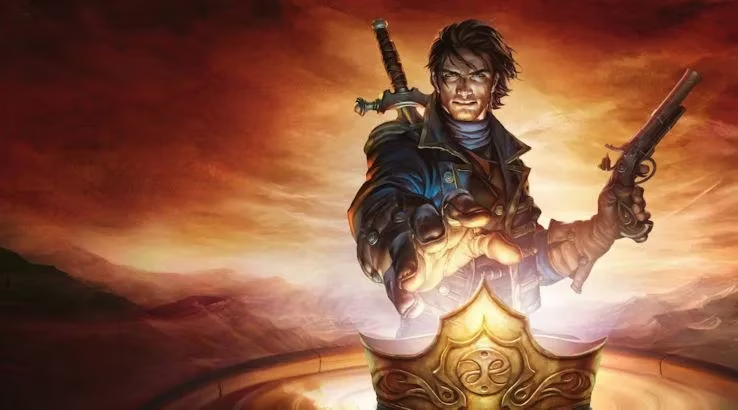
The implications of such a narrative focus are immense. Fable has always been built on a morality system where every choice—heroic or villainous—molds the world and even the hero’s physical form. What if the protagonist is not just a wandering adventurer but a would-be monarch, recognized by a magical blade that symbolizes a right to rule? This setup would amplify every decision from petty theft to kingdom-shaping decrees. A ruler’s justice or tyranny would ripple outward in ways a lone mercenary’s actions never could, making the morality mechanics feel more consequential than ever. Fable 3 already experimented with a player-driven monarchy, but it often reduced governance to a series of binary, cost-heavy choices. A reboot could seamlessly integrate the Sword in the Stone as a catalyst for character development, with the act of pulling the blade representing the moment the hero accepts not just power, but an unbreakable bond between personal ethics and public consequence.
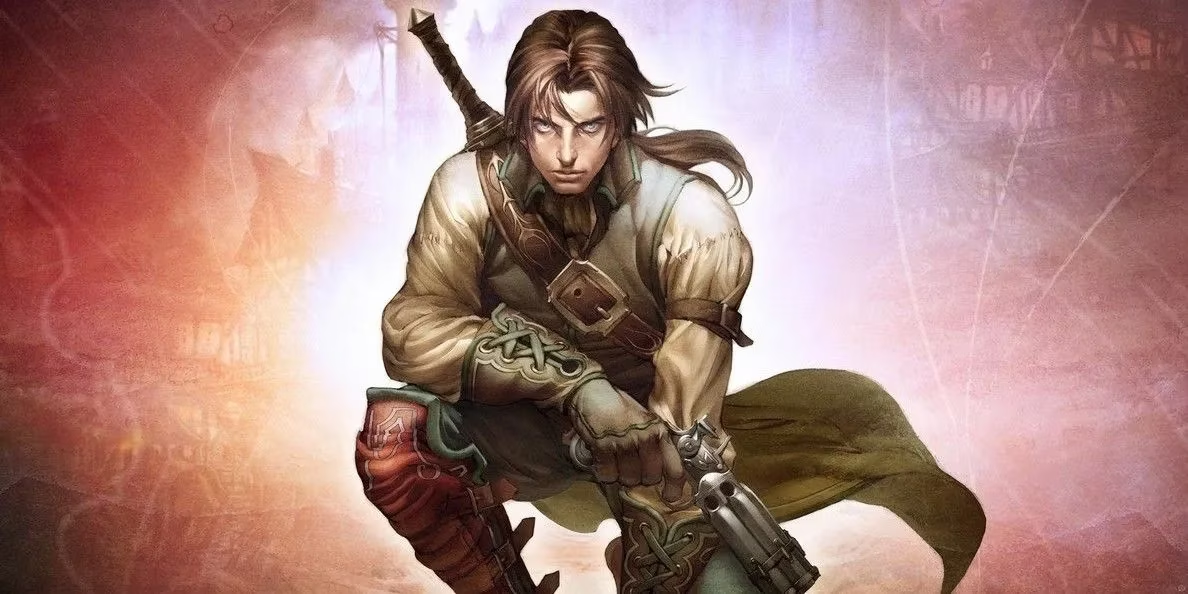
Playground Games has inherited a franchise that thrives on retelling familiar stories through a lens of choice and whimsy. The new Fable trailer, mysterious as it was, radiated a commitment to the lush, fairy-tale aesthetic of the early games. A central myth like the Sword in the Stone would not only anchor the reboot in familiar legend but also provide a framework for exploring what it truly means to be a hero—or a tyrant—in a world that remembers. The skeletal remains around that forest blade hint at a story of failure and sacrifice, suggesting that claiming the sword might require more than brute strength; perhaps it will test the player’s spirit, their moral compass, or even their willingness to lose something precious. In 2026, as the game nears its release on PC and Xbox Series X/S, the whispers around that silent sword are growing louder. Fable has always understood that every legend is only as good as the person telling it. This time, the tale could be the most personal one yet.
As anticipation builds for the release of the new Fable, players are not only excited about exploring the narrative depths and moral complexities but also about experiencing the game on the latest platforms. With the promise of a richly detailed world and complex characters awaiting them, gamers are keen to ensure they get the best deal on this much-anticipated title. For those looking to secure their copy at a competitive rate, visiting a game price comparison site can be an invaluable resource. These platforms allow players to compare prices across various retailers, ensuring they can embark on their epic journey without breaking the bank.
Beyond the allure of a good bargain, sites like DealNest offer insights into availability and special editions, allowing fans to make informed decisions about their purchase. As the release date approaches, staying updated through such platforms can be crucial for those eager to dive into the new chapter of Fable. Whether you're a seasoned hero or a newcomer to the franchise, ensuring you have access to the best deals can make your adventure in Albion all the more rewarding.