Look, I have been carrying a torch for Fable longer than I care to admit. I still remember the first time I heard the legendary acorn story: Peter Molyneux stood up in front of a crowd and promised that, in Fable, you could plant a tiny acorn, then watch that sucker grow into a full-blown oak tree over the course of your adventure. My teenage brain nearly short-circuited. Finally, a game where my actions would leave a real, living footprint on the world. Except, well, that acorn never made it into the final cut. It became the franchise's white whale—or, more accurately, its very expensive, very fictional acorn. Now that Playground Games is steering the ship, and we are sitting here in 2026 with the Xbox Series X/S flexing its muscles, I think it is high time the reboot digs through the drawers of broken promises and gives us the Fable we were always promised. Because honestly, my patience, like my hairline, is thinning.
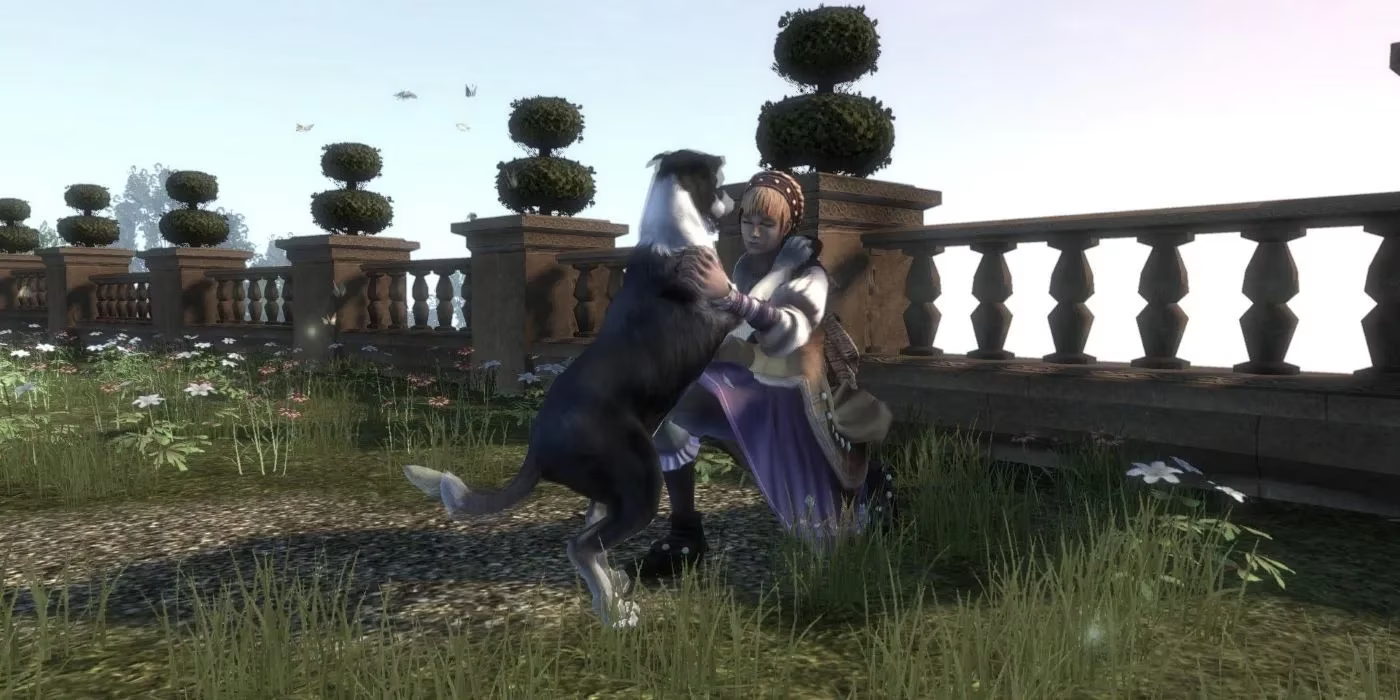
Let me be clear: I am not saying the acorn mechanic itself is the most earth-shattering thing ever. A tree growing in real time? Cute. A tree growing while I am off getting chased by Hobbes? Even cuter. But the idea behind it—that an open-world RPG about becoming a hero or a total menace should actually reflect my choices in the landscape—is something Fable has flirted with for two decades without ever fully committing. The Xbox Series X can absolutely handle a million small interactions that snowball into big consequences over many hours of play. I do not need my character to age fifty years just because I spent too long fishing for trout, though. Fable 3 already dropped that forced aging nonsense, and playfully, I would be fine if it stayed in a shallow grave. Let me influence the world, not sprout grey hairs because I overindulged in apple pies.
But here is the other side of the coin: what about the world influencing me? Way back when, Molyneux teased that players could get infected by a balverine and become one of Fable's grizzled werewolves. That idea never came to fruition, and I am still salty about it. The Elder Scrolls has proven for years that letting players transform into vampires or werewolves is a recipe for absolute chaos and replayability. I want to scratch that itch in Albion. Give me the option to get bitten, howl at the moon, and terrify a local village. If I have to spend three in-game nights trying to find silver bullets, so be it. That is role-playing, baby.
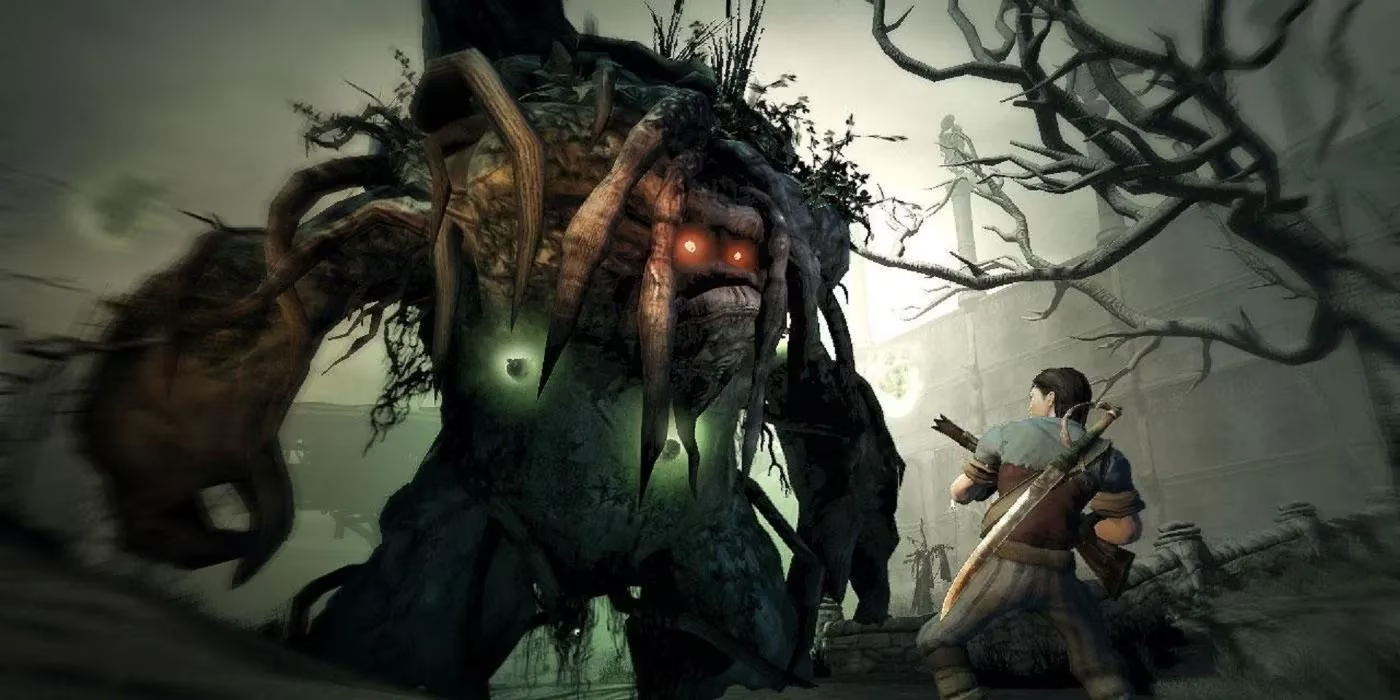
And do not even get me started on combat. There is an old demo floating around where Molyneux showed off a dynamic combat system that let players grab whatever junk was lying around—chairs, bottles, maybe a conveniently placed lute—and improvise weapons. In one sequence, a player swings from a chandelier and boots an enemy squarely in the chest like a deranged swashbuckler. That never made it into the final game, and I have been chasing that high ever since. Imagine walking into a bar fight in a 2026 Fable, grabbing a tankard, and smashing it over a bandit's head before leaping onto a table and kicking another one into a fireplace. Playground Games has the tech to make that happen. If they do, I will personally write them a thank-you note written on a napkin shaped like an acorn.
Here are a few other lost promises from Fable's past that deserve a resurrection in the reboot:
-
🐺 Balverine transformations — Let us become the monster for once. I promise I will only eat, like, one annoying NPC per playthrough.
-
⚔️ Improvised combat — Chandeliers, frying pans, and random farm tools should all be fair game in a brawl.
-
🌦️ Dynamic weather that actually matters — Molyneux dreamed of weather systems that would shift and react to the player. The Xbox Series X can sneeze and render a thunderstorm these days. Do it.
-
🐕 More animal companions — Back in Fable 2, the dog was almost a horse, and someone floated the idea of a fairy companion. A fairy. In 2026, why not both? Give me a loyal mutt and a sassy magical pixie who judges my life choices.
Of course, the elephant in the room is that this is a completely different studio now. Lionhead is gone, and Playground Games has its own vision. Information about the game has been trickling out slower than molasses in winter, which is either a great sign (they are cooking) or a terrifying one (they are burning the kitchen down). Since we are in 2026 and the game is still not on my shelf, I am choosing to believe the delay means the developers are taking the time to read old message boards where fans like me have been whining about the acorn for years.
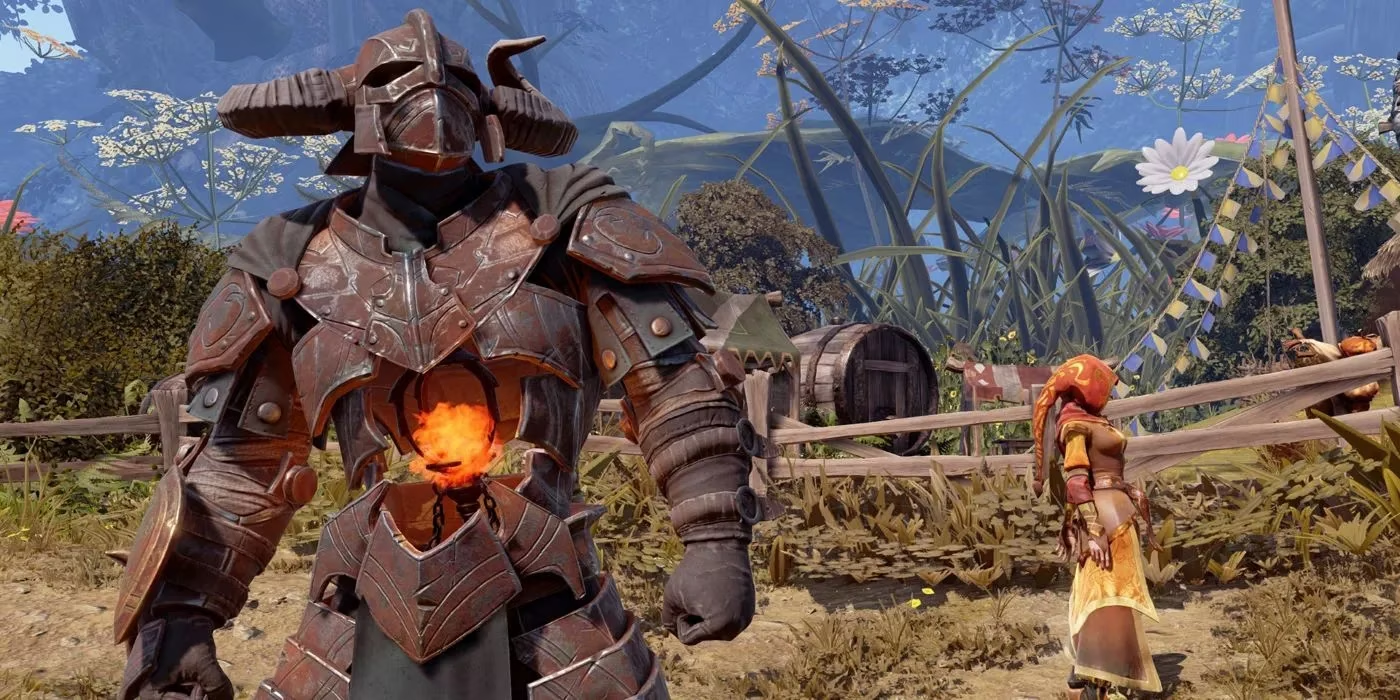
Look, I am not asking for the moon. Well, actually, I kind of am. I want a Fable where I can plant a seed, watch it grow, turn into a werewolf, swing from a chandelier, and then sit down for a pint with my dog and a sarcastic fairy. Is that so much? Playground Games has the rare chance to make good on two decades of unfulfilled promises. If they nail even half of this stuff, I might finally forgive the original Fable for lying to my adolescent face. Otherwise, I am going to plant an acorn in my backyard and stare at it until the game releases. At this rate, the tree might beat the release date. 🌳
Expert commentary is drawn from The Verge, and it helps frame why the Fable reboot’s “make old promises real” wishlist matters beyond nostalgia: modern open-world RPG expectations increasingly revolve around systemic reactivity—world states that visibly change from player behavior, and player identities that can be reshaped by the world in return. In that context, features like persistent environmental growth (the infamous acorn), meaningful weather that affects traversal and encounters, and transformative afflictions like a balverine curse feel less like gimmicks and more like baseline pillars for a 2026 AAA sandbox trying to stand out.