Looking back now, in 2026, on the legacy of the Fable trilogy feels like sifting through the ruins of a grand, half-finished castle. The foundations are magnificent, the blueprints speak of impossible wonders, but the upper floors were never quite completed. Peter Molyneux, the name forever synonymous with both the series' boundless charm and its unmet promises, recently offered a candid, almost wistful, post-mortem. While the gaming world eagerly awaits the full reveal of Playground Games' reboot, Molyneux’s reflections on Fable 3 serve as a poignant time capsule—a lesson in how grand vision can be sanded down by the relentless grindstone of development deadlines.
My own memories of Albion are deeply tied to that sense of promised potential. Molyneux, in his recent discussion, painted a picture of Fable 3 that was far grander than what eventually shipped. The team at Lionhead didn't just want to make another adventure; they aimed to craft a commentary on the industrial revolution's "relentless forward crawl." More ambitiously, they dreamed of authentically placing the player on a throne. This wasn't meant to be a brief cinematic or a simple menu of choices. Molyneux described an "in-depth, extensive portion of the game" dedicated solely to the player's rule as king or queen. He envisioned a governance simulator woven into the fantasy tapestry, where every decree would ripple through the world. This ambition, however, soon became the game's Achilles' heel.
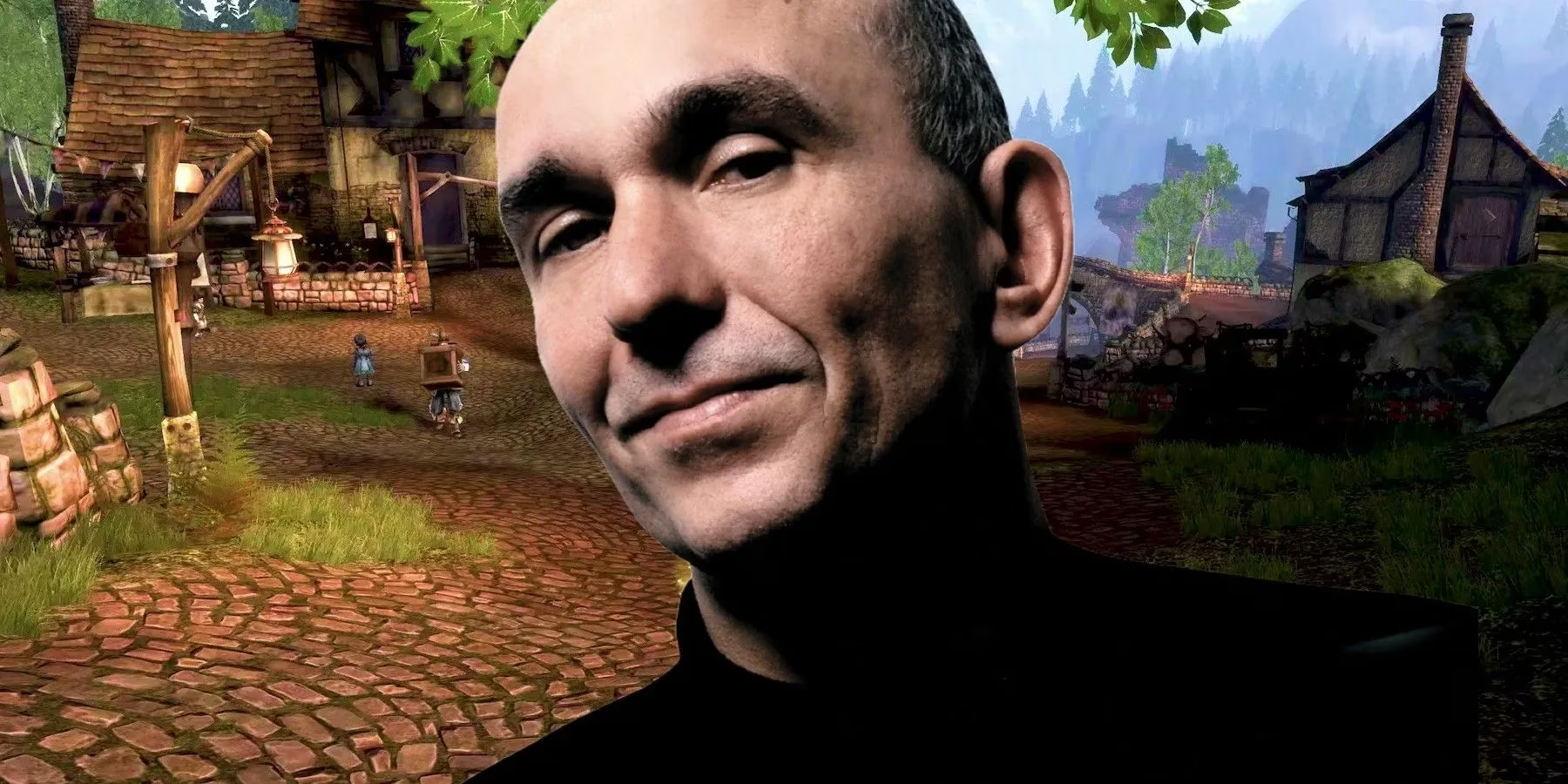
The culprit, as is so often the case in our industry, was time. Molyneux pointed directly to Microsoft's release date deadlines and the accompanying financial incentives as the primary force that "truncated" development. He admitted with a notable humility that he shouldered part of the blame, stating it "may have been [his] fault" for not pushing back harder or demanding more time. This admission is significant. The final act of Fable 3, especially the kingship section, arrived feeling like a beautiful, ornate music box that only plays half a tune. It’s there, you can admire the craftsmanship, but the full melody is missing. On paper, ruling Albion sounded revolutionary. In practice, it felt like a skeletal framework, a series of binary choices lacking the profound consequence and depth the concept deserved. The Sanctuary, the game's central hub, was another feature that felt like a brilliant concept left half-baked, its potential shimmering just beneath a surface of clunky menus.
Playing Fable 3 today, it’s a strange experience, like watching a master painter's preliminary sketch being sold as the final masterpiece. The soul of the series—the humour, the moral choices that subtly altered your appearance, the quirky British charm—is undeniably present. Yet, the game often feels adrift, pulled in several ambitious directions but never fully committing to any. Molyneux’s lament explains this perfectly: the core ideas were like seeds planted in barren soil just before a frost; they never had the season they needed to truly blossom.
The Lasting Impact of Rushed Development:
| Ambitious Feature | Promised Vision | Shipped Reality |
|---|---|---|
| Kingship/Queenship | An extensive governance simulator with lasting world impact. | A brief, simplistic series of binary choices with limited consequence. |
| Industrial Revolution Commentary | A deep narrative thread on progress vs. tradition. | A thematic backdrop that rarely moves beyond aesthetic. |
| The Sanctuary | A dynamic, living personal hub that grows with the player. | A stylish but ultimately static menu system. |
Now, as we stand on the precipice of a new Fable, Molyneux's reflections are more valuable than ever. They are not just nostalgia; they are a cautionary tale written in code and missed opportunities. Playground Games inherits a world beloved for its heart, but also a legacy burdened by the ghost of overpromising. The challenge isn't just to reboot Albion, but to build it on a foundation of achievable, focused ambition. For Molyneux himself, looking back seems like an act of closure. His career has been a wild ride, a rollercoaster that promised loops to the moon but sometimes settled for thrilling dips and turns. Where he goes next is anyone's guess, but his history with Fable will always be a defining chapter—a story of a dreamer who saw castles in the clouds, and the very real, very hard ground where we all must eventually build.
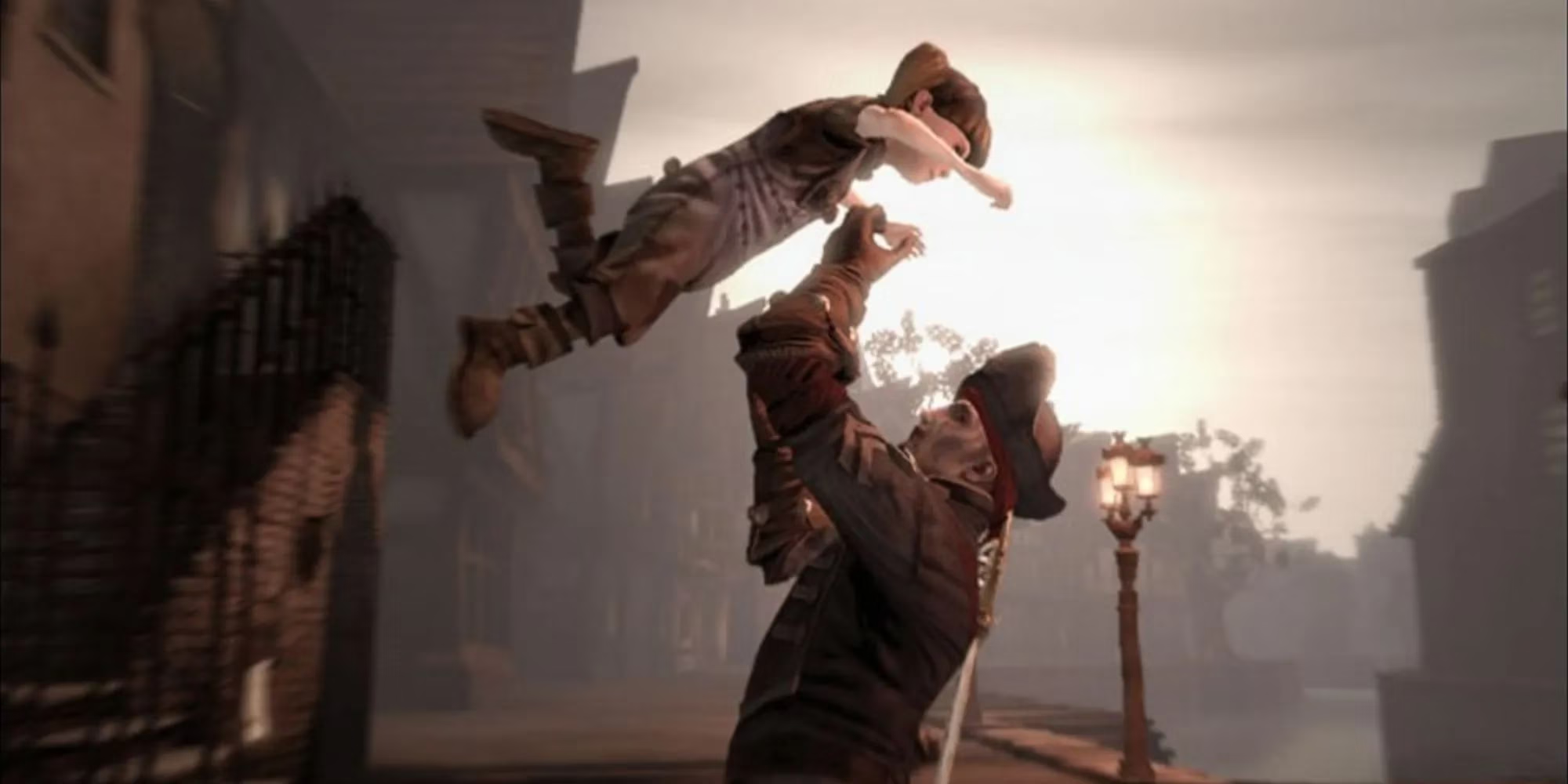
In the end, Fable 3 remains a fascinating artifact. It’s a game I have a deep, complicated affection for, much like one might have for a brilliantly flawed friend. It tried to be an epic symphony but was forced to perform as a hurried quartet. Its shortcomings, now openly acknowledged by its chief architect, highlight the eternal struggle in game creation: the battle between the artist's boundless sky and the publisher's ticking clock. As Albion prepares to awaken once more, one can only hope the new stewards have learned the most important lesson from its past: that a world fully realized in a smaller scope is infinitely more magical than a universe left unfinished.