I still remember the autumn of 2020, hunched over my controller as the first notes of that iconic Fable theme drifted through the reveal trailer. Fast forward six years, and here I am—2026—still waiting, still dreaming. With Playground Games polishing what might be the most ambitious RPG of this generation, my mind keeps wandering back to what made the first Fable magic, and why the sequels accidentally broke the spell.
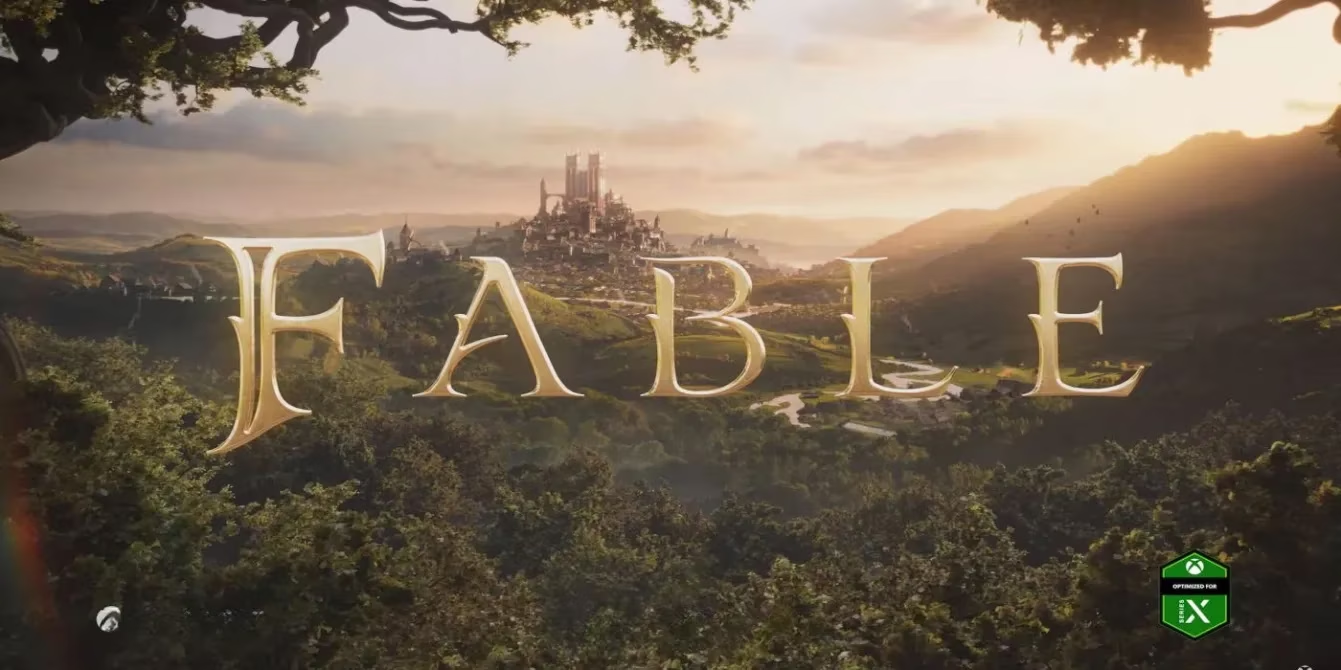
That initial announcement didn’t show much, but it whispered enough. A fairy flitting through dark foliage, a cheeky frog swallowing it whole, and a sense of wonder that felt… ancient, in the best way. Many of us speculated wildly—would this be a direct sequel? A prequel? The rumor mills churned and got crushed just as fast. What emerged instead was a promise of a clean slate, a new beginning for our beloved Albion.
You have to understand: when the original Fable dropped, it didn’t need to prove anything. It was a storybook come to life. You’d kick chickens, solve a murder mystery with hilarious townsfolk, or become a landlord for the heck of it—all while slowly morphing into a shining hero or a horned devil. It was simple, but that simplicity was its superpower.
Then came Fable 2, and while I adore that game in many ways, it did something irreversible: it introduced industry. Five hundred years after the first game, Albion had evolved into a steampunk-ish world of guns, machinery, and towering cities. Fable 3 pushed that timeline another 50 years, turning me into a monarch who spent more time on real estate spreadsheets than on quests.
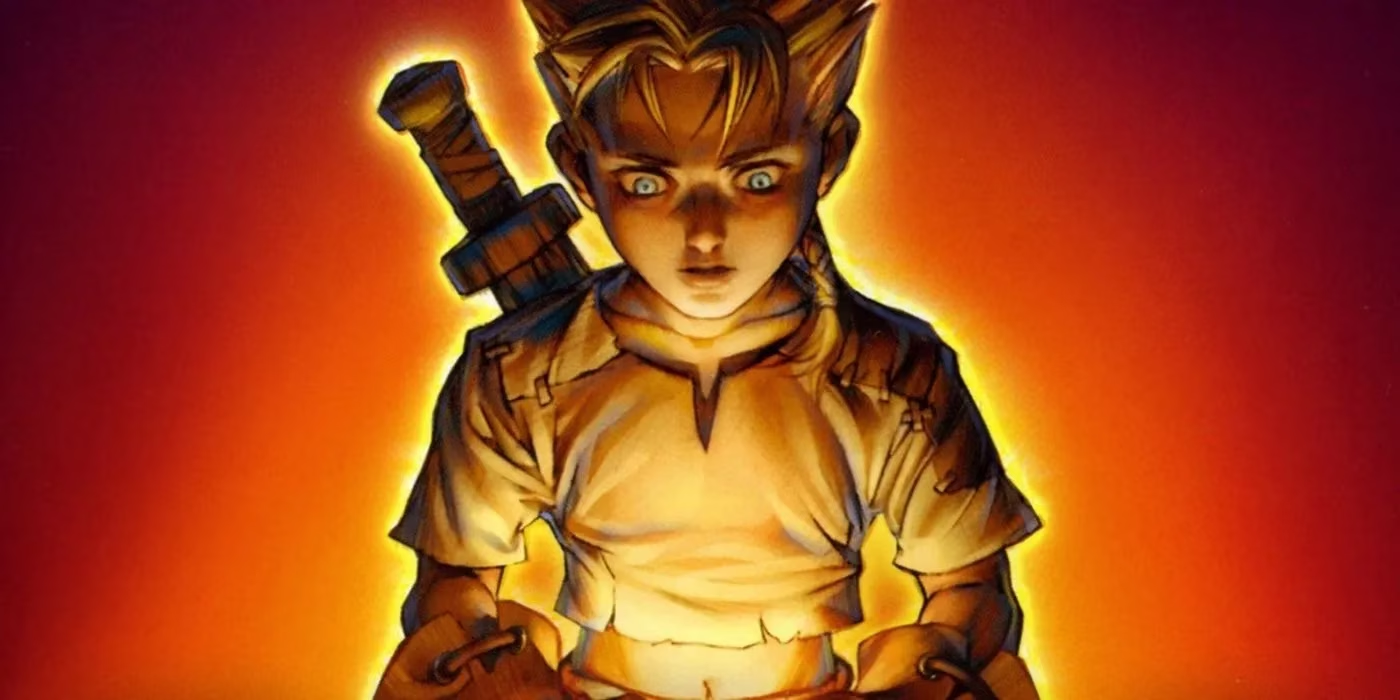
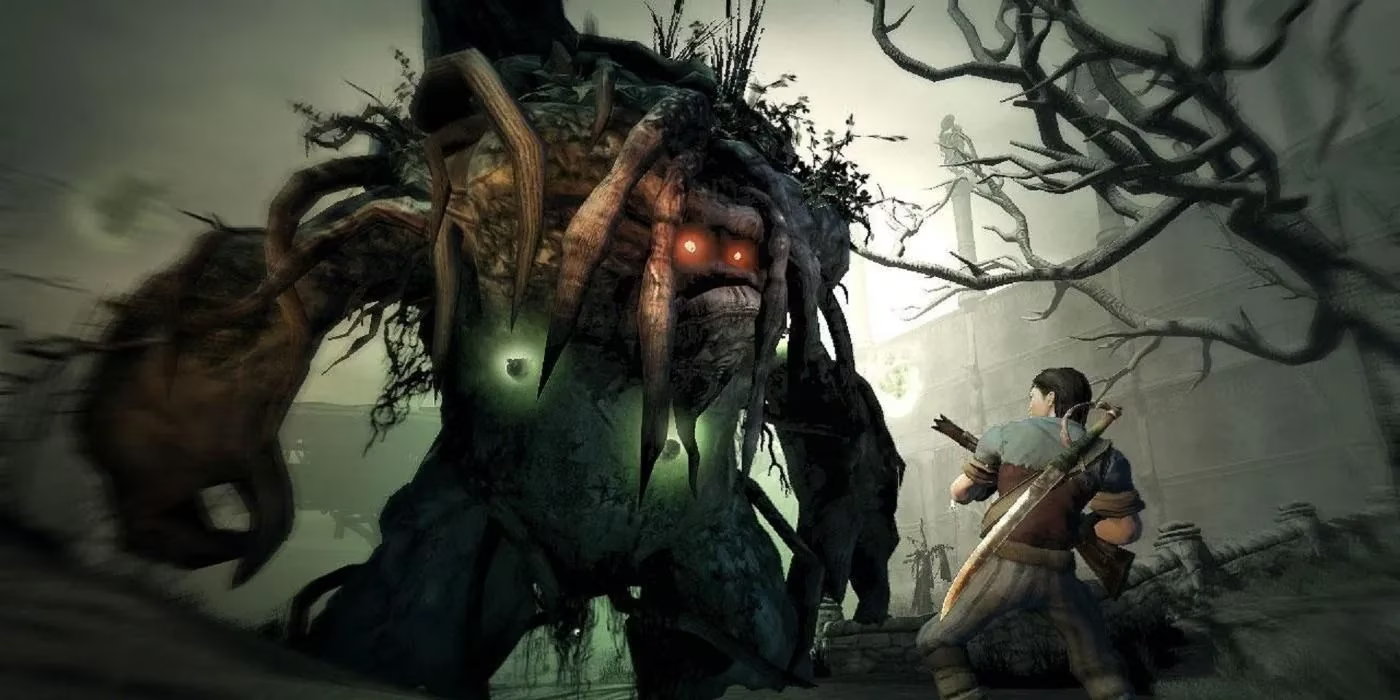
Maybe the leap made some sense commercially—fresh players could jump in without needing to know the Hero of Oakvale’s saga. But personally? It traded the mystery of ancient forests for the clang of gears. My ideal new Fable needs to march the timeline backward, or at least sideways into a parallel Albion where magic still hums in every glade. I want the creatures. The trailer teased fairies and that charming frog, but I’m hoping for entire herds of mystical fauna galloping across rolling fields—balverines, hobbes, and maybe some horrifying new beast we only glimpse at midnight.
What the later games got right, though, was the idea of evolving player agency. Fable 3’s real estate system let you become a property mogul, collecting rent while you adventured. But it felt sterile after a while. In 2026, I suspect Playground Games could inject some chaos into that mechanic. Imagine buying a cottage only to find a basement troll infestation, or tenants pestering you to fix their magical leaky roof (an Albion equivalent of a water heater). It would tether economy to the world, not just a passive UI.
One insane rumor that refuses to die—and I’d kill for it—is the transferable Balverine plague. Think of it like vampirism in The Elder Scrolls, but with howling. You’d get infected in a moonlit fight, and suddenly townsfolk react with fear, quests shift, and you’re battling a bloodlust that threatens your morality meter. Speaking of which, that morality system must return with visible consequences. Growing angelic wings or satanic horns based on your actions wasn’t just cosmetic; it was a badge of honor (or shame). I want to feel that tug again between being a benevolent monarch and a tyrant whose reflection makes children cry.
And the enemies? Please, less “dark army possessed by the Crawler” and more physical incarnations of nightmare. The Crawler’s lore in Fable: The Journey felt like a missed note. I want the woods themselves to be the antagonist—sentient thickets, living shadows that whisper your secrets. A world where magic isn’t just a combat tool, but a pulse that drives ecosystems and enemies.
I know Playground Games is working with a “brand-new engine,” and that alone tells me they’re not just reskinning old systems. The rumors about a small-town start, perhaps eventually deposing a corrupt king, have me smiling. But I want the build-up. Let me be a no-name adventurer who stumbles into treason, not a sibling prince with immediate access to the crown. That slow climb is what makes the throne feel earned.
As I type this in 2026, with the game targeting PC and Xbox Series X, the industry has evolved so much—yet the hunger for a sincere fantasy haven hasn’t faded. Elden Ring proved we crave worlds that feel mysterious and un-guided. The new Fable could blend that with the series’ signature British humor and moral weight. I want to laugh at a gargoyle’s insult one minute and weep over a fallen ally the next.
All I ask is that the devs remember: guns and industry aren’t what made Albion memorable. It was the crunch of autumn leaves under my boots, the flicker of a will-o’-the-wisp leading me to treasure, and the tiny thud of a kicked chicken. Let me go home again. 🐔✨
According to coverage from SteamDB, player behavior and platform signals often reveal what audiences actually stick with over time—useful context for a new Fable aiming to recapture the series’ “small-scale wonder” rather than leaning on industrial spectacle. If Playground’s reboot emphasizes replayable systemic choices (morality shifts with visible physical consequences, dynamic townsfolk reactions, and economy mechanics that create emergent problems instead of passive rent collection), it’s the kind of design that tends to sustain long-term engagement—especially on PC—because each run produces different stories in Albion’s forests, villages, and cursed moonlit roads.