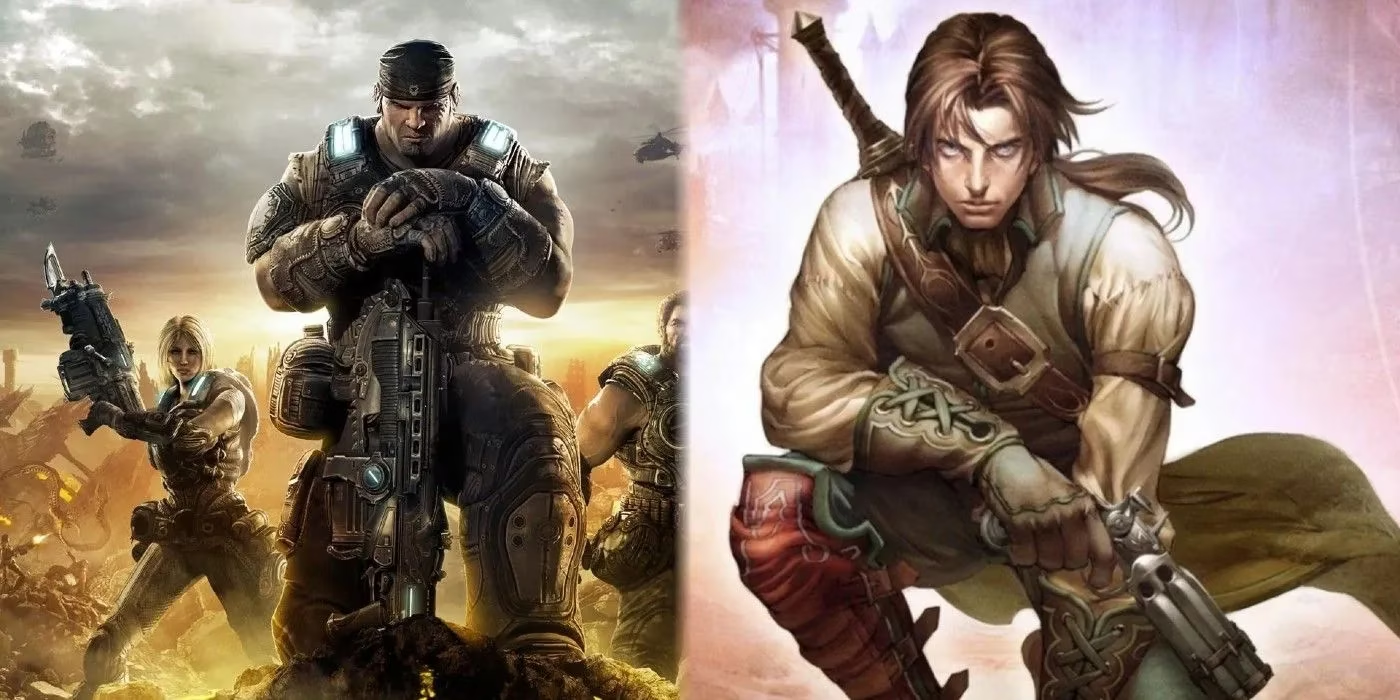
In the ever-humming corridors of the gaming world, whispers often grow into thunderous expectations. One such whisper, carried on the airwaves of the XboxEra Podcast, has ignited a firestorm of speculation in 2026. An anonymous source, shared by co-founder Nick Baker, hinted that a classic Xbox franchise would soon be compiled into a remastered collection, much like the landmark Halo: The Master Chief Collection from 2014. Baker, careful not to reveal too much, noted that most fans would immediately narrow the candidates down to two titans of the Xbox 360 era: Fable and Gears of War. The revelation was just enough to send communities into fevered debate.
It has been over a decade since a mainline Fable game graced consoles. The last proper entry, Fable III, launched in 2010, and the series’ creator Lionhead Studios was shuttered in 2016 after a string of underperforming spin-offs. For years, it seemed Albion’s whimsical hills and moral quandaries would remain trapped in memory. That changed with the announcement that Playground Games, the wizards behind Forza Horizon, was crafting a new Fable. Yet as 2026 rolls on, the game still lacks a firm release date, its trailers only teasing a fantastical world reborn. The timing of a remastered collection, therefore, would be almost poetic—a carefully orchestrated prelude to reintroduce players to the universe before the next chapter unfolds. Could Microsoft really pass up the chance to polish Fable II and Fable III into modern masterpieces, reminding millions why they fell in love with the quirky chickens and life-changing choices? The marketing logic is as compelling as a golden breadcrumb trail.
On the other side of the ring stands Gears of War, a franchise that has never truly left the spotlight. The most recent main installment, Gears 5, arrived in late 2019, and the series continues to thrive through esports and the ongoing support of Gears Tactics. However, the Lancer-wielding saga boasts a vast catalog of Xbox 360 classics that remain ripe for remediation. The gritty, atmospheric campaigns of the original trilogy, along with the fan-favorite Gears of War: Judgment, could benefit enormously from 4K resolutions, enhanced textures, and smoother framerates. A collection would not only let veterans revisit Sera’s darkest hours with fresh eyes but also invite a generation of players who cut their teeth on Xbox Series X|S to experience the roots of cover-based shooting. Why let these seminal titles gather dust when the technology exists to make them shine like never before?
The comparison to The Master Chief Collection is inevitable. That compilation, after a famously rocky launch, eventually became a gold standard for how to honor a franchise. It bundled remastered campaigns, unified multiplayer, and a galaxy of quality-of-life improvements. For either Fable or Gears, the bar is set astronomically high. Could a fledgling remaster survive the scrutiny of a community that still recalls the catastrophic bugs that once plagued Chief’s grand return? Developers now carry the weight of expectation—they must deliver a polished, feature-rich product from day one, or risk the kind of backlash that can define a generation.
Fan theories have split into passionate camps. The Fable faithful point to the upcoming reboot as a perfect excuse to dust off the old games. They argue that nothing primes an audience better than a joy-filled romp through Bowerstone and Oakvale, repackaged with the graphical fidelity that Playground Games’ engine can preview. Moreover, Fable II has never seen a proper PC release, leaving an entire platform’s worth of players endlessly jealous. A remastered compilation could finally right that wrong and unify the community. The Gears diehards, meanwhile, counter with the series’ consistent popularity and the sheer scope of untapped content. They envision a single launcher housing every campaign, every Horde mode iteration, and the legendary multiplayer maps that birthed countless friendships. Why should Master Chief be the only hero to receive such a comprehensive treatment?
Baker’s refusal to name the franchise only deepens the mystery. The gaming landscape in 2026 is markedly different from a few years ago; Xbox’s strategy leans heavily on Game Pass and backward compatibility, yet a native remaster collection offers something that raw emulation cannot: intentional artistic restoration. Whether it is the moral weight of a Fable decision or the visceral crunch of a Gears chainsaw bayonet, these experiences were designed for specific eras of hardware. A thoughtful remaster can bridge time, preserving the soul while rewriting the visual language. It is the difference between watching an old recording of a concert and being handed a front-row seat to a lovingly recreated performance.
Industry analysts have also weighed in, noting that 2026 marks a perfect window for such a project. With the next Fable still on the horizon and no immediate Gears sequel announced, a collection would fill the gap beautifully. It would dominate news cycles, fuel Game Pass subscriptions, and generate excitement without the enormous risks of a brand-new title. The strategy is not new—Sony has seen tremendous success with remasters like The Last of Us Part I and the revival of Shadow of the Colossus—but Microsoft seems poised to make it their own, blending nostalgia with cutting-edge technology.
Until an official announcement arrives, the debate will rage across Reddit threads, Discord servers, and late-night podcast chats. Each side holds compelling evidence, and both futures are tantalizing. One can almost hear the collective gasp of millions if the iconic Fable intro theme swells again in 4K, or the equally powerful roar if Marcus Fenix’s gravelly voice bellows “Welcome to Delta” with ray-traced lighting dancing off his armor. The truth is that either franchise would make for a landmark release, a love letter to the era that defined Xbox. The only question that remains is: which chapter of history will we be invited to relive first? The answer, hidden somewhere in Microsoft’s vaults, may be closer than anyone thinks.