Remember the good old days? A player would finish a masterpiece, maybe shed a tear at the credits, and then, in what felt like a blink, a shiny new sequel would be announced. Two, maybe three years tops. The iron was hot, and developers struck it with glee. Fast forward to the modern era, and that rhythm has been replaced by a glacial, often agonizing, crawl. The digital age, with its endless updates, DLC packs, and live-service models, has fundamentally altered the sequel landscape. Now, it's not uncommon for a game to reign supreme for a decade or more, leaving fans of iconic franchises to stare longingly at the horizon, wondering if the next chapter will ever arrive.
Let's talk about the king of the long wait, the elephant in every digital room: Grand Theft Auto. When GTA V dropped in 2013, it didn't just launch; it conquered the world. Los Santos became a second home for millions. Yet, as the years ticked by and the online world of GTA Online ballooned, a quiet question grew into a deafening roar: "When's the next one?" Rumors swirled like Los Santos smog for a solid decade. 😩 The first trailer finally graced our screens in 2023—a full ten years later—promising a return to Vice City with dual protagonists. The end is (supposedly) in sight with a 2025 release window, proving that even the biggest franchises can make fans feel like they're aging in real-time.
Then there's the case of Portal. Who would have thought a clever little puzzle game about making holes in walls would become a cultural touchstone? The first game was a perfect, concise gem. Portal 2 in 2011 was a masterpiece that expanded the universe with wit and brilliance. And then... silence. 🤐 Valve, the developer, seems to have entered a permanent state of "counting to three" that would baffle even the most patient test subject. It's been over a decade, the memes are eternal, and GLaDOS's sarcastic taunts about no sequel feel less like a joke and more like a cruel prophecy.
The fantasy realm of Fable presents a different kind of wait—one born from presumed death and miraculous resurrection. The original 2004 game promised the moon; it delivered a charming, if scaled-back, experience in Albion. After a few sequels, the franchise seemed to fade into legend, another relic of the Xbox's past. The announcement in 2020 that Playground Games was rebooting Fable was a genuine shock. Dubbed Fable 4 by hopeful fans, this isn't just a sequel; it's a phoenix rising from the ashes, with a trailer already out and a hopeful 2025 release on the horizon. Sometimes, the longest waits are for things we thought we'd never see again.
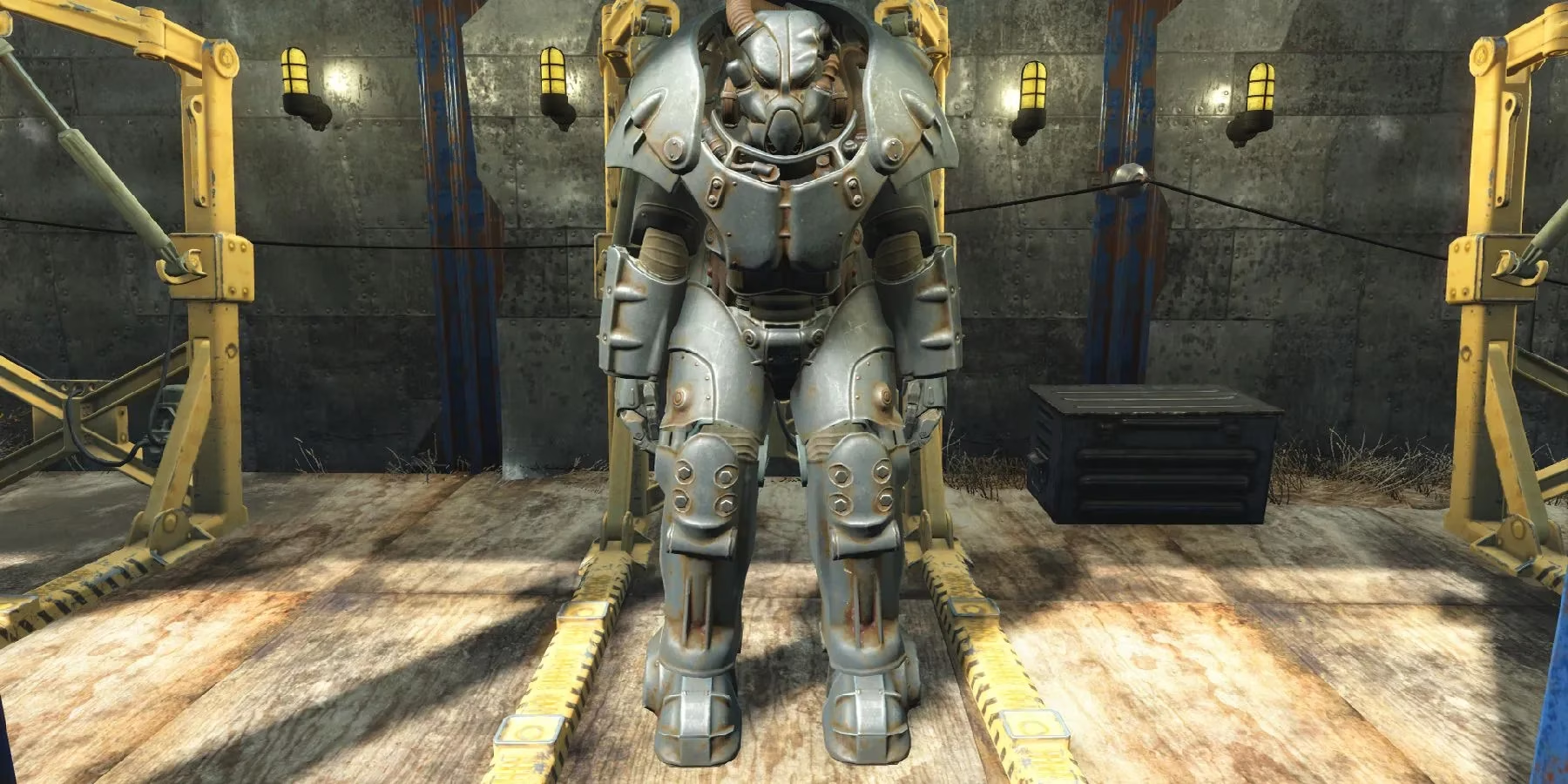
Bethesda's Fallout series is in a uniquely frustrating position. The post-apocalyptic RPG has never been more popular, thanks largely to a critically acclaimed TV show that has introduced the Wasteland to a whole new audience. The hype train is at full speed! 🚂 Yet, the studio itself seems to have misplaced the tracks. Fallout 4 launched back in 2015, and since then, Bethesda has been clear: Fallout 5 is on the list, but it's years away, waiting its turn behind other colossal projects. It's the ultimate tease—maximum popularity, minimal forward momentum on the main game front.
But perhaps no wait embodies the modern gaming dilemma more than the one for The Elder Scrolls VI. Skyrim wasn't just a game; it was a phenomenon. Released in 2011, it has been ported to every device imaginable (probably including smart toasters by now) and has sold tens of millions of copies. Fans have been ready for a new adventure for over a decade. Bethesda acknowledged this desire in the most minimal way possible: a title announcement teaser in 2018. That's it. No date, no details, just a name and a landscape. As of 2026, the silence remains. At this rate, by the time The Elder Scrolls VI launches, the original Dovahkiin will be telling tales of Alduin to their grandkids. The table below sums up the sheer scale of the patience required:
| Franchise | Last Main Game | Year Released | Status of Sequel (2026) |
|---|---|---|---|
| Grand Theft Auto | GTA V | 2013 | Officially announced, expected soon. |
| Portal | Portal 2 | 2011 | Radio silence from Valve. 🤖 |
| Fable | Fable III | 2010 | Reboot in development, trailer released. |
| Fallout | Fallout 4 | 2015 | Confirmed, but very early in development. |
| The Elder Scrolls | Skyrim | 2011 | Announced in 2018, no further news. |
So, why do we put up with it? The reasons are as complex as the games themselves:
-
Scale & Polish: Games are vastly more complex and expensive to make.
-
Games-as-a-Service: Why make a sequel when you can keep updating the current cash cow forever?
-
Studio Priorities: Developers like Bethesda and Rockstar work on one behemoth at a time.
In the end, the relationship between fan and franchise has changed. We're no longer just awaiting a sequel; we're participating in a years-long communal vigil, clinging to trailers, dissecting rumors, and finding solace in memes. The wait is painful, but the hope—that the next Skyrim, Portal, or Fallout will be worth every agonizing year—is what keeps us checking the news. The iron isn't just hot anymore; it's being forged into a monument, and we're all waiting to see if the final shape will have been worth the lifetime of anticipation. 🗿