As Playground Games continues development on the highly anticipated Fable reboot in 2026, one question looms large for fans: what kind of hero will they be playing? While many modern RPGs have embraced rigid class systems and specialized character builds, Fable has always danced to a different tune. The series' identity isn't about limiting players to being just a mage or just a warrior—it's about becoming a legendary figure who can do it all, often with a wink and a smile. This isn't your typical zero-to-hero journey; it's more like zero-to-demigod, and that's precisely what makes Fable, well, Fable.
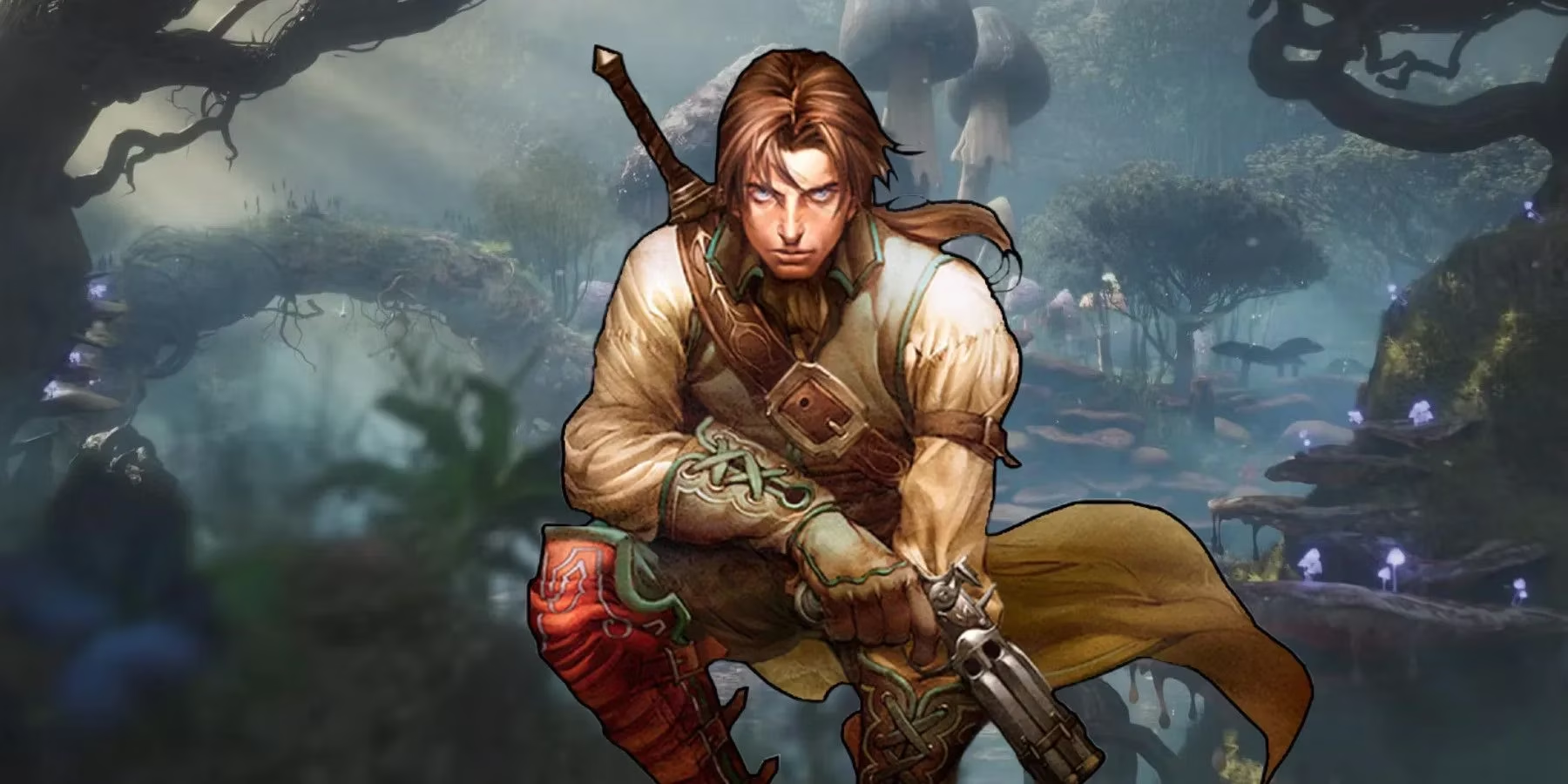
The Fable Formula: Breaking RPG Conventions Since 2004 🎮
Let's be real—Fable games have always played by their own rules when it comes to character progression. On the surface, they appear to follow typical RPG conventions with their three core skill trees:
-
Melee Combat (Swords, hammers, and good old-fashioned fisticuffs)
-
Ranged Weapons (Bows, crossbows, and later, firearms)
-
Will (Magic) (Everything from fireballs to time manipulation)
But here's the kicker: unlike games that force you to choose a path and stick with it, Fable encourages—nay, enables—players to become masters of everything. By the end of most playthroughs, your character isn't just competent in multiple areas; they're ridiculously overpowered in nearly every aspect of combat and magic. This design philosophy creates what some might call a "power fantasy on steroids"—and honestly, that's part of the charm.
Why Specialization Would Break the Magic ✨
Imagine if the new Fable suddenly implemented traditional class systems:
| Traditional RPG Approach | Fable's Historical Approach |
|---|---|
| Choose class at character creation | Start as a blank slate (literally sometimes!) |
| Limited skill progression paths | Unlock everything eventually |
| Replay value through different builds | Replay value through moral choices & exploration |
| Narrative justifies specialization | Narrative celebrates overwhelming talent |
As one critic noted, Fable isn't about role-playing as a specific archetype—it's about role-playing as "someone with god-like power." That distinction is crucial. While games like Baldur's Gate 3 offer incredible depth through specialization, Fable offers something equally valuable: the sheer joy of unrestricted progression.
The 2026 Reboot: What Should Stay and What Could Change 🔄
Playground Games faces an interesting challenge. They need to modernize the franchise for contemporary audiences while preserving its soul. Here are some key considerations:
What Should Definitely Stay:
-
Flexible skill systems - No hard locks on abilities
-
Progressive power scaling - That satisfying feeling of becoming overpowered
-
The tone - Whimsical, British humor mixed with genuine heart
-
Moral choices with visible consequences - Good, evil, and everything in-between
What Could Be Enhanced:
-
Deeper customization without restricting ability access
-
More meaningful side activities that tie into progression
-
Enhanced social systems (remember buying property and getting married?)
-
Dynamic world changes based on player actions
The beauty of Fable's approach is that it doesn't need complex narrative justifications for why one character can master swordplay, archery, and magic. The series has never taken itself too seriously—it's more Monty Python than Game of Thrones—and that narrative flexibility allows for gameplay freedom that more "serious" RPGs can't easily replicate.
The Risk of Following Trends vs. Forging a Path 🛤️
In today's RPG landscape, it would be easy for Playground Games to look at successful titles and think, "Hey, maybe we need proper classes too!" But that would be a classic case of "if it ain't broke, don't fix it." The original Fable trilogy carved out its niche precisely by being different—by prioritizing charm, tone, and a specific kind of power progression over endless build-crafting possibilities.
Consider this: when you finish a Fable game, you don't think, "I wonder how a mage playthrough would go." You think, "I wonder what would happen if I was evil this time" or "I missed that secret area" or "What if I married someone different?" The replay value comes from exploring the world and narrative possibilities, not from experimenting with different combat builds.
The Sweet Spot: Modernization Without Loss of Identity 🎯
The ideal Fable reboot in 2026 would:
-
Keep the jack-of-all-trades progression as the core philosophy
-
Add depth through horizontal progression (more abilities, not restricted access)
-
Maintain that signature British humor (it's part of the DNA!)
-
Expand social and economic systems (because being a landlord was weirdly fun)
-
Push visual boundaries while keeping the fairy-tale aesthetic
At the end of the day, Fable's hero needs to be someone who can swing a giant hammer, cast world-altering spells, and fire a flintlock pistol—all while making sarcastic comments and possibly growing horns if they're feeling particularly mischievous. That's not just a character build; that's a personality, and it's what fans have loved for over two decades.
Final Thoughts: Why Fable's Approach Still Matters in 2026 💭
In an era where RPGs often demand hundreds of hours to experience everything, there's something refreshing about Fable's promise: you can experience nearly everything in one playthrough. You don't need to create three different characters to see all the combat styles. You don't have to worry about "wasting" skill points. You just play, experiment, and have fun watching your character evolve into a legendary figure capable of literally anything.
As we look toward the reboot's eventual release, here's hoping Playground Games remembers what made the series special in the first place:
-
😄 The joy of unrestricted progression
-
🏰 A world that reacts to your choices (both big and small)
-
⚔️ Combat that's accessible yet deep
-
📖 A story that doesn't take itself too seriously
-
🌟 That magical feeling of becoming Albion's ultimate hero
The gaming landscape has changed dramatically since Fable 3 released, but some things remain timeless. The desire to become an all-powerful hero in a charming, quirky world? That's one of them. Here's to hoping the reboot remembers that sometimes, being a jack-of-all-trades isn't a compromise—it's the whole point.