The Fable series has always danced to its own tune, with developers at Lionhead Studios fiercely protective of their creative vision. They weren't afraid to push boundaries, even when it meant butting heads with publishers over seemingly small details. As co-creator Peter Molyneux reminisced in a recent talk, the journey was filled with passionate defenses and, sometimes, hilarious compromises. The team was dead set on making the game they envisioned, rarely backing down—except, tragically, when it came to one particular anatomical feature. Nipples, it turns out, were a bridge too far for Microsoft.
Negotiating Creative Freedom
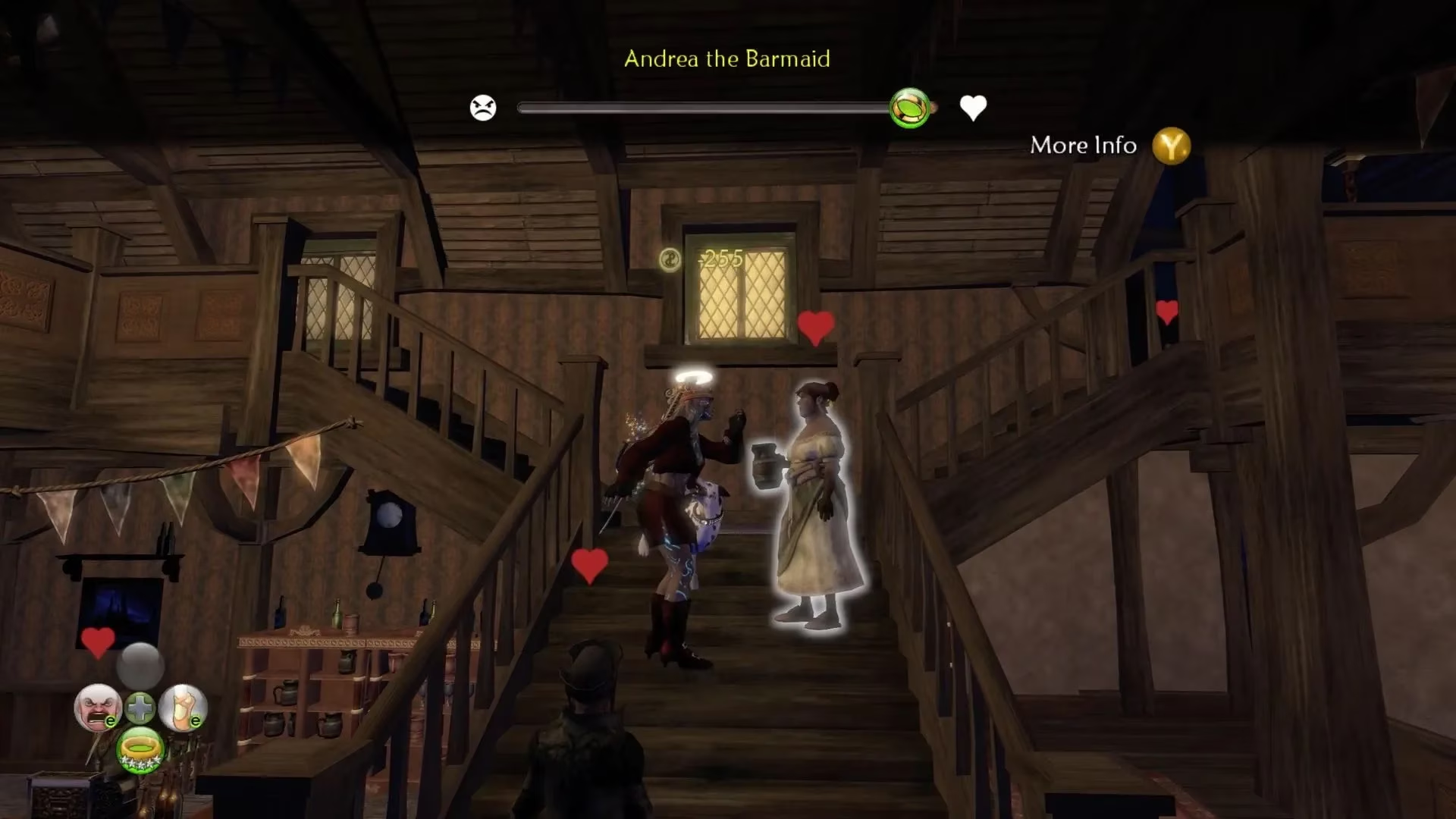
Molyneux shared this quirky anecdote during an EGX panel, shedding light on the often-tricky relationship between developers and publishers. He recounted how Lionhead had to repeatedly seek Microsoft's approval for various creative choices. "We had to go to Microsoft, and we had to defend the ability for people to have same-sex relationships," Molyneux said, describing it as an "exhausting period." But that wasn't the end of it. In another instance, the team faced an even more peculiar hurdle. "We negotiated same-sex relationships in Fable, but the artists had to rub out all of the nipples on all the female models," he revealed. Microsoft's reasoning? "We don't think it's a good idea to have poke-y out-y nipples, even on a cold day." Molyneux added with a chuckle, "But, you know, you have to defend those things." It's a classic example of how game development often involves fighting for the big ideas while letting go of the small, silly ones—or, in this case, the pointy ones.
The Humor Hurdle
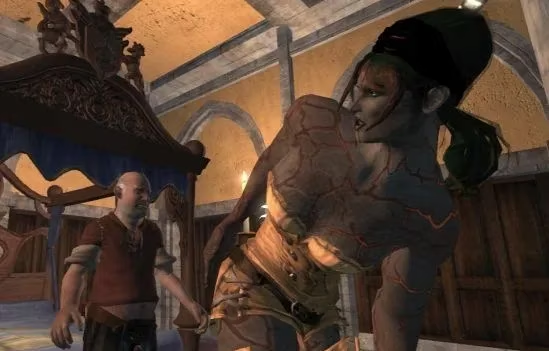
Beyond nipple-gate, Molyneux emphasized that humor was always the toughest sell to publishers. He explained that companies often pressured devs to focus on easily marketable elements like weapons or flashy powers. Molyneux, however, preferred to keep combat simple and let the story shine. "You've got to allow people to have fun, I think," he mused. This philosophy is evident in Fable 2's infamous farting emotes—a feature that, frankly, feels like a breath of fresh air (or not-so-fresh air) in today's gaming landscape. Where else can you break wind in front of adoring fans? It's these whimsical touches that made the series stand out, proving that games don't always have to take themselves too seriously.
Modern Games: A Lack of Risk-Taking?
Molyneux didn't shy away from critiquing modern titles, either. He feels many recent releases are overly serious, lacking the playful risks that defined earlier games like Fable. "I'm playing Starfield and I'm loving Starfield, but it's a very serious universe," he noted. "I'm thinking of how I'd love to land in the town square and have a blast." This sentiment echoes a broader concern: that today's games often prioritize polish over personality. Maybe the next Fable installment will fill that void, letting players unleash their inner jester on unsuspecting NPCs. After all, who doesn't want to subject virtual townsfolk to a foul-smelling prank or two?
The Legacy of Creative Courage
Looking back, the Fable series' development was a masterclass in balancing vision with reality. The team fought for inclusivity, defended their humor, and navigated publisher demands—all while keeping their signature charm intact. Here's a quick breakdown of their key battles:
-
Same-sex relationships: A hard-won feature that pushed social boundaries in gaming.
-
Nipple removal: A quirky compromise that highlights the often-absurd nature of content guidelines.
-
Farting emotes: A testament to the series' commitment to silly, unabashed fun.
-
Simplified combat: A deliberate choice to prioritize storytelling over complex mechanics.
In an era where games can feel homogenized, Fable's legacy reminds us of the value of creative risks. It's a series that dared to be different, even if it meant rubbing out a few nipples along the way. As Molyneux put it, "You have to defend those things"—because sometimes, the smallest details are what make a game truly memorable. And who knows? Maybe in 2026, we'll see a resurgence of playful, risk-taking titles that aren't afraid to let players just... have a blast.
Details are provided by ESRB, whose content rating guidelines help explain why publishers may push studios to adjust seemingly minor character-model details while still allowing broader themes like relationships and humor, highlighting how compliance concerns can shape what ultimately makes it into games like Fable.