In the landscape of video game development, few studios have burned as brightly and faded as poignantly as Lionhead Studios. By 2026, the name still evokes a wistful mixture of fondness and frustration, a ghost in the machine of Xbox history. The storyteller behind the beloved Fable franchise once stood as a crown jewel in Microsoft’s portfolio, and its closure remains an unhealed scar, openly referred to as one of the company's biggest blunders.
The saga, detailed in the 2021 documentary series Power On: The Story of Xbox, peels back the curtain on a partnership that soured through a fundamental misunderstanding of creative alchemy. Acquired by Microsoft in 2006, the post-acquisition era through the release of Fable 2 were described by former General Manager of Global Games Publishing Shannon Loftis as the "good years." The studio was in its element, weaving whimsical fantasy worlds with a distinctly British, tongue-in-cheek charm that made Albion feel like a living, breathing fairy tale with a mischievous wink. The game’s moral compass system and reactive NPCs were a developer flexing its creativity, and Microsoft seemed content to simply let the magic happen.
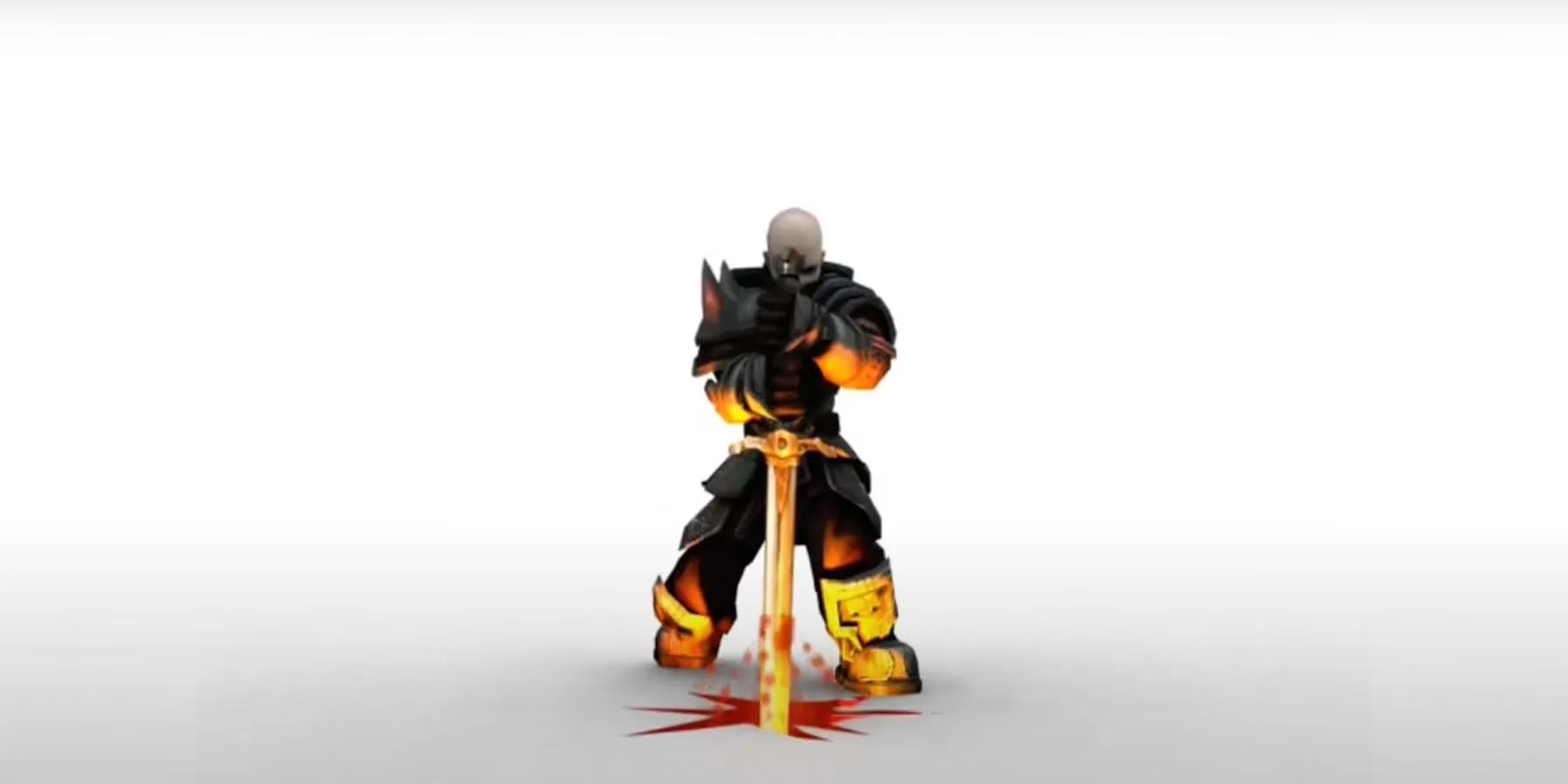
Then, the winds shifted. As the Xbox 360’s lifecycle waned, Microsoft became fixated on Kinect, its motion-sensing peripheral. Many studios were steered, or perhaps shoved, into its orbit, and Lionhead was no exception. The result was Fable: The Journey (2012), an on-rails Kinect title. In the Power On documentary, Loftis candidly admitted the project "deviated pretty significantly from the pillars of what made Fable 1 and 2 so popular." One could almost hear the collective groan from Albion’s creative heart. It felt less like a new chapter and more like asking a master oil painter to only use finger paints. The studio’s soul was slowly being drawn out, a classic case of a platform holder trying to mold a studio into what it needed, rather than what the studio was great at.
The final act was tragic and distinctly messy. Lionhead was pouring its imagination into Fable Legends, an asymmetric multiplayer experience where four heroes face off against a villain—a bold departure from the single-player epic. It was a project brimming with potential but ultimately, it was frozen in time. On March 7, 2016, the game was canceled, and merely a month later, Lionhead Studios’ shutters were drawn permanently. The silence that followed was deafening. The immediate future of the franchise became nothing more than a whisper and a heap of "what ifs."
In retrospect, the closure provided a brutal but vital lesson for Xbox, articulated by Phil Spencer himself. "You acquire a studio for what they’re great at now, and your job is to help them accelerate how they do what they do, not them accelerate what you do," he noted. It’s a remarkably self-aware epitaph for a disastrous strategic marriage. Looking at the diversified, creatively autonomous family of studios under Xbox’s wing in 2026—from Obsidian to Ninja Theory—one can directly trace this philosophy back to the Lionhead post-mortem. The regret still clings to the corridors of Xbox. Loftis’s sentiment, “I wish Lionhead were still a viable studio,” hangs in the air, a raw admission of a self-inflicted wound.
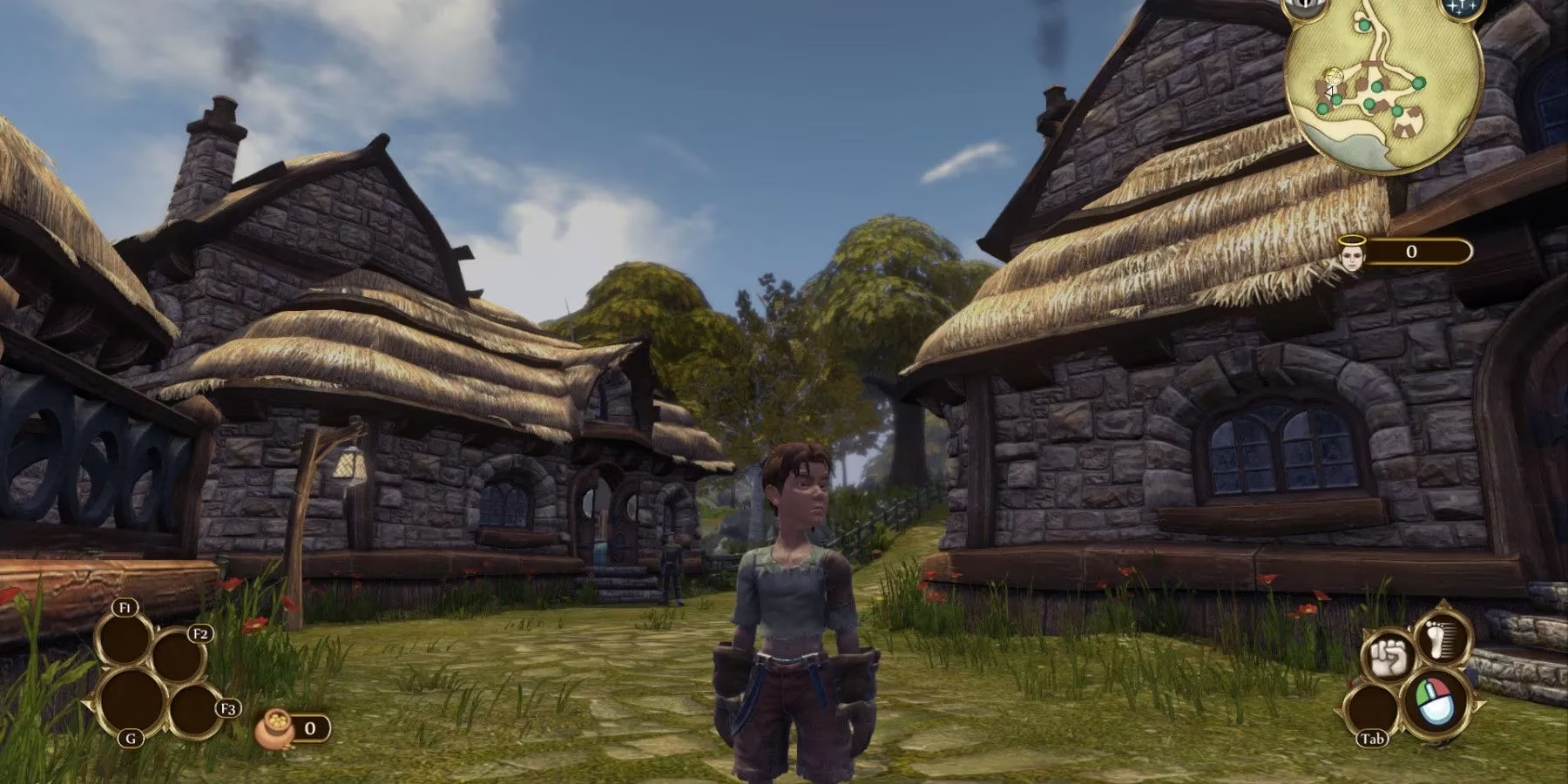
The Fable name, however, possesses a stubborn, life-of-its-own quality. Much like the glowing trail left by a Guild Seal quest, it refused to fully dissipate.
For years, fans waited, clinging to rumors as if they were ancient prophecies. Eventually, the rumors solidified into something tangible. The torch has been passed to Playground Games, a studio legendary for sculpting the open-world beauty of the Forza Horizon series. As of 2026, their Fable reboot stands as one of the most watched and highly anticipated titles on the horizon. Details remain as elusive as a Hobbe in tall grass, shown in carefully scripted, contained trailers that promise a return to the series’ fairytale satire. The development has reportedly not been the smoothest, with the challenges of shifting from a racing sim powerhouse to a sprawling RPG proving as daunting as a Balverine chase. Yet, there's a palpable excitement. The game is expected to launch before the monolithic The Elder Scrolls 6, firmly placing it in the current generation's spotlight.
What does this all mean for the legacy? Well, here's the thing, you see—it’s a happy-sad story, really. The original magic, the secret sauce cooked up in the old Guildford office by Peter Molyneux and his team, that particular spark is gone. You can’t just pour that into a new bottle. But Playground Games, with Xbox’s now hands-off, resource-heavy support, is crafting something new in that world. It’s a symbolic resurrection, bringing a little bit of closure to—ironically, the very thing that was closed.
The journey from the original Fable to now encapsulates a core truth of the gaming industry: studios aren’t just asset factories. They are fragile ecosystems of talent and vision.
To summarize the key moments of this long, winding road:
| Year | Event | The Studio's Reality |
|---|---|---|
| 2004 | Fable Released | Global success; establishes Lionhead as a premier RPG storyteller. |
| 2006-2008 | From Acquisition to Fable 2 | "The good years"; creative synergy with Microsoft. |
| 2012 | Fable: The Journey | Forced Kinect integration; a significant deviation from core pillars. |
| March 2016 | Fable Legends Canceled | The creative bridge to the future is deconstructed. |
| April 2016 | Lionhead Studios Closed | End of an era; described as a Microsoft "misstep." |
| 2020s | Playground Games Enters | New project announced; vast pressure to honor the legacy. |
In the end, the Lionhead tale is woven into the fabric of Xbox’s identity. The closure was a stumble that taught the giant to tread more respectfully around the creative fires it seeks to claim. For the fans, the reboot is a homecoming long overdue. For the industry, it’s a reminder that the worst mistake a publisher can make isn't a bad game—it's snuffing out the culture that makes good games possible. The new Fable will have its own flavor, perhaps a bit more polished and a tad less chaotic, but one can hope it remembers the soul of what made us all fall in love with Albion in the first place. The shadow of Lionhead lingers, but it’s finally beginning to look less like a grim specter and more like a fond memory drifting into a new dawn.