As I look towards the long-awaited return of Albion, the upcoming Fable game from Playground Games stands at a crossroads between cherished nostalgia and the need for meaningful evolution. The original trilogy, brainchild of Peter Molyneux and Lionhead Studios, wasn't just a series of RPGs; it was a whimsical, often hilarious sandbox that dared to let players live a life, for better or worse. It gave us gesture-based communication, jobs that ranged from blacksmithing to bartending, a reputation system that visibly changed our heroes, and of course, those ever-faithful canine companions. But as we stand in 2026, with gaming narratives having matured into intricate tapestries of choice and consequence, simply recreating the past won't be enough. The new Fable must be a phoenix, rising from the ashes of its predecessors not just to match them, but to transcend them, refining the clunky mechanics and black-and-white morality while fiercely protecting the series' uniquely British, fairy-tale soul.
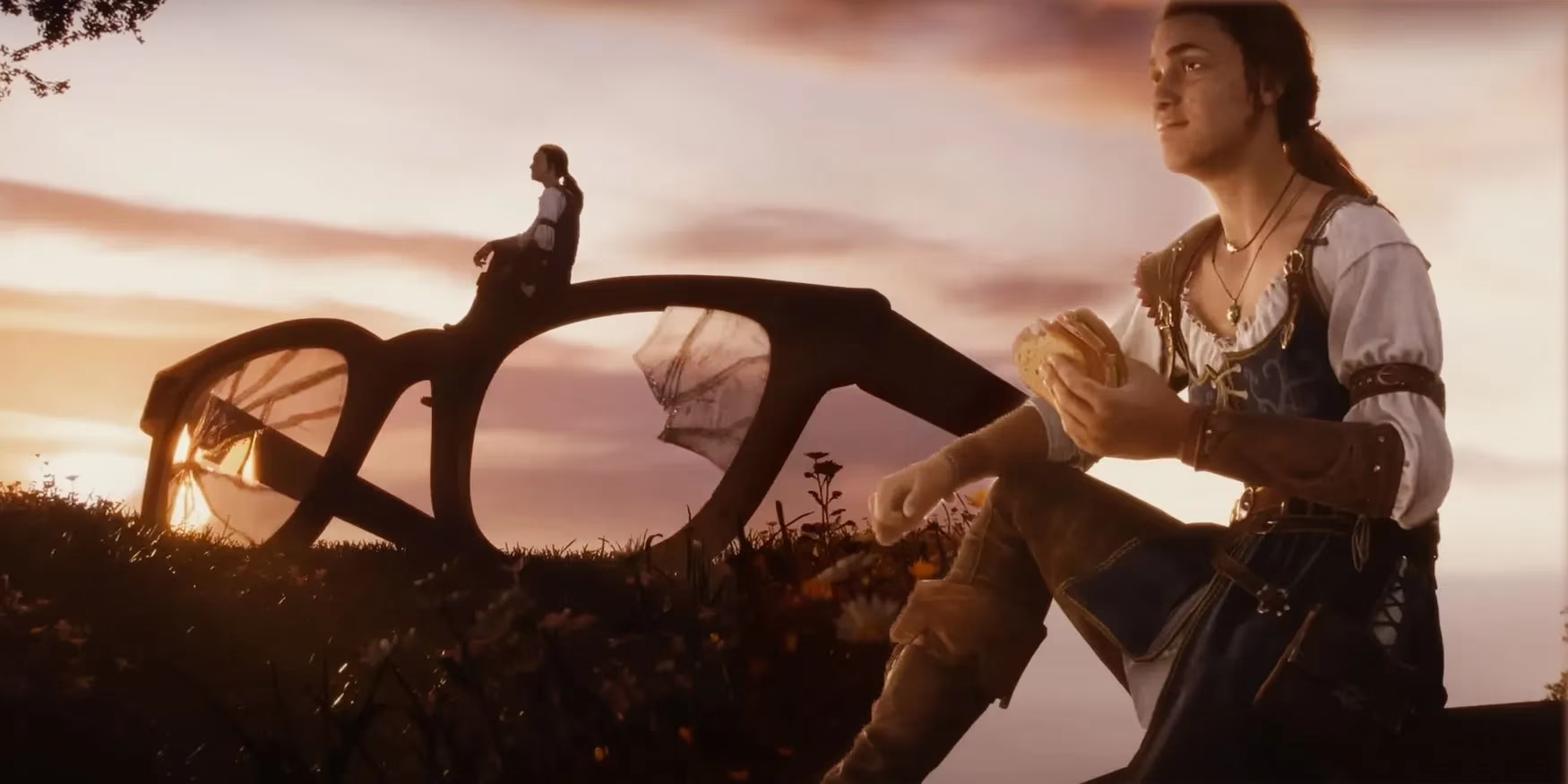
The beating heart of Albion was never solely its main quest. For many of us, the magic was in the detours—the world felt alive not because of a looming apocalyptic threat, but because of the absurd problems of its inhabitants. The upcoming game must double down on this. The side-quests should be the series' secret weapon, little self-contained stories brimming with the dry, farcical humor that defined the originals. We need more sentient Demon Doors with bizarre riddles, more eccentric NPCs with requests so ludicrous they loop back to genius, and more treasures only our trusty dog can unearth. The recent cinematic trailer, with its Jack and the Beanstalk homage and the giant's deadpan pitch for 'giant vegetables,' is a promising sign that Playground Games understands this. The fairy-tale whimsy must be preserved like a carefully tended secret garden, a place where logic takes a backseat to wonder.
Evolving Beyond Good & Evil: The Need for Moral Nuance
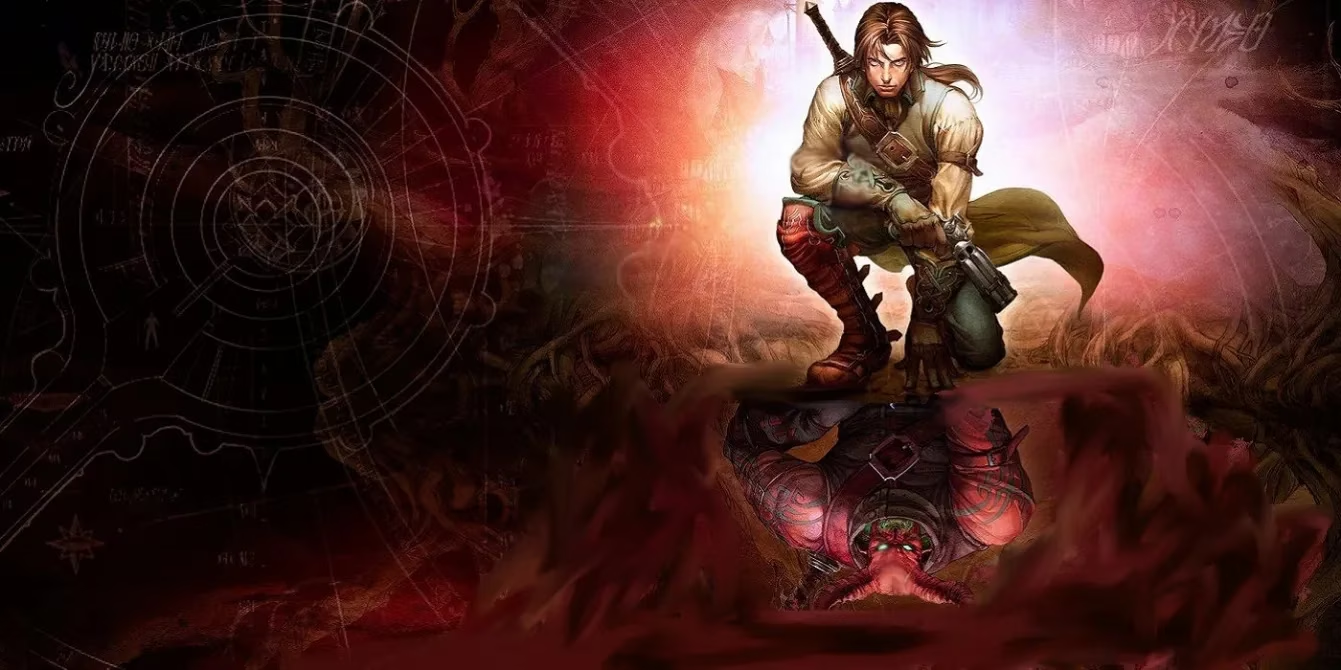
If the original trilogy's morality system was a child's storybook—clear, bold, and simple—the new game needs the moral complexity of a modern political thriller. The old 'save the orphans' vs. 'eat the orphans' binary needs an overhaul. We've moved past the era where RPG choices were as stark as choosing between a halo and a pair of horns. Modern players crave ambiguity, scenarios where the 'right' choice is obscured by personal bias, conflicting loyalties, and unforeseen consequences. The new Fable should take a page from contemporary narrative masters, introducing dilemmas where neither option feels purely virtuous or evil. Should you uphold a law that protects the many but ruins one innocent family? Do you side with a revolutionary who promises freedom but uses brutal methods? This doesn't mean removing clear-cut choices entirely; sometimes, kicking a chicken just for the fun of it is a timeless pleasure that must remain. But layering in true moral ambiguity would make Albion feel like a real, breathing world, not just a morality simulator.
Building a Life, Not Just a Home
One of Fable 2's most revolutionary feats was letting us build a life. We could work, buy property, get married, and have children. For its time, it was groundbreaking. But by 2026's standards, those systems can feel as dated as a flintlock pistol next to a plasma rifle. The new game needs to deepen these life sim elements from a shallow pond into a vast, interactive ocean.
-
Romance Beyond Gifts: Courtship shouldn't just be a matter of spamming the 'Flirt' gesture and gifting endless chocolates. Potential spouses should have personalities, preferences, and questlines that reveal their histories and dreams.
-
NPCs with Agency: Our families should feel like active participants in the world. A spouse might start their own business, our children might get into trouble at school requiring our intervention, and their opinions of us should change based on our actions in the wider world, not just at home.
-
Consequences That Matter: Neglect shouldn't just lead to a frowny-face icon and divorce papers. It should create unique narrative branches—a resentful child who runs away to join a faction you oppose, or a former spouse who becomes a political rival.
The Aesthetic of a New Albion
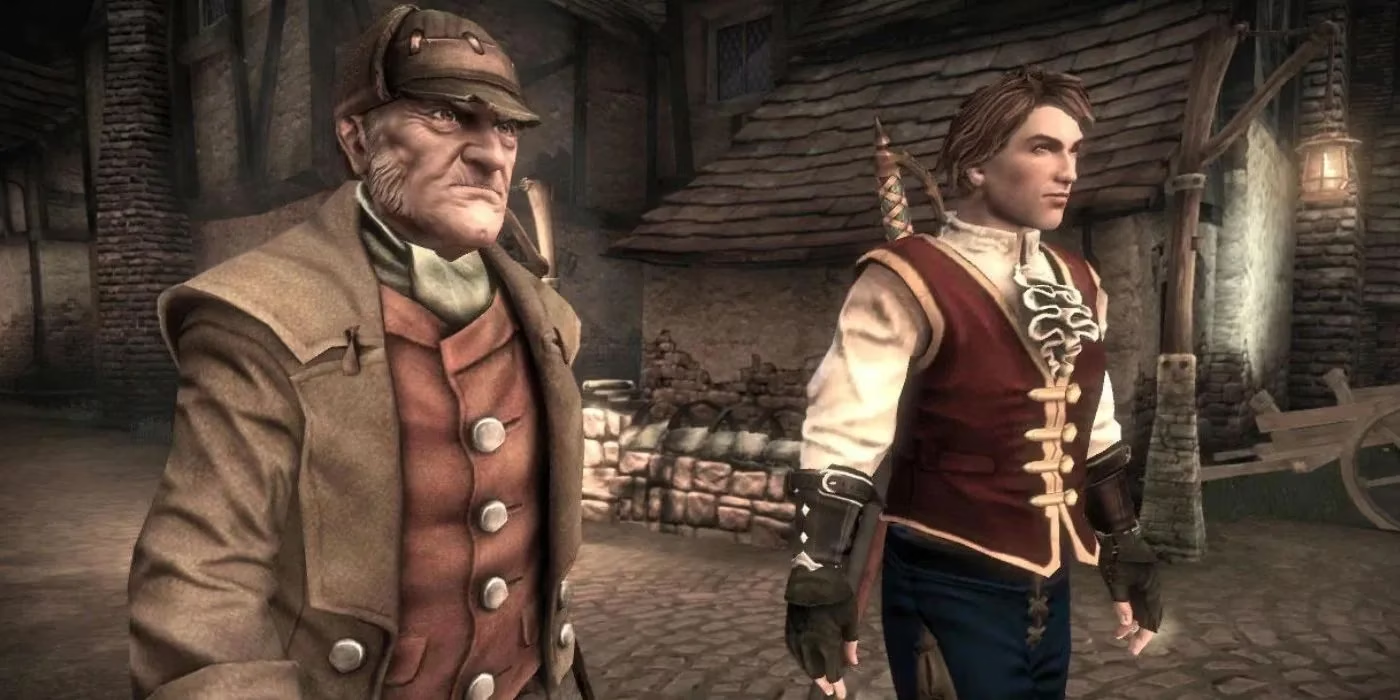
Aesthetic is key to Fable's identity. The jump from the classic medieval fantasy of the first game to the flintlock fantasy of the second was a masterstroke, setting it apart in a sea of Tolkien-esque worlds. The trailer hints at a new direction—perhaps a late medieval or Renaissance-era 'matchlock fantasy.' This is a perfect sweet spot. Imagine a world where polished plate armor gleams alongside the first crude, unreliable firearms. Where ancient magic and nascent science are in a tense, fascinating dance. This setting could be the series' new signature, as distinctive as the flintlock era once was. It allows for the swords and sorcery we love, while introducing the social and technological tumult that makes for great storytelling.
Final Thoughts: Honoring the Past, Building the Future
In the end, the task for Playground Games is as delicate as negotiating with a Demon Door. They must be archivists, carefully preserving the core DNA: the humor, the whimsy, the freedom, and the heart. But they must also be innovators, sanding down the rough edges of clunky plots and simplistic morality, and introducing systems with the depth modern players expect. The new Fable shouldn't just be a reboot; it should be a renaissance for Albion. It needs to make us feel like wide-eyed Heroes once more, not through nostalgia alone, but by offering a world that is deeper, richer, and more alive than anything we've explored there before. If they can strike that balance, the new Fable won't just live up to its legacy—it will become the new benchmark by which the old ones are remembered.