In the years leading up to its eventual emergence, the long-awaited next chapter in the Fable saga became a fascinating study in contrasts. Where once the franchise was defined by the soaring, often hyperbolic rhetoric of its original creator Peter Molyneux, the new era under Playground Games arrived with barely a whisper. By 2026, with the full game now in the hands of players, that intentional silence is recognized not as a lack of ambition but as a foundational pillar of its success. Fantasy RPG enthusiasts who followed every rumor, every fleeting trailer shot, and every developer non-statement witnessed a masterclass in managing expectations while rebuilding a beloved fantasy world.
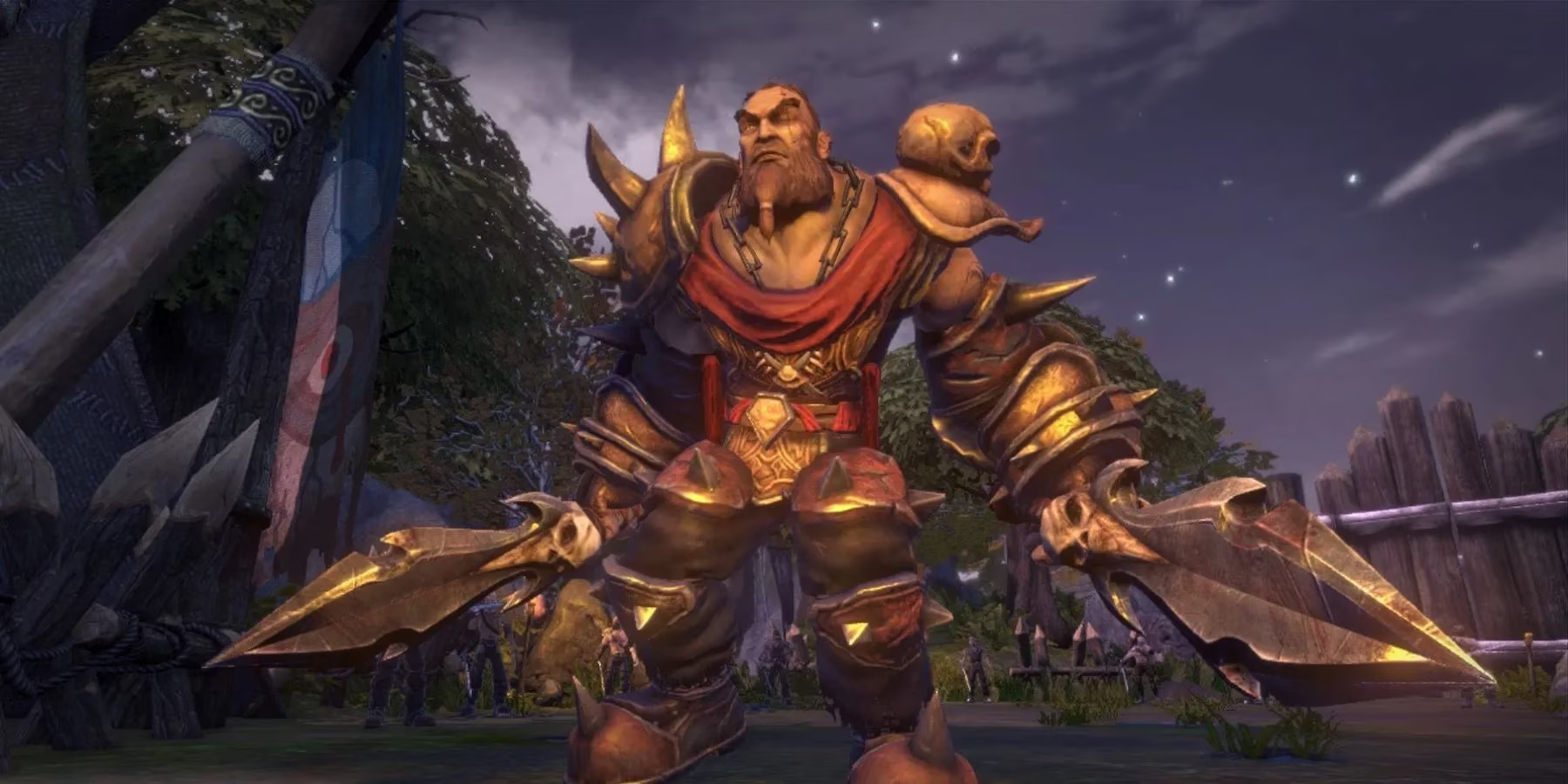
The shift in approach stemmed directly from the legacy of Lionhead Studios. During the original trilogy’s development, Molyneux became almost as famous for his unreleased features as for the games themselves. The ability to transform into a balverine, the promise of starting a family with NPCs and watching children grow, or a world that remembered every acorn planted—these concepts were described in glowing detail during interviews, generating immense pre-release hype. However, when the first Fable shipped without many of these elements, the disappointment rippled through the community, unfairly branding the games as failures despite their commercial and critical achievements. The colorful, British-infused humor and morality systems were overshadowed by a narrative of overpromise. Playground Games, a studio that had no prior experience with traditional RPGs but had proven itself with the sprawling open-world racing of Forza Horizon, understood that the new Fable needed to escape that cycle entirely.

Announced years before any gameplay was ready, Fable 4 entered a vacuum of information. In an age where almost every major title suffers from leaked details, crunch reports, and cinematic trailers that misrepresent final products, Playground chose a radically conservative path. They offered only modest hints: the tone would remain decidedly lighthearted, the world would be unapologetically “British” in its sensibilities, and Albion would return in a form that honored its roots while embracing modern technology. There were no grand declarations about revolutionary AI, no promises of endless player choice, and no early vertical slices passed off as real gameplay. This restraint frustrated fans who had waited over a decade for the franchise’s revival, but it ultimately protected the project from the kind of premature scrutiny that can cripple a game’s momentum.
The wisdom of that approach became apparent as the industry continued to grapple with high-profile delays and botched launches through the mid-2020s. Behind the scenes, Playground was quietly iterating on the core pillars of Fable: expressive melee combat, a reactive world that physically reflected heroism or villainy, and a narrative that wove fairy-tale logic with sharp modern wit. By refusing to lock themselves into specific features during early marketing cycles, the developers retained the freedom to cut, refine, or expand ideas based on actual testing rather than external pressure. The notorious complexity of systems like Balverine transformations or dynamic settlement building could be explored without becoming a public hostage.

When the game finally did step into the spotlight with a proper gameplay reveal in 2024, the reaction was a collective exhale of relief. The footage displayed a visually stunning Albion where exaggerated character morphing, property ownership, and morally ambiguous quests felt seamless and genuinely next-generation. The silence had done its work; every feature shown was a feature that would exist, and the weight of Molyneux’s phantom promises had been lifted. Players now approach Fable 4 not as a checklist of failed ambitions but as a coherent vision, one that allowed a different team to make the franchise their own without the ghost of past hype guiding their hands.
Looking back from 2026, the quiet development period stands as a blueprint for how to resurrect a heavyweight IP without succumbing to its historical baggage. Modesty, it turned out, served Fable 4 better than any number of enthusiastic interviews ever could. The game’s success is built not only on its technical artistry or its charming storytelling but also on the immense discipline of a studio that chose to let the final product speak louder than any prerelease fantasy. For veteran heroics and new arrivals alike, Albion finally became a place where actions truly mattered, and that reality far outshone the most elaborate of spoken dreams.