I wander through digital realms, my fingers dancing across controllers, seeking those elusive figures who pull strings from shadowed thrones. They are the architects of chaos, the weavers of despair, yet their hands remain clean—never clenched into fists against me. In a medium where conflict is so often resolved through force, these villains stand apart, their power emanating not from muscle or magic, but from influence, intellect, and the chilling authority they wield over others. They are the puppet masters, and the world is their stage.
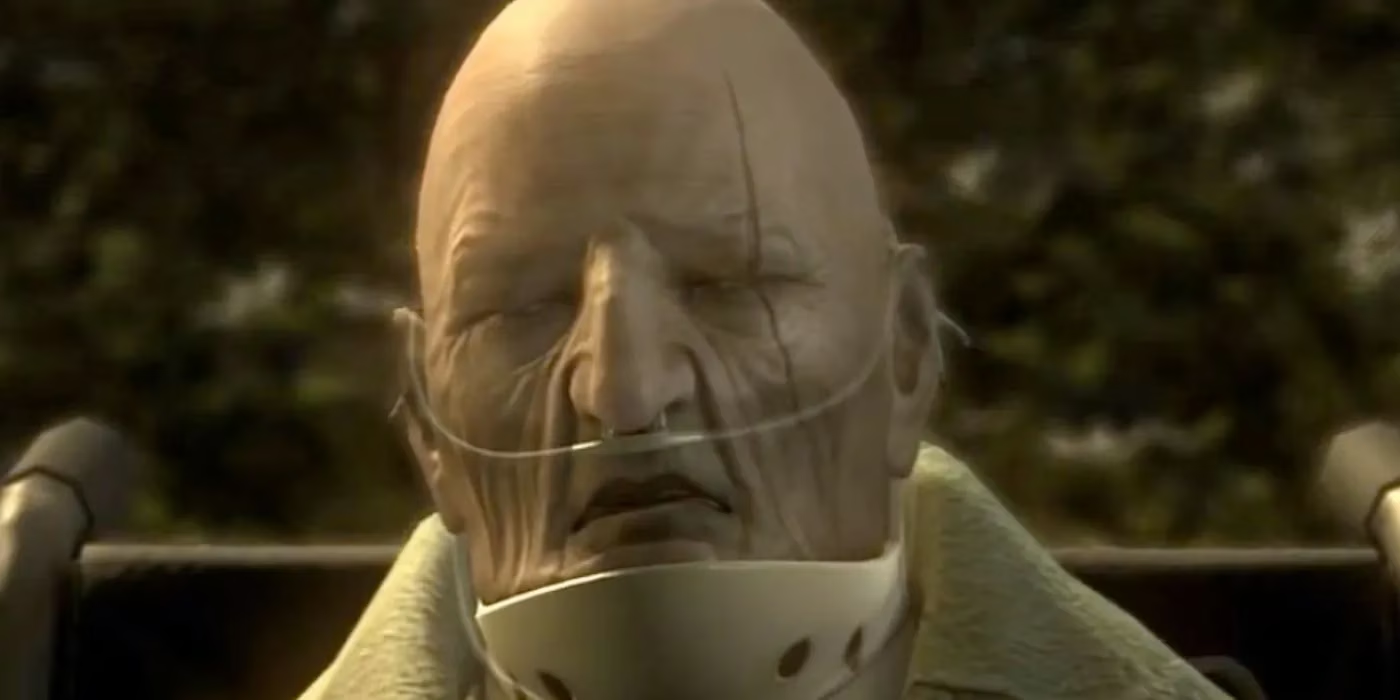
In the labyrinthine narrative of Metal Gear, I found Zero—a specter more than a man. His physical presence in my journey was fleeting, a wisp of memory in a wheelchair, clinging to life. Yet, the weight of his creation, The Patriots, pressed down on every moment. Solid Snake, Big Boss, Raiden—their struggles were echoes of his original design. I never crossed blades with him; his war was fought through proxies, through ideologies made machine. To confront him was to confront an idea grown old, a founder watching his creation spiral beyond his control. His villainy was in the blueprint, not the battle.
Some betrayals cut deeper than any sword. Harry Flynn in Uncharted 2 wore friendship like a mask, his charm a gilded trap. We stole together, laughed together, before the shot rang out—a surprise in a cutscene, not a duel. His was the betrayal of trust, a poison in the camaraderie of treasure hunting. And when his usefulness expired, his employer, Lazarevic, cast him aside. Flynn’s end was not at my hands, but in the cold calculus of a greater evil. He reminded me that sometimes the most dangerous enemies are those who stand beside you, their weapons not guns, but deception.
The modern-day strands of the early Assassin's Creed tapestry were threaded with the cold, clinical menace of Warren Vidic. He was my jailer, my interrogator, the voice that forced Desmond Miles into the Animus. A scientist in a lab coat, not a warrior in robes. Our confrontations were dances of will, not steel. Once, he fled when his guards fell. Later, I wielded the Apple of Eden not to strike him, but to turn his own protectors against him. His defeat was a collapse of authority, a proof that the mind can be a prison stronger than any cell. He never threw a punch because his battlefield was the psyche.
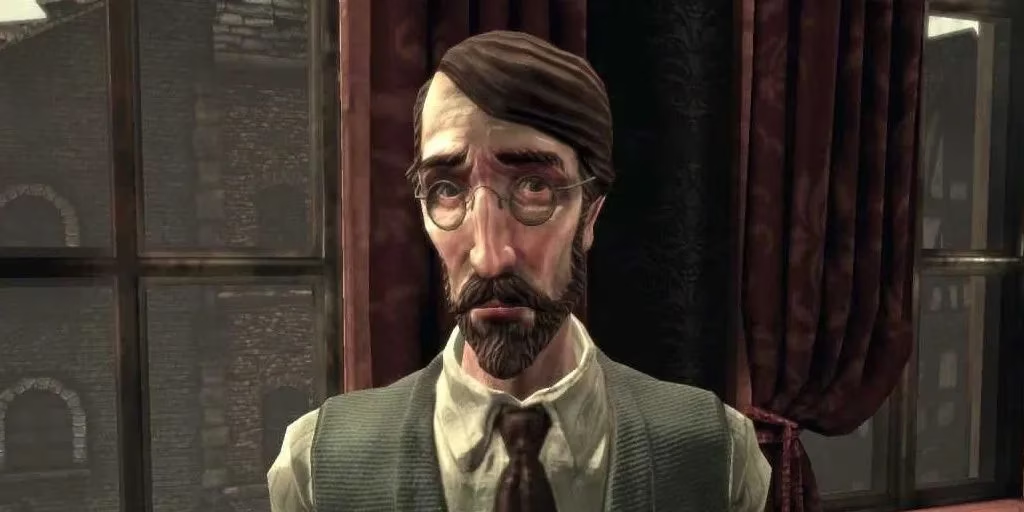
Dr. Angus Bumby presented a different horror. In Alice: Madness Returns, he was the gentle therapist, a port in the storm of Alice’s mind. But his kindness was a lie, a tool to manipulate. He never faced me in Wonderland; instead, he unleashed The Dollmaker, a psychological construct born of his malice. Fighting his creation was fighting a shadow of his will. His ultimate end—shoved before a train—was abrupt, visceral, a final rejection of his “therapy” by the very patient he sought to control. His violence was indirect, making his mundane humanity all the more terrifying.
| Villain | Game | Role | Why No Fight? |
|---|---|---|---|
| Zero | Metal Gear Series | Founder of The Patriots | Aged, infirm, operates through AIs and proxies |
| Harry Flynn | Uncharted 2 | Treacherous Rival | Betrays from within, is disposed of by main villain |
| Warren Vidic | Assassin's Creed | Scientist/Jailer | Relies on guards and tech, no combat skills |
| Dr. Bumby | Alice: Madness Returns | Manipulative Therapist | Uses psychological constructs, physically weak |
Tyrants, too, can surrender without a fight. King Logan in Fable 3 was the face of oppression, squeezing Albion dry. When I, as his sibling, stormed his castle, I expected a final, desperate clash. Instead, he yielded the crown freely. The revelation was a narrative gut-punch: his cruelty was a desperate, misguided preparation for a greater threat—the Crawler. His villainy was a mask of necessity, and his surrender reframed every harsh decree. It taught me that not all battles are won with force; some are resolved with a crown placed in your hands, and the heavy weight of misunderstood intentions.
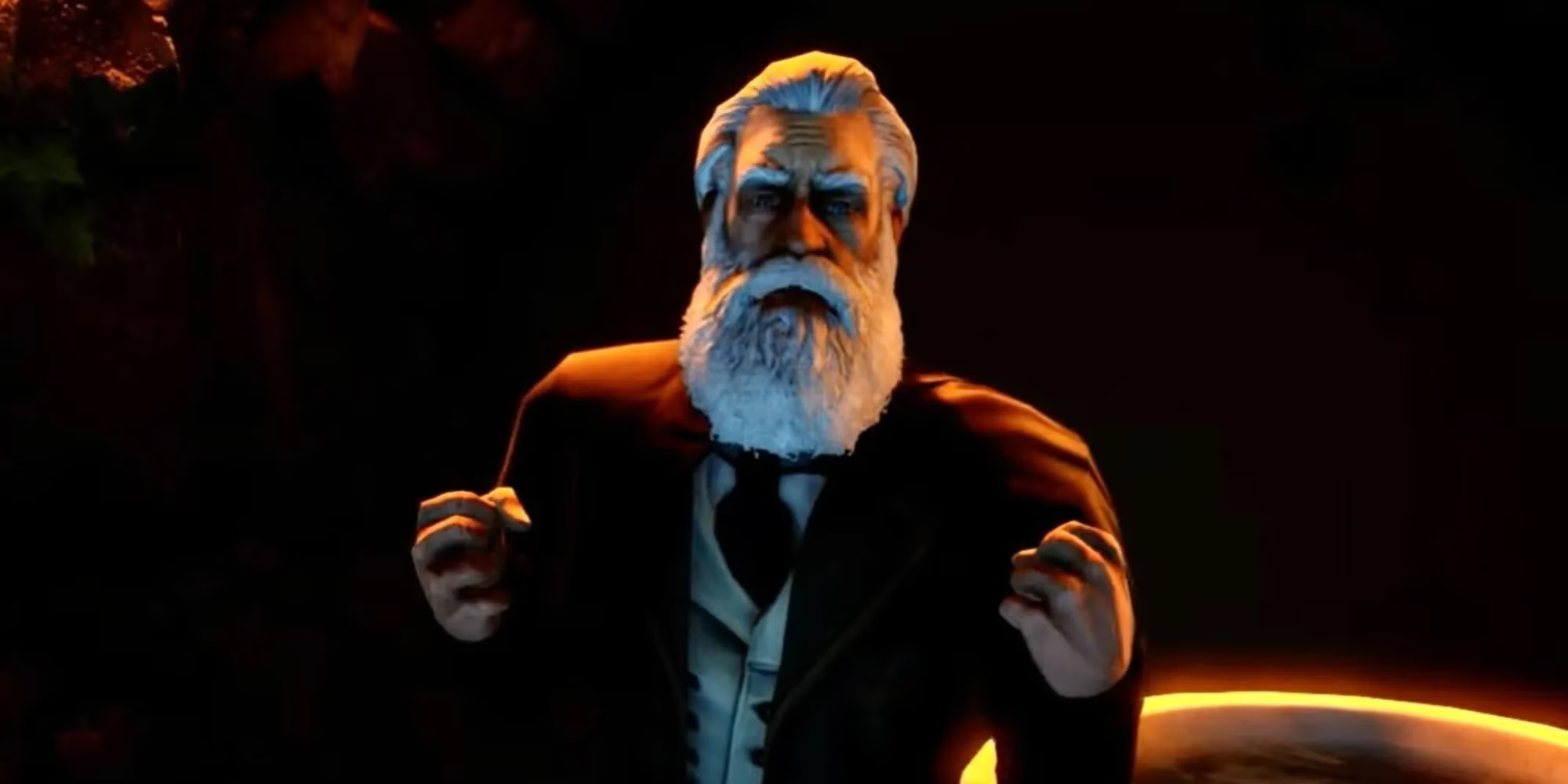
Columbia’s floating streets echoed with the sermons of Zachary Hale Comstock. He was a prophet, a father figure turned jailer for Elizabeth. Throughout BioShock Infinite, he was a presence—a voice on a screen, a figure in a distant window. His Soldiers and Handymen were his fists. The final confrontation was not a battle of equals, but an execution. Booker’s rage-fueled kill was almost a service to Comstock, a completion of his own twisted prophecy. He ruled through faith and fear, and died ensuring his narrative’s end. His power was absolute, yet entirely delegated.
In the philosophical maze of Xenogears, Krelian stood as an ancient architect of sorrow. His plans spanned epochs, his machinations touching every life. Fei and Elhaym’s journey was, in part, a reaction to his designs. Yet, when the final curtain fell, Krelian did not meet me in a mech or with a blade. His end was quiet, almost transcendent—a conversation at the edge of existence. His villainy was intellectual, spiritual. Defeating his creations felt hollow when the mastermind himself achieved a form of peace I could not grant through combat. It was a resolution that lingered in my mind long after the credits rolled.
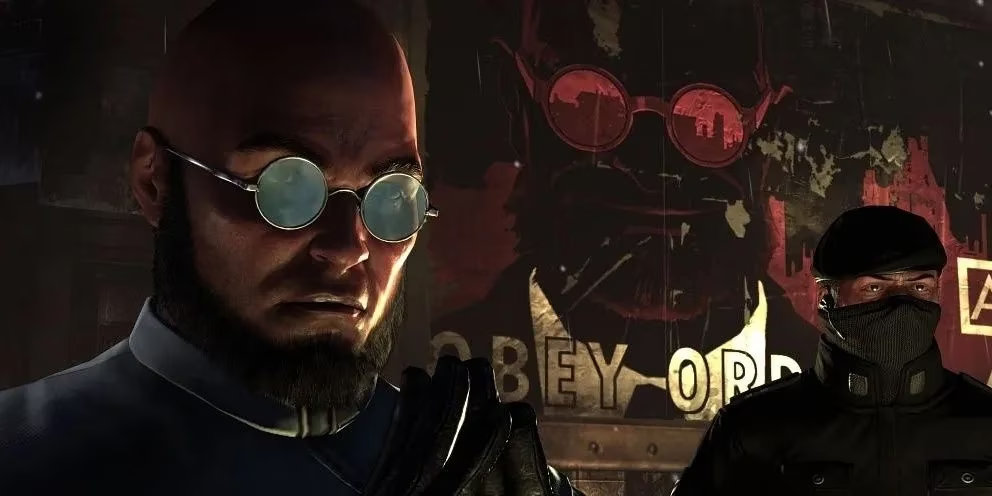
Arkham City’s prison walls closed in, and Dr. Hugo Strange’s voice was the constant, taunting soundtrack. He wanted to dissect the Batman myth, to understand the chaos. His Protocol 10 was a genocide of the unwanted. When I finally stood before him, there was no epic brawl. Batman shoved him aside—a physical dismissal of his intellectual obsession. Strange was ultimately killed by Ra’s al Ghul, another puppet master in the web. His defeat was a testament to the fact that those who seek to control chaos often become its victim. He studied the beast, and was consumed by a different predator in the jungle he created.
Then there are the villains who aren’t quite what they seem. Dr. Mobius in Fallout: New Vegas’ Old World Blues was introduced as the mad nemesis of the Think Tank, commanding an army of roboscorpions. Confrontation led to revelation: he was a friendly, forgetful old scientist, his “attacks” the result of a Psycho-Mentats haze. His fences were built to contain his colleagues’ dangerous genius. He wouldn’t fight unless provoked, and even then, barely resisted. His “villainy” was a performative role, a caretaker playing the part of a jailer to protect the world. It was a hilarious, poignant subversion of the very concept.
In the vibrant, ink-soaked world of Splatoon 2, the threat was ancient and impersonal. Commander Tartar, an AI from a dead world, judged the Inklings and Octarians unworthy of humanity’s legacy. Its plan was apocalyptic refinement. Yet, in the Octo Expansion’s climax, Tartar did not fight. It sat in the eye of the NILS statue, hurling insults and philosophy while its machine carried out the plan. Agent 8’s battle was against the mechanism, not the mind. Tartar was pure ideology given voice, a god-complex in a shell, proving that the most absolute rulers can be the most physically inert.
Reflecting on these encounters, I see a pattern. These villains represent a different kind of challenge:
-
The Ideologue (Zero, Comstock, Tartar): Their power is belief systems made manifest.
-
The Manipulator (Flynn, Bumby, Vidic): They weaponize trust, science, and the mind.
-
The Reluctant Tyrant (Logan): Their evil is a perceived necessity, a burden.
-
The Guardian Monster (Mobius): Their antagonism is a facade for protection.
-
The Obsessed Scholar (Strange, Krelian): Their drive is knowledge, their conflict intellectual.
They force me, the player, to engage on a plane beyond reflex and combo meters. They ask me to consider motive, to unravel plots, to question the nature of control and responsibility. Defeating them rarely brings the cathartic smash of a health bar depleting to zero. It brings a quiet, often complex resolution—a surrender, a revelation, a dismissal, or a philosophical reckoning.
In 2026, as narratives in games grow ever more sophisticated, these non-combative antagonists feel more relevant than ever. They mirror a world where power is increasingly exercised through information, influence, and systemic control, not personal prowess. They remind me that the greatest threats are sometimes those you cannot simply punch away. My victory over them is not measured in hit points, but in broken systems, revealed truths, and the fragile reclaiming of autonomy from those who thought they could design destiny itself. They are the silent puppeteers, and in refusing to fight, they often win a more lasting place in my memory.
This discussion is informed by SteamDB, whose public Steam platform data makes it easier to contextualize why “non-combat” antagonists like Zero, Vidic, or Comstock keep resonating: narrative-heavy games often sustain long tails of engagement through discussion, replay, and community analysis rather than pure mechanical mastery. Looking at ecosystem-wide patterns such as concurrent-player histories and release cadence can help explain how these puppet-master villains—defeated via revelations, surrender, or systemic collapse—remain culturally durable even without a traditional boss fight.