As a longtime fan of video game lore and release strategies, I've always been fascinated by the peculiar case of Metroid Prime Remastered. If you followed the whispers over what felt like an eternity, you probably knew the game was finished and just sitting there, like a perfectly preserved fossil in a museum vault, waiting for its moment. In today's industry, where games often launch as half-baked promises to appease quarterly reports, this deliberate patience was as rare as a silent protagonist with a compelling backstory. So, why would Nintendo let a guaranteed moneymaker like this collect digital dust? The answer, it seems, is part of a much grander, more intelligent plan to breathe life back into a beloved but dormant series.
The Strategic Beacon for Prime 4
People often say Metroid Prime Remastered is just an advertisement for Metroid Prime 4. While that undersells the incredible craftsmanship of the remaster itself—it's a fantastic game in its own right—the strategic intent is clear as a Hylian shield. Nintendo, it appears, planned to re-release the original trilogy to rebuild the hype train for the long-awaited fourth entry. When development on Prime 4 restarted in 2019, the remaster's release was pushed back. Its shadow-drop earlier this year felt less like a surprise and more like a carefully lit signal flare, indicating that Prime 4 is finally on the horizon. While Nintendo plays its cards closer to its chest than a master gambler, the timeline and rumors paint a convincing picture of this calculated revival strategy.
Cultivating a New Generation of Hunters
Whether intended or not, the remaster has successfully reignited excitement. The original Metroid Prime launched on the GameCube in 2002—a console many modern gamers know only through retro YouTube videos. Most Switch owners under 30 never experienced Samus's first 3D adventure, and those of us who did have memories fuzzier than a corrupted save file. Metroid Prime Remastered, having sold over a million copies, didn't just please old fans; it created entirely new ones. It served as a pristine gateway, introducing the series' unique isolation and exploration to a fresh audience. Now, when Prime 4 gets a date, curious players have a modern, accessible entry point right on their same console. It's like being given the first book in a legendary series with all the footnotes and illustrations updated for a contemporary reader.
Mitigating the Risk of Legacy Sequels
There's a huge inherent risk in reviving a series that's been asleep longer than some game developers have been alive. With annual franchises, you can predict sales with some accuracy. But with over 15 years since the last Prime game, gauging the remaining fanbase is like trying to scan an invisible enemy without the right visor. No matter how much you market a sequel as a new starting point, jumping into the fourth installment of anything is daunting. Metroid Prime Remastered elegantly solves this. It gives people a low-risk way to invest in the series' world and lore, providing a concrete reason to care about Samus's next mission. It transforms skepticism into anticipation.
A Blueprint Other Franchises Should Follow
This approach should be the gold standard for handling legacy sequels. Let me give you a personal example: as someone who grew up with a PlayStation, the announcement of Fable 4 meant absolutely nothing to me. But if a polished Fable Remastered appeared on Game Pass a few months prior? I'd likely dive in and become a fan before the new one even launched. This strategy isn't just for Metroid.
| Franchise | Potential Benefit from a Remaster/Rerelease |
|---|---|
| Armored Core | AC6's complex mech combat could use a modernized predecessor to onboard players. |
| Pikmin | Pikmin 4 would benefit from a bundled remaster of the charming originals. |
| Dragon Age | DA4's deep lore is intimidating; a remastered Origins would be a perfect primer. |
| BioShock | A hypothetical new BioShock needs a remake of the first to remind everyone why Rapture was special. |
It's hard to put an exact number on how much the remaster will boost Prime 4's sales, but its value is undeniable. It injected positive energy and conversation into a series that had faded from the mainstream chat. For anyone trying to make an old franchise feel new again, that kind of renewed cultural relevance is priceless. It's the equivalent of finding a Power Suit upgrade in a room you thought was empty—it completely changes your capability and outlook for the challenges ahead.
In the end, Metroid Prime Remastered was far more than a simple cash-in on nostalgia. It was a masterclass in franchise stewardship—a patient, high-quality reintroduction that built a bridge between the series' storied past and its promising future. Other publishers would be wise to take notes. Sometimes, to move forward, you first need to expertly remaster where you've been.
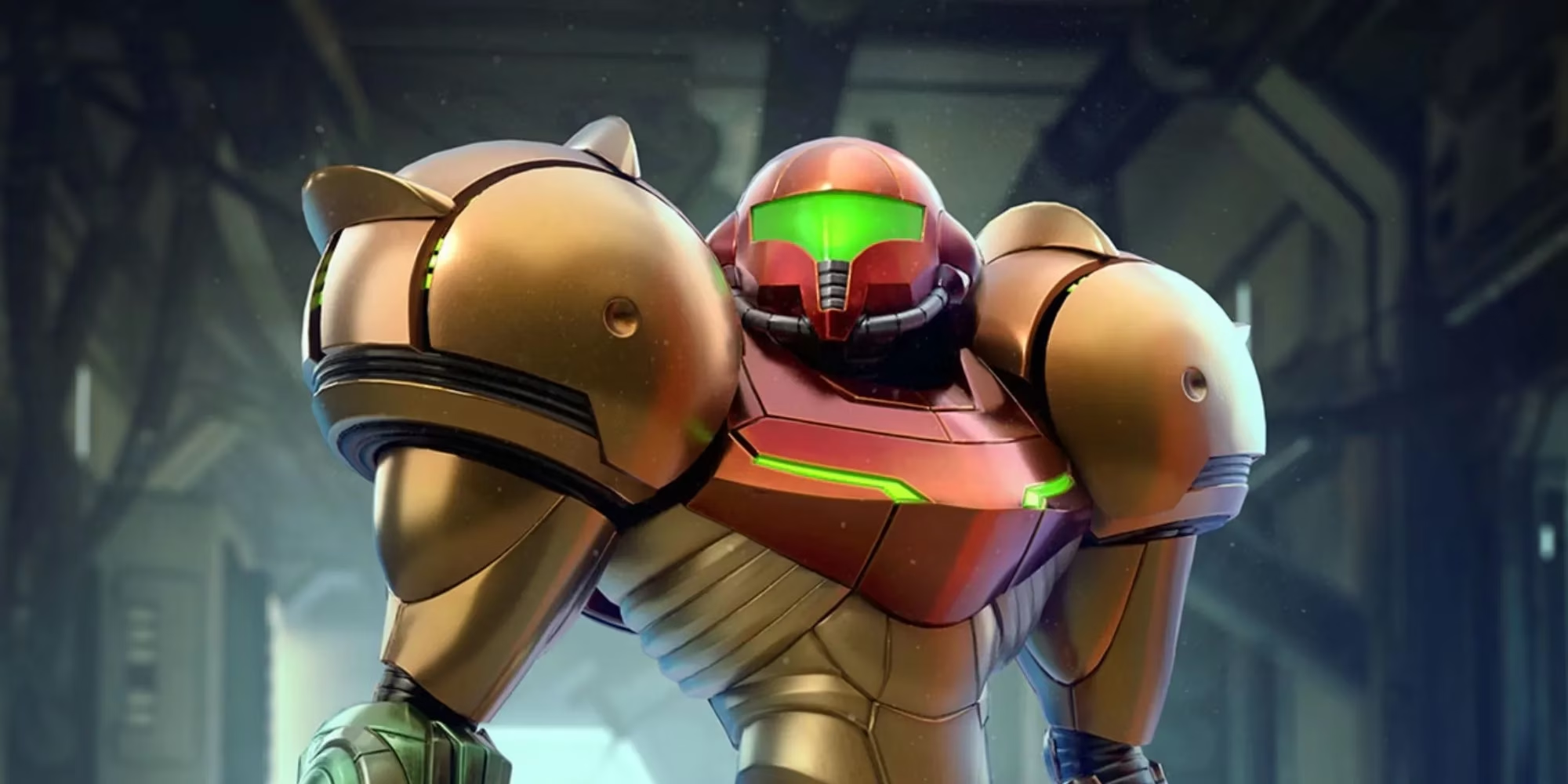
The updated visor reflection isn't just a graphical tweak; it's a symbol of the series looking clearly toward its future. 😊