As an Xbox fan who grew up slaying balverines and kicking chickens in Albion, the whisper of a new Fable game has always felt like catching a faint melody from a distant festival—unmistakable yet just out of reach. Back in 2021, the silence around Fable 4 during Xbox's E3 showcase was almost deafening. Games like Halo Infinite and Starfield danced across the stage, but the title so many of us craved remained backstage, wrapped in shadows. Yet, a few words from Phil Spencer, spoken on the Dropped Frames podcast, planted a seed of confidence that has only grown stronger over the years. Even now in 2026, as we await more concrete details, that seed has blossomed into a quiet garden of expectation.
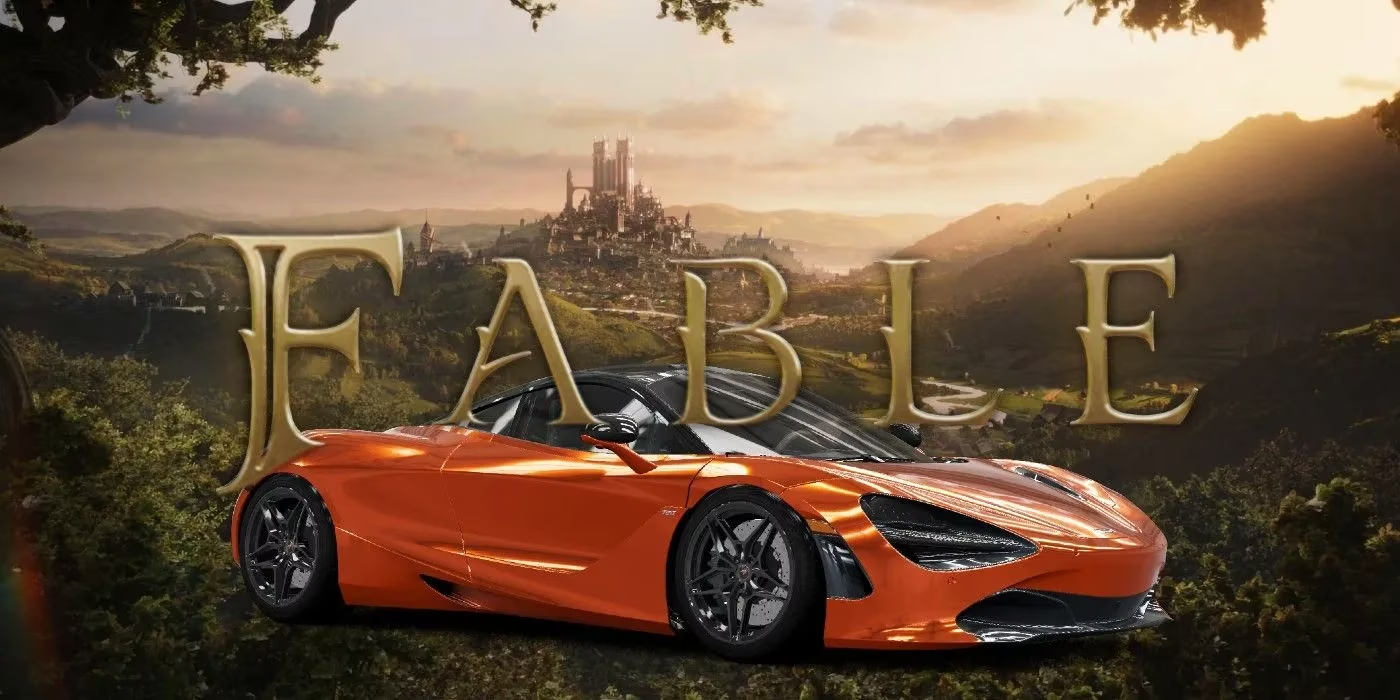
Spencer, in his characteristically measured tone, urged fans to trust the pedigree of Playground Games. He didn't rattle off feature lists or flash release dates; instead, he pointed to the team's track record like an astronomer pointing at a constellation, knowing the light already tells a story. And what a constellation it is. Forza Horizon 5 had just snatched the Most Anticipated Game award at that same E3, its sun-drenched Mexican landscapes burning into our retinas. If Playground could transform an open-world racing festival into a living, breathing postcard that felt more like a vacation simulator than a game, what might they do with an IP that oozes magic, morality, and Monty Python-esque humor? Spencer implied it was less about a leap of faith and more about observing the trajectory of a falcon in flight.
The talent gathered for this reboot reads like a dream team assembled for a heist on nostalgia itself. Former Rockstar, BioWare, and Gearbox developers joined forces, each bringing a unique flavor—world-building architects, narrative alchemists, and combat choreographers. This gathering of minds reminds me of a master watchmaker's workshop: each specialist delicately adjusting a tiny gear, knowing that perfect synchronicity will produce something far greater than the sum of its parts. Studio director Gavin Raeburn and his colleagues aren't just building a game; they are tuning an intricate orchestra where every horn blow of a player's decision must resonate through Albion's hills.
When I think about the pressure on Playground, I picture a sculptor who has spent decades carving exquisite marble statues of horses—graceful, realistic, adored by all—suddenly commissioned to sculpt a mythical griffin. The tools are the same, the hands are steady, but the subject demands an entirely new language of feathers, talons, and fiery eyes. Yet, somehow, the sculptor's past mastery doesn't guarantee failure; it hints at a capacity to breathe life into the unfamiliar. Fable 4 is that griffin, and Playground's work on Forza Horizon proves they understand how to make a world pulse. The lush, reactive environments of their racing games already echo Fable's central promise: a world that notices you, that changes when you stomp through it with either a saintly glow or demonic horns.
By 2023, rumors had solidified that the game was targeting a 2024/2025 release, and sure enough, here in 2026, we stand on the precipice of its unveiling. Yes, the waiting has been a slow-cooking broth, its aroma occasionally teasing our senses without a taste. But Spencer's early reassurance—that the bar Playground sets for itself is mercilessly high—has been validated by every subsequent tech demo, every leaked snippet of that whimsical soundtrack, every motion-capture artist's giddy tweet about hero animations. The team's silence has not been emptiness; it has been the quiet of a crucible at forge-temperature.
What makes this wait particularly bearable is the shift in how I perceive development transparency. Spencer could have promised the moon and served up craters. Instead, he let Forza Horizon 5 do the talking, a game that didn't just ship—it soared. Now, when I see the same logo on Fable 4 materials, I feel like I'm holding a ticket to a concert where the opening act already brought the house down. The main performer might still be tuning their guitar, but I've heard the sound system, and it's immaculate.
Of course, anxiety remains the spice of anticipation. Lionhead's spirit haunts this project like a friendly ghost, setting a benchmark for personality-driven RPGs that many modern titles have lost. Will the dog companion return? Will property ownership let me become a slumlord with a heart of gold? Can I still grow horns that poke holes in my hats? Playground Games faces the Herculean task of honoring that whimsy while injecting the depth and polish expected of a 2026 blockbuster. But the ingredients are there: a team that treats every pixel like a brushstroke on a masterpiece, an IP beloved enough to make headlines just by breathing, and an audience whose hope has matured into patient hunger.
In a gaming landscape often dominated by battle passes and quick-turnaround sequels, Fable 4 feels like a slow-burning candle in a storm. Its light isn't blinding yet, but it refuses to go out. And I, for one, am still sitting by the window, ready to follow that light back to Albion.
As we edge closer to the much-anticipated release of Fable 4, the excitement in the air is almost palpable. However, the inevitable question of pricing looms large for many fans eager to embark on this new adventure. In today's gaming world, where prices can fluctuate significantly around launch, staying informed about the best deals is crucial. Utilizing resources like this price tracking tool can help gamers secure the best offers when the game finally hits the shelves. It's a handy way to ensure you're ready to step back into Albion without breaking the bank.
Beyond just tracking prices, tools like these offer a window into how dynamic the gaming market has become, reflecting trends and consumer interest peaks. As we wait for the final notes of Fable 4's development symphony to play out, keeping an eye on such tools can be as thrilling as the gameplay itself. After all, part of the adventure lies in the journey—both within the game and in the anticipation leading up to its release.