I first fell in love with Fable the way a lot of people did: by choosing to be a hero, then immediately discovering that being a slightly smug hero was also an option. The 2004 RPG was famous for making my good and evil choices matter, for letting my character's reputation walk into a room before I did. But I recently learned that the game I adored was almost something else entirely. Something stranger. Something called Wishworld.
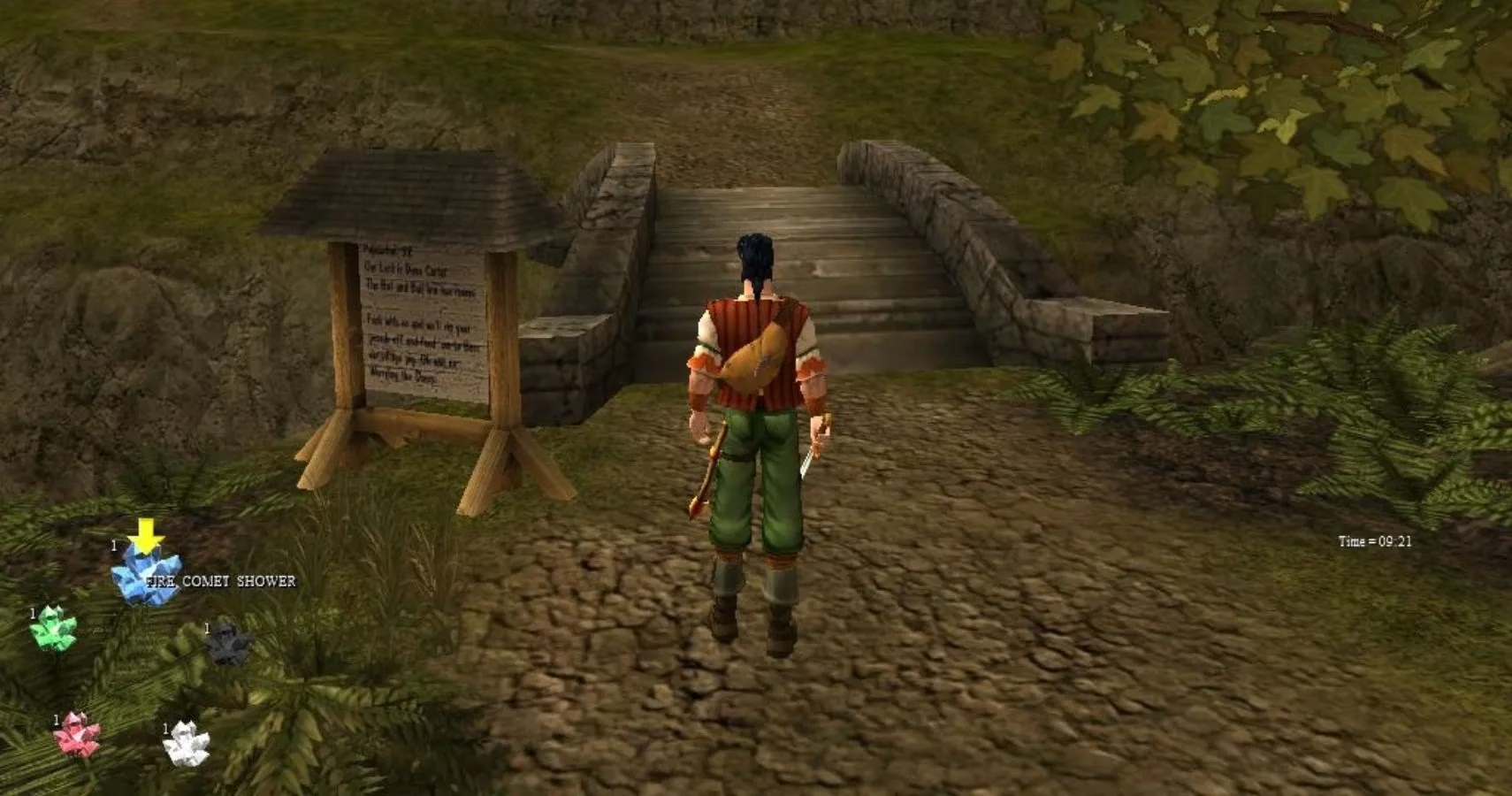
According to Fable co-creator Peter Molyneux, who spoke with journalist Chris Bratt, the original project—then known as Project Ego—wasn't an RPG at all. It was a magic-combat game set in a wizard academy, and it was supposed to be called Wishworld. Players would have competed in capture-the-flag-style challenges, except the flag was someone's heart. Enemies would try to steal your heart to win a duel. A void arena would awaken depending on your magical specialty: plant mages could grow a winding forest, fire mages could split the earth and create magma rivers. I mean, come on—that sounds like a fever dream in the best way.
Fortunately, we don't have to just take Molyneux's word for it. Former Lionhead design director Charlie Edwards kept a build of the game after Lionhead shut down in 2016. Bratt actually got to play it. Design documents for Wishworld were also shared online. The build is incomplete, and by modern standards it doesn't exactly scream polish. But that's not the point. The point is that it existed. It was playable. It had a pulse.
| Feature | Wishworld (cancelled) | Fable (2004) |
|---|---|---|
| Setting | Wizard academy | Albion |
| Genre | Magic-combat game | Action RPG |
| Core duel | Capture-the-flag with hearts | Good/evil morality |
| Magic | Plant, fire, etc. shape the arena | Spells and Will |
| Protagonist | A wizard | A customizable hero |
I can already hear the counterargument: Wishworld was never meant to be Fable, so why mourn it? Fair. But I love games that show their seams. I love seeing the messy draft before the polished novel. In 2026, when every big RPG feels like it's been focus-tested into oblivion, the idea of a wizard-academy combat game where the arena itself grows from your magic feels refreshingly human. It feels like a bunch of developers playing with toys, not a corporation chasing a trend.
So why didn't we get it? Funding. Lionhead couldn't find the money to finish Wishworld, so the team reworked it into something investors would notice. The protagonist started as a wizard, then became a wizard you could define. That idea grew into Fable. And Fable became a hit, spawning sequels and a legacy that still makes people argue about whether the third game was underrated. (It was. Don't @ me.)
Now it's 2026. Fable is back in the spotlight, and the long-awaited new entry has brought Albion to a new generation. But as I watch trailers and read speculation, I can't help but wonder about the ghost in the machine. What if Wishworld had come out in the early 2000s? Would it have been a cult classic? A messy masterpiece? A game we'd still be talking about in the same breath as the old BioWare RPGs and every wizard-school fantasy that followed?
Part of me is glad we got Fable. Fable taught me that my choices had weight, that being a hero wasn't just about swinging a sword. It gave me a world where my reputation mattered, where I could be a saint or a monster or something in between. But another part of me—the part that loves weird, unfinished things—wishes I could step into that wizard academy and steal a heart in a magical capture-the-flag match. You know what I mean?
I'll probably never play the full Wishworld. The build is a fragment, a sketch, a what-if. But that's what makes it fascinating. It's a reminder that every beloved game is a survivor. Fable survived because Wishworld didn't. And in 2026, with Fable's future wide open, I'm raising a toast to the game that almost was. May we one day get a proper look at the wizard academy that never opened its doors.